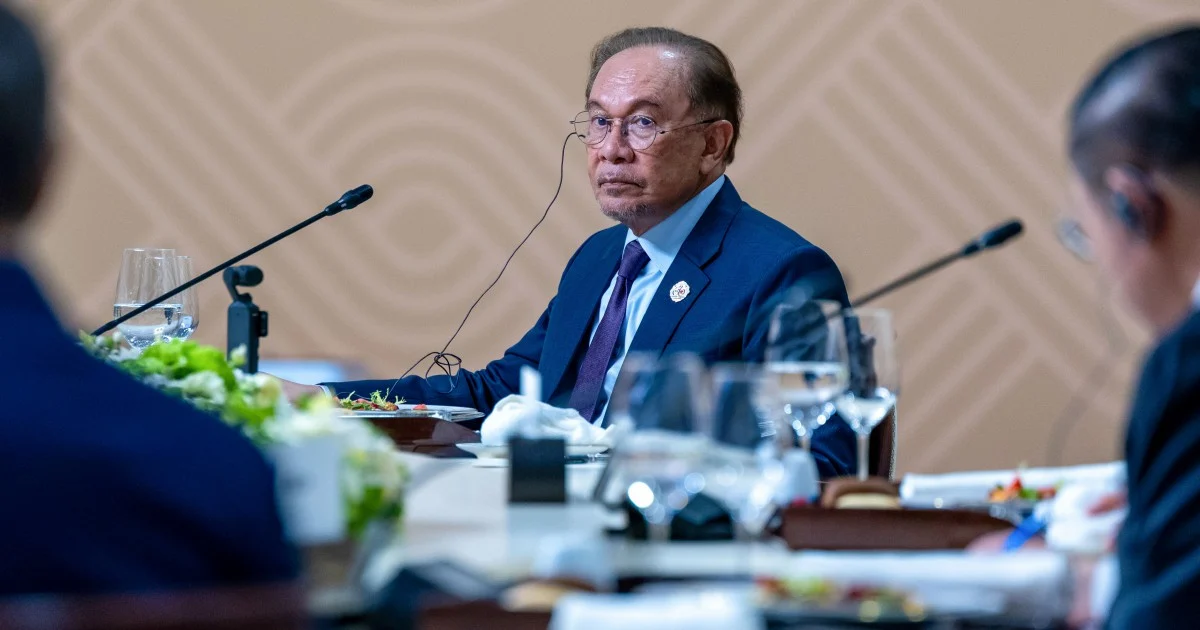
Prime Minister Datuk Seri Anwar Ibrahim has issued a pointed warning to the international community that developing countries throughout the Global South will actively pursue alternative strategic partnerships if European nations continue to apply unequal treatment standards. The Malaysian leader's remarks, made during a recent address in Kuala Lumpur, reflect growing frustration among developing economies over perceived disparities in how they are treated by wealthy Western nations on the world stage.
Anwar's comments were triggered by a specific defence-related controversy involving Norway, a Nordic nation with significant strategic interests in Southeast Asia and the broader Indo-Pacific region. While detailed specifics of the dispute remain under discussion, the underlying tension points to broader friction between developing nations and Northern European countries over transparency, accountability, and reciprocal treatment in bilateral defence arrangements. Such disagreements are increasingly becoming flashpoints in international relations as developing nations assert greater agency in their strategic choices.
The Prime Minister's position reflects a strategic shift in how Malaysia and other developing economies view their relationships with traditionally dominant Western powers. Rather than accepting conditions laid down unilaterally by European nations, these countries are now signalling their willingness to explore partnerships with emerging powers and regional actors who may offer more balanced terms of engagement. This signals a meaningful realignment in global power dynamics, where developing nations possess greater leverage than in previous decades.
The Malaysia-Norway situation exemplifies a pattern seen across Southeast Asia, where small and mid-sized developed European nations increasingly engage in defence and security matters. These engagements, while ostensibly aimed at promoting stability and shared values, often come with implicit or explicit expectations that partner nations adopt Western perspectives on regional issues. When developing countries resist such pressures or demand reciprocal respect for their sovereignty and strategic autonomy, friction emerges.
For Malaysian readers, Anwar's warning carries particular significance. Malaysia maintains extensive trade relationships with multiple European Union member states and coordinates with Norway on various maritime and environmental initiatives. However, the country also pursues independent foreign policy objectives and refuses to be drawn into zero-sum geopolitical competition between great powers. The Prime Minister's statement reinforces this balancing act—Malaysia values Western partnerships but will not accept subordinate status in these relationships.
The broader context here involves how developing nations increasingly view themselves as stakeholders in global governance rather than passive recipients of policies designed by the West. This consciousness has been building for years but has accelerated following geopolitical shifts in recent years. The rise of economic powers in Asia, Africa, and Latin America has created genuine alternatives for developing countries seeking partnerships, investment, and security arrangements. European nations, recognising this shift, must adapt their approach or risk marginalisation in crucial global regions.
Anwar's implicit reference to seeking alternative partnerships also acknowledges the reality that developing nations now have genuinely competitive options. Countries from China to India to Gulf states are actively courting relationships with Southeast Asian nations, offering investments, technology transfers, and security cooperation on terms that often respect sovereignty more explicitly than traditional Western arrangements. Malaysia and other developing countries are therefore negotiating from positions of relative strength, not weakness.
The defence dispute with Norway likely involves disagreements over weapons systems, military cooperation terms, or differing positions on regional security matters. Nordic countries, despite their progressive image on human rights, sometimes apply different standards when it comes to defence partnerships. They may, for instance, impose conditions on how military equipment is used or demand alignment with their foreign policy positions. When developing nations resist, tensions inevitably arise.
Anwar's warning should be understood as part of Malaysia's continuing assertion of strategic autonomy in an era of competing global powers. Rather than choosing sides in great power competition, Malaysia seeks to maintain partnerships across the spectrum—with Europe, America, China, Russia, India, and regional neighbours. However, this multipolarity strategy only works if all partners respect Malaysia's right to set its own course. European nations must internalise this reality or risk being sidelined in Asia's critical developments.
The Prime Minister's remarks also resonate with broader sentiments across the Global South, where countries are increasingly vocal about reforming international institutions and norms that they see as reflecting Western preferences. From climate negotiations to security arrangements to trade frameworks, developing nations are demanding greater voice and fairer treatment. Anwar's statement indicates Malaysia will back these demands through its diplomatic positions and, implicitly, through willingness to pursue alternative partnerships when necessary.
Looking ahead, European nations face a critical juncture. They must decide whether to adapt their engagement with developing countries or accept reduced influence in crucial regions. For Malaysia and Southeast Asia broadly, maintaining this assertive stance—as Anwar has articulated—preserves the region's agency in navigating an increasingly complex international environment where traditional hierarchies no longer hold absolute sway.

