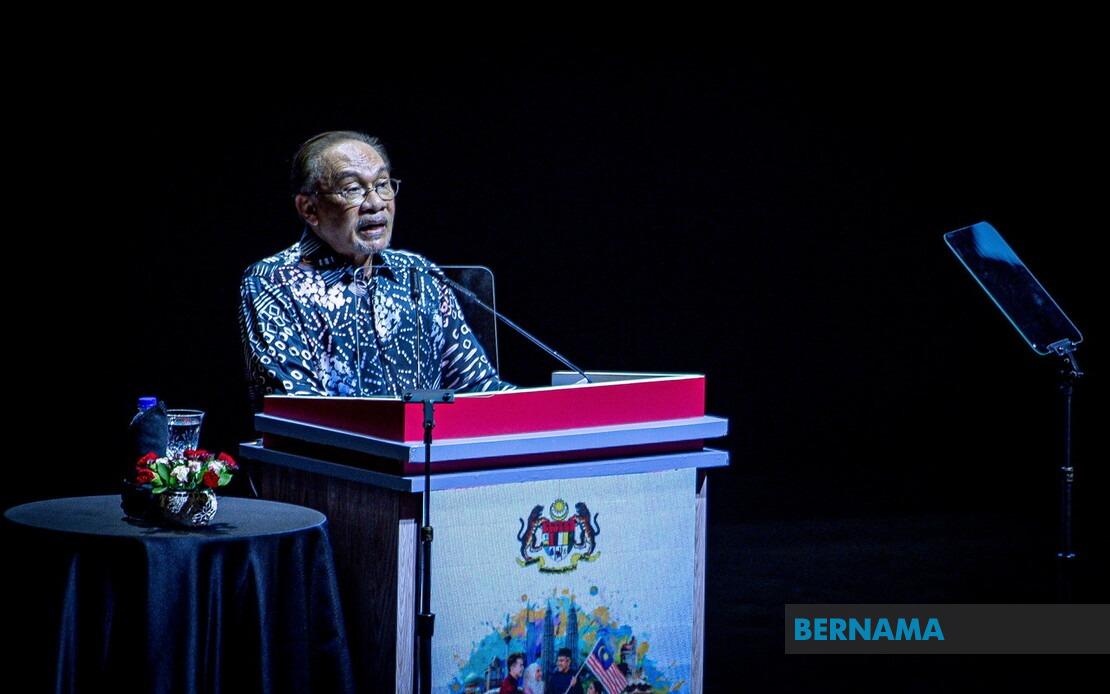
Prime Minister Datuk Seri Anwar Ibrahim has unveiled a six-point relief package designed to ease the financial strain on Malaysian households, with the entire initiative set to commence on September 1. The announcement came during the 2026 National Day Prime Minister's Address at the Putrajaya International Convention Centre, where the government laid out its immediate response to persistent public concerns about the rising cost of living and everyday economic pressures facing citizens across the country.
The relief measures span a diverse range of areas affecting daily life and economic activity. The package includes continued fuel subsidies, enhanced school maintenance allocations, artificial intelligence development initiatives, digitalisation of healthcare services, implementation of e-invoicing requirements, and expanded microfinancing schemes aimed at supporting small enterprises and entrepreneurs. By clustering these initiatives under a single announcement timed to coincide with national celebrations, the government has signalled its commitment to comprehensive economic relief rather than isolated, piecemeal interventions.
Addressing an audience that included Deputy Prime Minister Datuk Seri Dr Ahmad Zahid Hamidi, Communications Minister Datuk Seri Fahmi Fadzil and senior Cabinet members, Anwar acknowledged that existing government initiatives, while substantial, have not fully resolved the economic difficulties confronting the public. Rather than claiming victory over inflation and financial hardship, he adopted a candid tone, recognising that Malaysian families continue to grapple with heightened living expenses and the mounting pressures of managing household budgets in an increasingly expensive economic environment.
The Prime Minister's framing of these measures as "temporary relief" is significant for understanding government expectations. This language suggests the administration views these interventions as stopgap measures while longer-term structural reforms take root, rather than permanent solutions to systemic economic challenges. Such transparency about the limitations of short-term policies reflects a departure from purely optimistic political messaging, instead acknowledging the complexity of economic management in a region experiencing inflationary pressures.
Fuel subsidies remain a cornerstone of the relief package, reflecting their continued importance in Malaysian fiscal policy and household budgets. Transportation costs directly influence the pricing of goods and services throughout the economy, making fuel support a lever through which government can indirectly reduce broader cost-of-living pressures. School maintenance improvements target educational infrastructure, ensuring that families do not bear secondary costs through deteriorating facilities, while also supporting the education sector's operational sustainability.
The inclusion of artificial intelligence and healthcare digitalisation reflects the government's dual focus on modernisation and immediate relief. Healthcare digitalisation can streamline service delivery and reduce out-of-pocket expenses for patients navigating the medical system, while AI investments position Malaysia within emerging technological sectors that will shape future economic competitiveness. These forward-looking elements balance against more immediate relief measures, suggesting a strategy that addresses present hardship while building capacity for future prosperity.
E-invoicing implementation and microfinancing expansions target business ecosystems, particularly small and medium enterprises that form the backbone of Malaysia's economy. Digital invoicing reduces transaction costs and administrative burden, potentially allowing businesses to pass savings to consumers, while enhanced microfinancing opens capital access for entrepreneurs who might otherwise be excluded from traditional banking channels. Together, these initiatives attempt to stimulate business dynamism from the ground up, theorising that economic vitality at the grassroots level will eventually ease consumer pressures.
The announcement's timing during National Day celebrations carries symbolic weight, positioning economic relief as part of the national development narrative. By presenting these measures as a gift to the nation during patriotic observances, the government frames economic management as an expression of national commitment to citizen welfare. This rhetorical strategy, while politically calculated, also demonstrates awareness that cost-of-living concerns rank among the highest public anxieties, meriting high-profile political attention and resource commitment.
For Malaysian readers and policymakers, the significance of this announcement extends beyond the specific measures themselves. It signals that the government recognises the political importance of visible, tangible relief, and is willing to deploy multiple policy instruments simultaneously rather than relying on a single approach. The breadth of the package—spanning infrastructure, technology, finance, and subsidies—indicates an administration attempting to address cost-of-living pressures through multiple economic channels simultaneously.
The package's regional implications deserve consideration as well. Southeast Asian governments increasingly face pressure to balance fiscal responsibility with citizen expectations for economic relief, particularly as global commodity prices and supply chain disruptions create inflationary headwinds across the region. Malaysia's approach, combining targeted subsidies with structural modernisation through digitalisation and technology investment, may serve as a model or cautionary tale for neighbouring nations managing similar economic pressures.
However, questions remain about implementation effectiveness and sustainability. Whether fuel subsidies can be maintained without unsustainable fiscal costs, whether healthcare digitalisation delivers promised efficiencies, and whether microfinancing actually reaches intended beneficiaries will determine the package's real impact on household finances. The government's acknowledgement that previous measures have not fully addressed the problem suggests awareness that implementation challenges have previously limited policy effectiveness, making execution critical to credibility.

