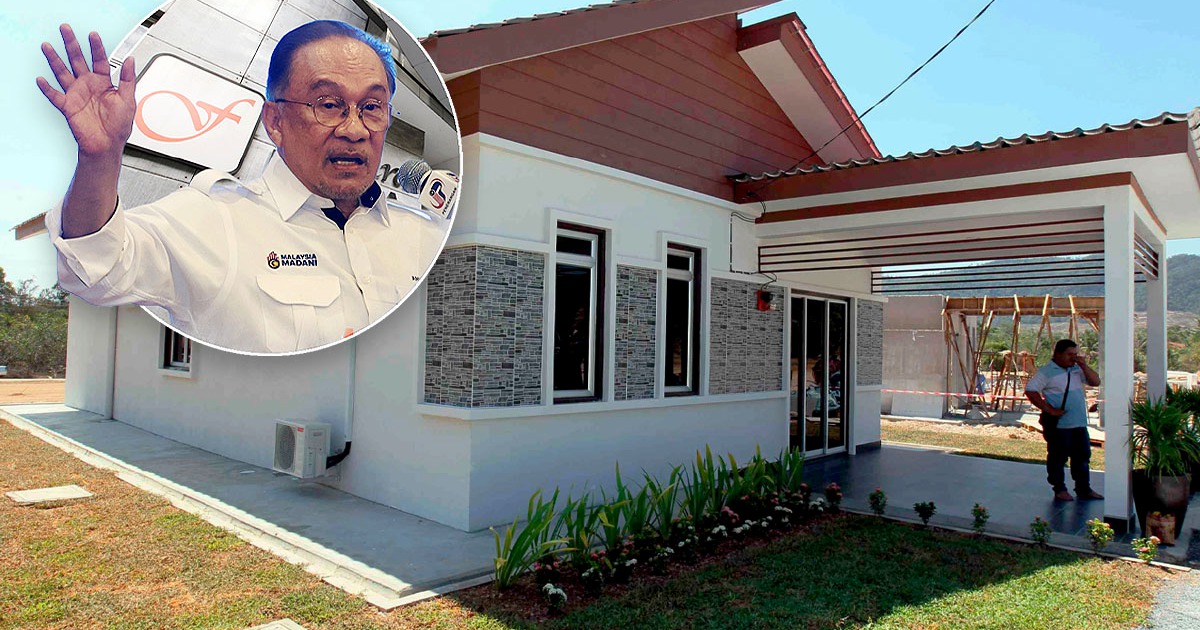
Prime Minister Datuk Seri Anwar Ibrahim has committed to tabling a comprehensive Cabinet paper outlining a second-home initiative for Felda settlers within the coming month, marking a significant move to address housing concerns within one of Malaysia's oldest and most established rural development schemes. The announcement underscores the government's renewed focus on improving living standards for the agricultural community that has long formed the backbone of Malaysia's rural economy and social fabric.
Felda, the Federal Land Development Authority, has been instrumental in reshaping Malaysia's agricultural landscape since its establishment, transforming vast tracts of undeveloped land into productive farming communities. Over decades, the scheme has settled hundreds of thousands of families in organised settlements across the country, creating stable communities centred around palm oil, rubber, and cocoa cultivation. However, like many government-backed initiatives, Felda communities have grappled with evolving socioeconomic challenges, including housing adequacy, generational transition, and economic diversification beyond traditional plantation work.
The proposed second-home policy represents a recognition that many Felda settlers, particularly those whose children have migrated to urban centres for employment, face housing pressures when their offspring return or seek to establish themselves closer to their parents' original settlements. This demographic reality is common across Malaysia's rural areas, where younger generations increasingly pursue opportunities in cities like Kuala Lumpur, Penang, and Johor Bahru, yet maintain family ties and aspirations to own property near ancestral lands. The policy could therefore serve dual purposes: facilitating family reunification and enabling generational wealth accumulation through property ownership.
The timing of this initiative coincides with broader government efforts to strengthen rural economies and demonstrate commitment to constituencies beyond metropolitan regions. Malaysia's political landscape has increasingly emphasised the importance of rural and semi-rural constituencies, where Felda settlements represent substantial voting blocs. By advancing tangible housing policies, the government signals responsiveness to long-standing settler grievances and investment in sustainable rural development beyond subsidy-dependent agricultural operations.
Implementation details remain unclear pending the Cabinet submission, but such schemes typically involve subsidised lending rates, relaxed financing conditions, or land allocation policies tailored to settler needs and income levels. Other Southeast Asian nations have experimented with similar second-home initiatives, though results have been mixed, depending on whether schemes address underlying affordability issues or merely create bureaucratic processes that benefit middlemen rather than intended beneficiaries. Malaysia's track record with housing subsidies and rural development programmes provides both cautionary lessons and successful models to learn from.
The Felda second-home policy must also contend with broader Malaysian economic concerns, particularly financing mechanisms in an environment of rising interest rates and cautious lending standards. For many settlers, particularly those relying primarily on declining plantation commodity prices, accessing additional credit for second-property purchases remains challenging despite government support. Any Cabinet paper will likely need to address whether subsidies, guarantees, or alternative financing structures will be employed to make second-home ownership genuinely accessible rather than theoretically available only to better-off settlers.
From a Southeast Asian perspective, Malaysia's approach to Felda modernisation and rural housing development holds relevance for neighbouring countries pursuing agricultural transformation and rural-urban integration strategies. Indonesia's comparable schemes, Thailand's rural development initiatives, and the Philippines' land reform programmes all grapple with similar tensions between preserving agricultural communities and enabling younger generations to pursue diverse economic opportunities. Malaysia's policy innovations, whether successful or otherwise, provide instructive case studies for regional policymakers.
The Cabinet submission will also likely address outstanding tensions within Felda itself, including disputes over land inheritance, settler representation, and tensions between traditional agricultural operations and alternative revenue streams from ecotourism, agribusiness, or renewable energy initiatives. Second-home ownership policies intersect with these broader questions about Felda's future identity and economic model. Settlers increasingly view their land holdings as wealth-building assets rather than subsistence farming operations, creating demands for policies aligned with this aspirational framing.
Industry observers will watch closely to determine whether the announced policy prioritises existing Felda settlers or extends benefits to their adult children, since this distinction carries substantial fiscal implications. Policies favouring younger generations could demonstrate government commitment to preventing rural-urban inequality, while those restricting benefits to current settlers may reflect concerns about fiscal sustainability and targeting efficiency. This delineation will reveal much about the government's broader vision for rural development and intergenerational wealth transfer in Malaysia's agricultural communities.
The one-month timeline sets a definitive deadline for Cabinet consideration, though parliamentary debate and implementation could extend well beyond that initial presentation. Felda settlers and industry stakeholders will scrutinise the proposal's provisions carefully, particularly concerning subsidy levels, eligibility criteria, and whether the initiative represents genuine assistance or primarily symbolic gesture. The policy's ultimate success will depend not on Cabinet approval alone but on implementation mechanisms that genuinely improve housing accessibility for intended beneficiaries across Malaysia's diverse Felda settlements.

