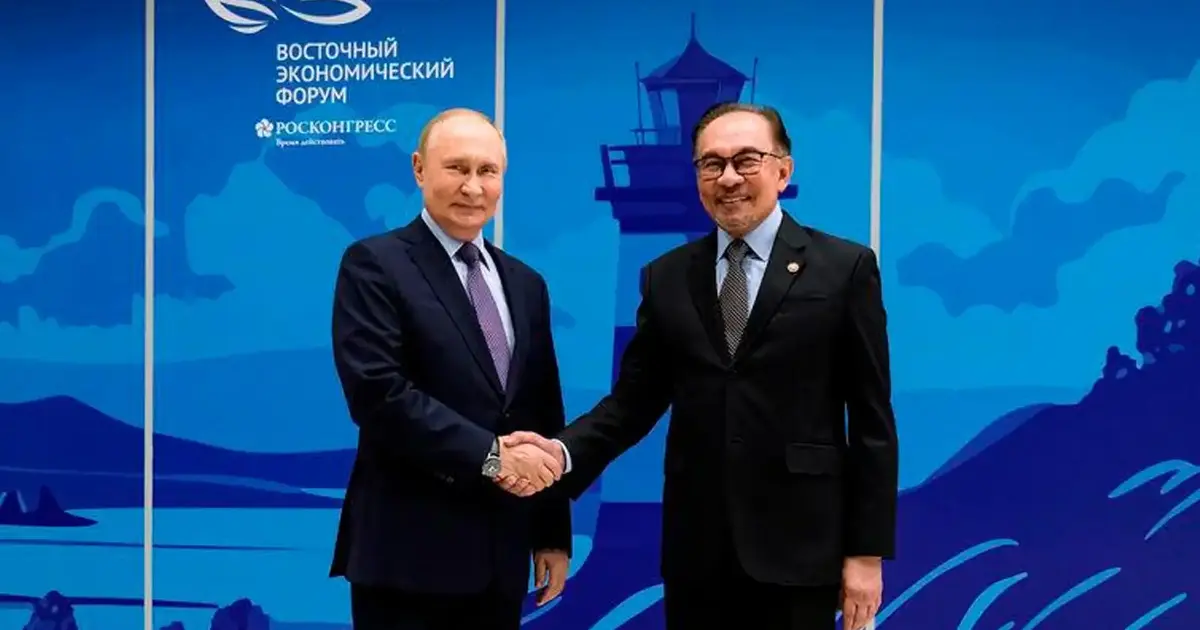
Prime Minister Anwar Ibrahim will undertake a working visit to Russia beginning tomorrow, where he is expected to engage in substantive discussions with Russian President Vladimir Putin on Malaysia's fuel and energy requirements. The visit marks a significant diplomatic initiative at a time when regional energy security remains a pressing concern for Southeast Asian economies heavily dependent on stable hydrocarbon supplies.
The bilateral meeting between Anwar and Putin will represent an opportunity for Malaysia to directly engage with one of the world's largest energy producers on matters critical to the nation's economic stability. Russia has long been a major exporter of crude oil and natural gas, and such discussions could potentially open new avenues for Malaysia to diversify its energy procurement channels or negotiate favourable supply agreements.
Beyond the bilateral component, Anwar's itinerary also encompasses a broader multilateral dimension. The prime minister will participate in meetings that bring together leadership representatives from Asean member states and the Russian government. This collective engagement reflects Malaysia's commitment to advancing regional interests on the energy question, recognising that several Southeast Asian nations face similar supply chain vulnerabilities and pricing pressures.
The timing of this diplomatic mission carries particular relevance for Malaysia's medium-term planning. As the nation seeks to balance rising energy demands from its manufacturing and services sectors with environmental sustainability commitments, exploring partnerships with established suppliers like Russia could complement existing arrangements with traditional partners in the Middle East and other regions. Diversification of energy sources and suppliers has become increasingly important as geopolitical tensions continue to reshape global commodity markets.
For the broader Asean community, coordinated engagement with Russia on energy matters could strengthen the bloc's collective bargaining position in international markets. When regional economies present unified priorities, major suppliers are more inclined to offer competitive terms. The presence of multiple Asean delegations alongside Malaysian representatives underscores this strategic thinking.
Energy security has assumed heightened importance in Malaysian policy circles following global supply disruptions and price volatility that have affected inflationary pressures domestically. The government has been actively exploring mechanisms to stabilise fuel costs for both industrial consumers and ordinary households. Any developments from discussions with Russian counterparts could inform Malaysia's energy strategy over the coming years.
The working visit also demonstrates Malaysia's pragmatic approach to international relations. Despite global divisions on various geopolitical issues, Malaysia maintains channels of dialogue with major powers to advance its national economic interests. Such engagement reflects the principle of constructive engagement that has characterised Malaysia's foreign policy orientation.
Russia's own interest in deepening ties with Southeast Asian nations has grown as Western sanctions and economic restrictions have prompted Moscow to strengthen partnerships in Asia. For Malaysia, this mutual interest creates a favourable negotiating environment where both parties see value in expanding cooperation.
The outcomes from Anwar's discussions could potentially result in concrete arrangements ranging from long-term supply contracts to technical cooperation on energy infrastructure. Any agreements reached would likely be subject to further refinement through follow-up discussions between respective energy ministry officials and state enterprises.
From a Malaysian perspective, the visit underscores the government's proactive stance on ensuring adequate and affordable energy supplies for the nation's development agenda. With manufacturing sectors and power generation facilities requiring reliable fuel access, securing options beyond traditional suppliers enhances resilience against potential supply shocks.
The Asean dimension of these talks also reflects the bloc's ongoing efforts to present a unified voice in international forums while respecting the distinct bilateral interests of individual member states. Malaysia's role in facilitating broader regional engagement demonstrates its continued influence within Asean structures.
As global energy markets remain volatile and geopolitical realignments continue, Malaysia's decision to engage directly with Russian leadership on fuel supply matters represents a calculated step toward strengthening the nation's energy security posture. The success of these discussions will likely be measured not only by immediate commercial outcomes but also by their contribution to longer-term strategic partnerships that enhance Malaysia's negotiating strength in global energy markets.

