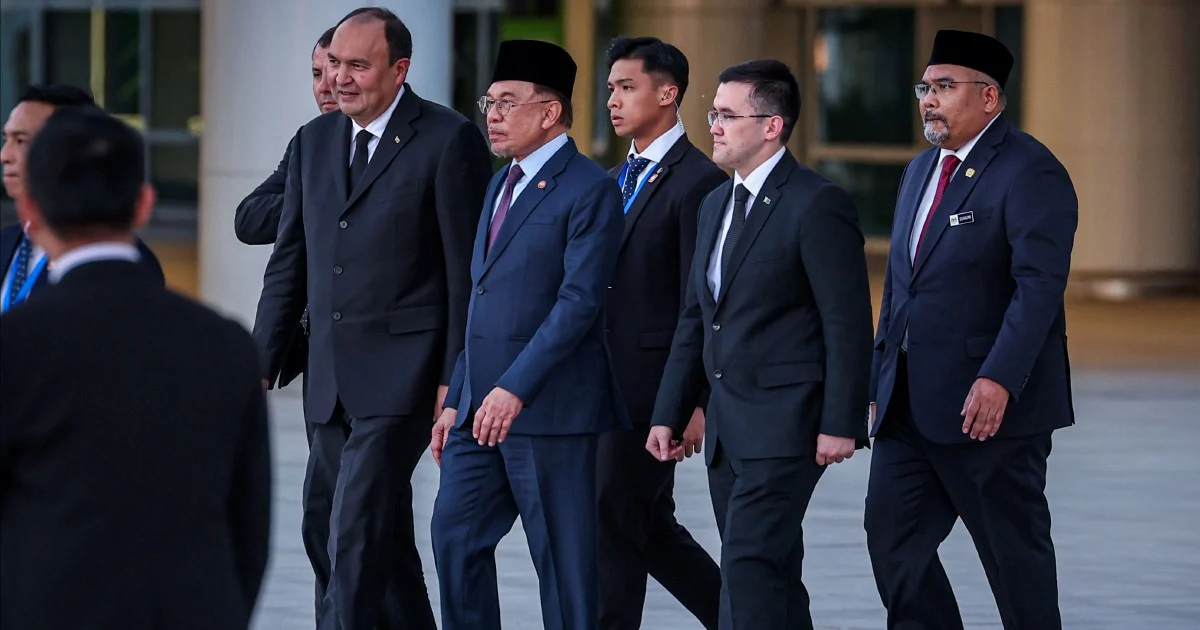
Prime Minister Datuk Seri Anwar Ibrahim will spend the final day of his official visit to Turkmenistan engaging in a series of consequential meetings with government and business leaders in the Caspian Sea region's eastern hub. The visit represents Malaysia's sustained effort to forge closer economic partnerships across Central Asia, a region increasingly important to Southeast Asian nations seeking diversified trading relationships beyond traditional markets.
Turkmenistan's strategic geographic position between Europe and Asia, combined with its substantial natural gas reserves, makes it an attractive partner for Malaysian businesses looking to expand into energy, infrastructure, and manufacturing sectors. The Central Asian republic has emerged as a significant player in global energy markets, particularly following geopolitical shifts that have redirected supply chains and investment patterns across Eurasia. For Malaysia, establishing stronger bilateral relations opens opportunities in areas where the nation possesses competitive advantages, from financial services to technology and defence cooperation.
The timing of this high-level engagement reflects Malaysia's proactive diplomatic strategy under Anwar's leadership to broaden the nation's international economic footprint. Rather than remaining concentrated in Southeast Asia and traditional trading partners, Malaysian businesses are increasingly seeking entry points into emerging markets. Turkmenistan offers particular promise given its government's ongoing diversification agenda away from gas-dependent revenues, creating openings for Malaysian companies in construction, telecommunications, and consumer goods sectors.
Energy cooperation represents perhaps the most significant dimension of potential bilateral collaboration. While Malaysia itself produces natural gas, Turkmen reserves and existing export infrastructure could provide opportunities for Malaysian energy companies to participate in development and technology-sharing arrangements. Additionally, both nations have expressed interest in alternative energy sources, presenting common ground for research partnerships and investment in renewable energy infrastructure across Central Asia.
The official visit underscores a broader Malaysian strategy to strengthen ties with non-ASEAN nations in strategically important regions. This approach diversifies economic exposure and reduces dependence on traditional Southeast Asian trade corridors. For Turkmenistan, welcoming high-level delegations from major Asian economies signals its commitment to international engagement and integration into broader regional economic frameworks that extend beyond Russian and Chinese spheres of influence.
Investment facilitation mechanisms will likely feature prominently in discussions between the two leaders. Both nations stand to benefit from streamlined business registration processes, investment guarantees, and bilateral agreements that reduce transaction costs for entrepreneurs. Malaysian financial institutions and development banks could play instrumental roles in funding infrastructure projects, while Turkmen enterprises might access capital and technology from Malaysian-based entities operating across the region.
The Central Asian market of over 70 million people presents untapped potential for Malaysian exporters. With relatively stable governance compared to some neighbouring regions and consistent government support for foreign investment, Turkmenistan offers a degree of predictability attractive to Malaysian business planners. Malaysian companies in sectors ranging from food processing to industrial manufacturing could benefit from proximity to European and Middle Eastern markets accessible through Caspian and continental transportation networks.
People-to-people exchanges and educational partnerships typically form supporting pillars of such high-level economic engagements. Malaysian universities and technical institutions could establish collaboration frameworks with Turkmen counterparts, facilitating knowledge transfer and building human capital essential for long-term economic integration. Such exchanges historically generate goodwill that translates into sustained commercial relationships across multiple sectors and generations of business leaders.
The visit also carries subtle geopolitical implications for Malaysia's positioning within broader Central Asian dynamics. By engaging with Turkmenistan as an independent economic partner, Malaysia reinforces its non-aligned stance while building relationships that could prove valuable as regional power dynamics continue evolving. For a nation navigating complex international relationships, Central Asian engagement offers a relatively low-friction avenue for expanding diplomatic influence and economic reach.
Government-to-government cooperation frameworks will likely include discussions on infrastructure development, where Malaysian expertise in port management, urban planning, and transportation networks could add value to Turkmen development projects. Conversely, Turkmen resources and market access provide Malaysian firms with springboards for deeper penetration into wider Eurasian markets, creating mutual benefits that extend beyond bilateral trade figures.
Looking forward, success in strengthening ties with Turkmenistan will depend on converting high-level political goodwill into concrete commercial outcomes. This requires follow-up actions from both governments in streamlining visa procedures, establishing trade offices, and facilitating business delegations. Malaysian chambers of commerce and industry associations should actively engage with Turkmen counterparts to identify specific sectors where partnerships can flourish and create sustained value for both economies.

