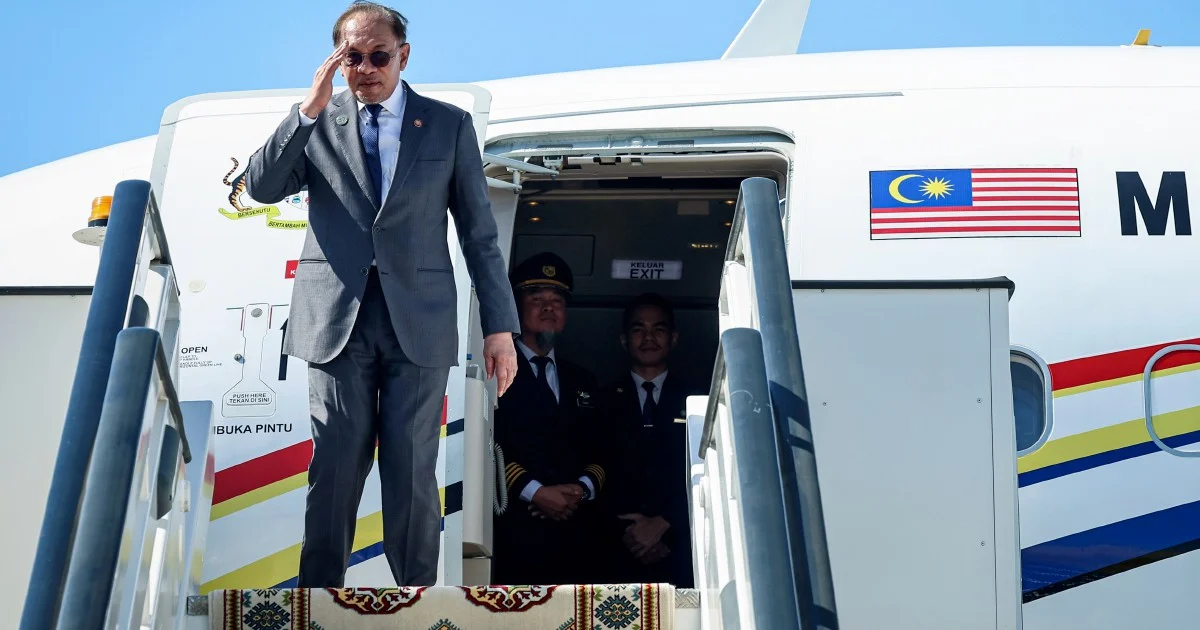
Prime Minister Datuk Seri Anwar Ibrahim has touched down in Penang immediately following the conclusion of his official visit to Turkmenistan, marking a continuation of his diplomatic engagements with a series of domestically focused commitments. The Premier's arrival in the northern state signals the government's intention to maintain momentum on multiple fronts, balancing international relations with pressing domestic priorities ranging from media engagement to economic development initiatives.
Among the foremost events on Anwar's Penang itinerary is his participation in the National Journalists' Day (Hawana) 2026 grand finale. This annual commemoration, which celebrates the nation's media professionals and their role in democratic discourse, provides a significant platform for the government to underscore its commitment to press freedom and the vital function journalists serve in accountability and public information. The Prime Minister's presence at this gathering carries symbolic weight, particularly in a media environment where the government's relationship with the press remains a subject of ongoing discussion among both practitioners and observers.
The timing of Anwar's visit to Penang reflects the government's strategic approach to regional engagement. Penang, as one of Malaysia's most economically dynamic states and a traditional centre of political activity, offers an ideal venue for showcasing the administration's achievements and soliciting support for its economic agenda. The state's significance as a manufacturing and technology hub, coupled with its status as an important trade gateway, makes it a logical destination for investment-related discussions that complement the Prime Minister's broader economic diplomacy.
Anwar's immediately preceding visit to Turkmenistan underscores Malaysia's diplomatic outreach beyond traditional regional partnerships. Central Asia represents a relatively underexplored arena for Malaysian engagement, and visits to nations such as Turkmenistan signal the government's ambition to diversify its international relationships and explore new avenues for cooperation in trade, energy, and cultural exchange. Such bilateral interactions contribute to Malaysia's positioning as a serious player in global geopolitics, transcending the Southeast Asian sphere.
The investment events scheduled during the Penang leg of this journey are expected to address Malaysia's ongoing efforts to attract foreign direct investment and foster domestic entrepreneurship. These gatherings typically bring together government officials, business leaders, and investors to discuss market opportunities, policy frameworks, and sectoral growth prospects. For Penang, which competes actively with other Malaysian states for corporate investment, such high-profile government participation can reinforce the state's attractiveness as a destination for capital allocation.
The juxtaposition of international diplomacy with domestic economic engagement reflects contemporary prime ministerial responsibilities. Modern governance demands that leaders simultaneously manage foreign relations while remaining attuned to domestic economic needs and stakeholder interests. Anwar's compressed schedule—moving directly from Turkmenistan to Penang without extended breaks—exemplifies the intensity of executive responsibilities in the current geopolitical environment.
From a Malaysian perspective, the Prime Minister's visit carries implications for how the federal government views Penang's role in the national economy. The choice of venue for major announcements or policy discussions sends signals about government priorities and regional investment confidence. Penang's reception of the Prime Minister and the calibre of events arranged around his visit may influence investor perceptions of the state's political stability and business environment.
The National Journalists' Day celebration also serves a broader communicative purpose. These annual observances traditionally involve speeches and engagements that shape public discourse around press freedom, government transparency, and media responsibility. The Prime Minister's keynote remarks will likely touch upon these themes while articulating the administration's vision for media development and the relationship between government and the fourth estate.
Anwar's diplomatic schedule, combining international visits with domestic engagement, reflects Malaysia's balancing act between its regional leadership aspirations and attention to internal development priorities. The Central Asian connection, though not traditional, aligns with global trends toward expanded great power competition and Malaysia's interest in securing diverse economic and diplomatic relationships. Simultaneously, investment promotion within strategic Malaysian states remains crucial for sustaining economic growth and employment generation that underpin the government's political legitimacy.
The Penang visit ultimately demonstrates how modern prime ministerial duties encompass rapid transitions between foreign capitals and domestic priorities. Whether participating in journalists' commemorations or facilitating investment dialogues, the Prime Minister remains engaged in activities designed to advance Malaysia's economic competitiveness, strengthen democratic institutions, and position the nation favourably within an evolving international system. The success of these Penang engagements will likely be measured not merely in immediate outcomes but in their contribution to broader government objectives around media relations, regional economic development, and international standing.

