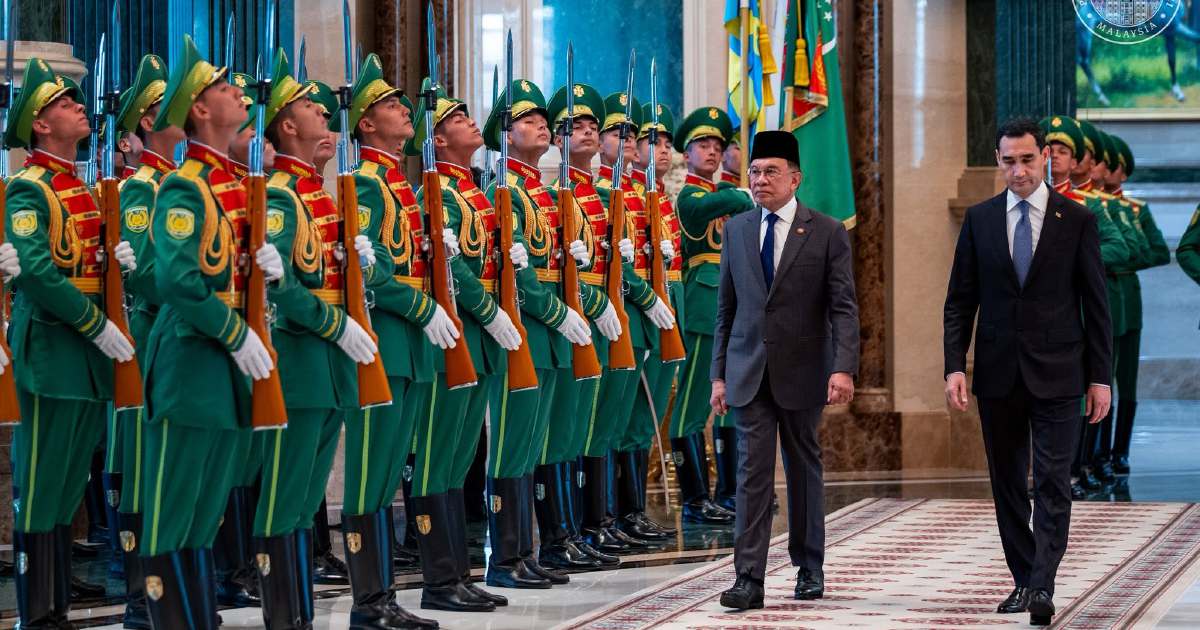
Prime Minister Datuk Seri Anwar Ibrahim was received with full ceremonial honours at the Presidential Palace in Ashgabat today, underscoring the significance Turkmenistan places on strengthening bilateral ties with Malaysia. The official welcome, featuring the customary protocol reserved for heads of government, comes as part of Anwar's first state visit to the Central Asian nation since assuming office as premier.
This visit represents a pivotal moment in Malaysia-Turkmenistan relations, as both nations look to deepen economic and diplomatic partnerships across multiple sectors. The formal reception at the Presidential Palace signals Turkmenistan's commitment to elevating engagement with Southeast Asia's leading economies and reflects growing interest from Central Asian nations in building stronger bridges with the dynamic region.
For Malaysia, the visit to Turkmenistan carries strategic importance in expanding the country's diplomatic footprint beyond traditional spheres of influence. Central Asia remains relatively underexplored territory for Malaysian foreign policy, yet the region presents significant opportunities for trade, investment, and cultural exchange. By undertaking this official state visit, Anwar is positioning Malaysia as an engaged and serious partner willing to cultivate relationships across diverse geographies and cultural contexts.
Turkmenistan's emphasis on ceremonial protocol during Anwar's arrival underscores the respect both governments accord to this bilateral engagement. Such formal welcomes are typically reserved for visits of considerable importance, suggesting that substantive discussions regarding cooperation frameworks, trade agreements, and regional initiatives are on the agenda. The presidential-level reception indicates that Ashgabat views Malaysia as a valuable counterpart in advancing mutual interests.
The visit occurs against a broader backdrop of Malaysian diplomacy seeking to diversify economic partnerships and secure alternative markets for Malaysian goods and services. Turkmenistan, strategically located along the historic Silk Road and rich in natural gas reserves, represents potential opportunities for Malaysian companies in energy, manufacturing, and technology sectors. Additionally, Malaysia's experience in Islamic finance and governance could offer valuable knowledge-sharing opportunities with a nation navigating its own development pathway.
From a regional perspective, Malaysia's outreach to Central Asia complements broader Southeast Asian efforts to strengthen connectivity with countries along the Belt and Road Initiative corridors. By engaging directly with nations like Turkmenistan, Malaysia enhances its diplomatic leverage and demonstrates independence in pursuing bilateral relationships beyond traditional frameworks. This approach aligns with Malaysia's long-standing policy of maintaining strategic autonomy while deepening cooperative ties with partners worldwide.
The timing of Anwar's visit may also signal Malaysia's interest in Central Asian perspectives on regional security, economic development, and geopolitical stability. As Central Asian nations grapple with infrastructure development and resource management, Malaysian expertise in governance, economic planning, and regional cooperation could prove mutually beneficial. Conversely, Turkmenistan's experiences in managing energy resources and regional diplomacy could inform Malaysian policy considerations.
Turkmenistan, as a major natural gas producer and an important player in Central Asian geopolitics, maintains strategic significance for global energy security and regional stability. Malaysia's engagement with Ashgabat reflects broader Asian interest in establishing stable, predictable relationships with Central Asian counterparts. Such diplomatic outreach contributes to reducing regional tensions and fostering dialogue among diverse stakeholders across the Eurasian continent.
The official welcome ceremony represents more than ceremonial courtesy; it demonstrates both nations' commitment to transforming bilateral relations from basic diplomatic recognition into substantive partnership. The discussions likely to follow this formal reception will probably address trade promotion, investment frameworks, educational exchanges, and coordination on international issues of mutual concern. These conversations could lay groundwork for long-term collaboration benefiting both Malaysian and Turkmen citizens.
For Malaysian observers, this visit highlights the government's broader strategic vision of engaging with non-traditional partners and expanding Malaysia's global influence. By venturing into Central Asia, Anwar signals that Malaysia remains committed to playing an active role in international affairs while pursuing pragmatic economic and diplomatic objectives. The success of this visit could open doors for future Malaysian engagement across the broader Central Asian region, including engagement with countries like Kazakhstan, Kyrgyzstan, and Tajikistan.
The Presidential Palace reception also carries symbolic weight in demonstrating Malaysia's respect for Turkmenistan's sovereignty and cultural traditions while asserting Malaysia's status as an important Asian economy worthy of high-level diplomatic engagement. Such mutual recognition of importance forms the foundation for constructive bilateral relationships that can withstand political changes and navigate international complexities.