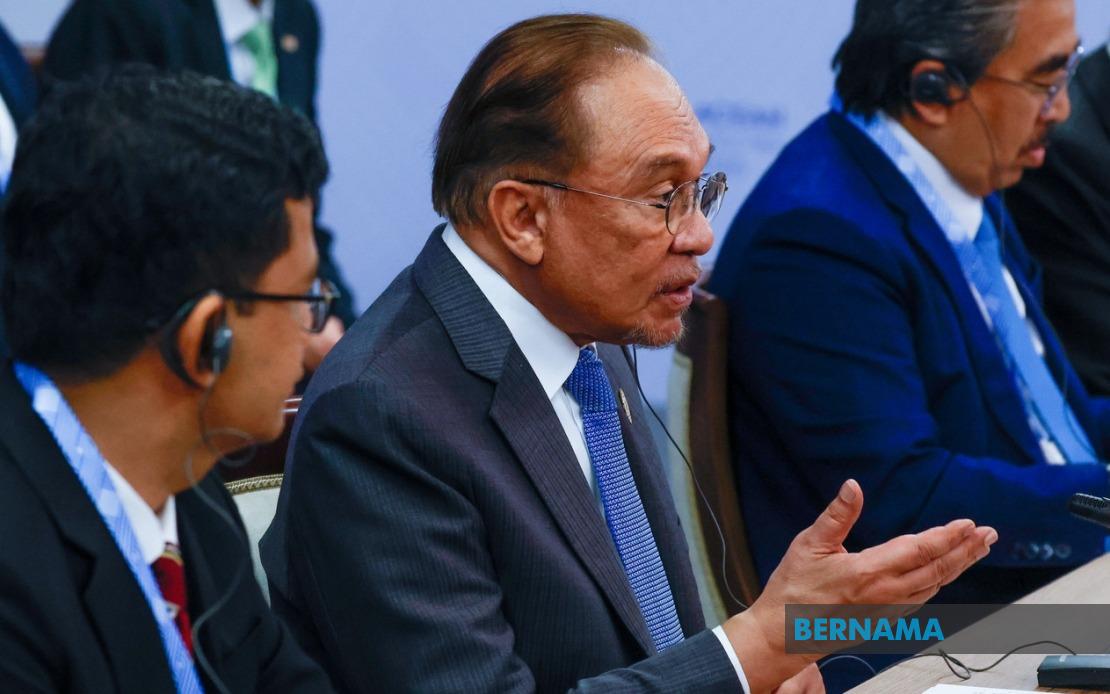
Prime Minister Datuk Seri Anwar Ibrahim used his meeting with Russian President Vladimir Putin in Kazan on Wednesday to commend Moscow's unwavering diplomatic position on two of the Middle East's most volatile flashpoints: the ongoing Gaza conflict and the broader tensions surrounding Iran. Speaking in opening remarks at their bilateral session, Anwar specifically highlighted what he characterised as Russia's principled consistency in navigating these complex geopolitical challenges, signalling Malaysia's appreciation for an approach that eschews partisan posturing in favour of measured diplomacy.
The Malaysian leader's public endorsement of Russian policy carries particular significance given Malaysia's own stated commitment to finding peaceful resolutions to regional disputes. By articulating admiration for what he termed Russia's tenacity and conviction, Anwar positioned Malaysia within a broader coalition of nations seeking alternatives to military escalation and unilateral action in Middle Eastern affairs. His remarks reflect a strategic calculation that emphasises dialogue and principled positions over alignment with Western-led approaches to these contentious issues.
Russia's position on Gaza has centred on advocating for ceasefire arrangements that would halt the cycle of violence and enable humanitarian access for Palestinian civilians affected by the conflict. Moscow has consistently called for diplomatic solutions grounded in international law and the rights of affected populations, contrasting its approach with positions that emphasise security concerns without corresponding attention to civilian welfare. This stance has resonated with nations in the Global South that view the conflict through a lens prioritising humanitarian considerations and self-determination.
On Iran specifically, Russia maintains a notably different trajectory from many Western powers, having pursued sustained diplomatic engagement and economic ties with Tehran despite international sanctions regimes. Moscow's advocacy for negotiated settlements rather than military confrontation reflects both historical relations and strategic interests, but also a principled rejection of interventionism as a solution to regional problems. For Malaysia and other Southeast Asian nations, Russia's approach offers a template for how major powers can maintain constructive relationships without abandoning core principles.
The geopolitical landscape surrounding these issues remains intensely competitive. The United States, Russia, and China all maintain significant interests in the Middle East, yet their approaches diverge markedly. While Western powers have generally emphasised containment and sanctions strategies, Russia has prioritised diplomatic channels and maintained communication with all parties to regional disputes. This distinction shapes how smaller nations like Malaysia assess which partnerships and policy frameworks best serve their own interests and values.
Malaysia's own position on Gaza has been notably vocal, with parliamentary constituencies and civil society organisations expressing strong support for Palestinian rights and calls for international action to address humanitarian concerns. Anwar's public acknowledgment of Russia's consistent stance thus represents alignment with domestic sentiment while also signalling to the international community that Malaysia sees value in approaches prioritising humanitarian principles and diplomatic solutions over military intervention.
The bilateral meeting in Kazan itself underscores the importance both countries attach to their relationship. Russia and Malaysia maintain extensive economic and strategic ties spanning energy, technology, and regional security cooperation. By publicly commending Russian diplomatic positions on issues of concern to Malaysia's population, Anwar reinforces the bilateral relationship while simultaneously positioning Malaysia within a broader non-aligned movement sceptical of Western-led international orders.
The emphasis on consistency and principle in Anwar's remarks carries deeper meaning within diplomatic circles. In an era of shifting alliances and transactional foreign policy, nations increasingly value partners whose positions remain grounded in identifiable principles rather than opportunistic calculations. Russia's sustained engagement with both Palestinian concerns and Iranian diplomatic channels, despite international pressure and sanctions, demonstrates the kind of principled consistency that appeals to nations seeking reliable long-term partnerships.
For Southeast Asia more broadly, Malaysia's public valorisation of Russian diplomatic approaches signals that regional nations are actively evaluating alternative frameworks for addressing international crises. While ASEAN maintains official neutrality on many global disputes, individual members increasingly articulate positions reflecting their values and strategic interests. Malaysia's stance on Gaza and Iran reflects both genuine humanitarian concerns and a calculated effort to position itself as a voice for the Global South in international forums.
The timing of these remarks also merits consideration. Both Gaza and Iran remain dynamic situations with potential for escalation, making consistent international messaging around diplomatic solutions increasingly important. By publicly crediting Russia's steadfastness on these issues, Anwar contributes to international pressure for restraint and negotiation at moments when tensions might otherwise lead to military confrontation.
Looking forward, Malaysia's endorsement of Russian diplomatic positions may influence how other Southeast Asian nations frame their own approaches to Middle Eastern crises. As the region increasingly asserts independent foreign policies less beholden to Cold War-era alignments, such public affirmations of particular diplomatic approaches serve as subtle signals of preference and principle that shape regional consensus and international positioning.

