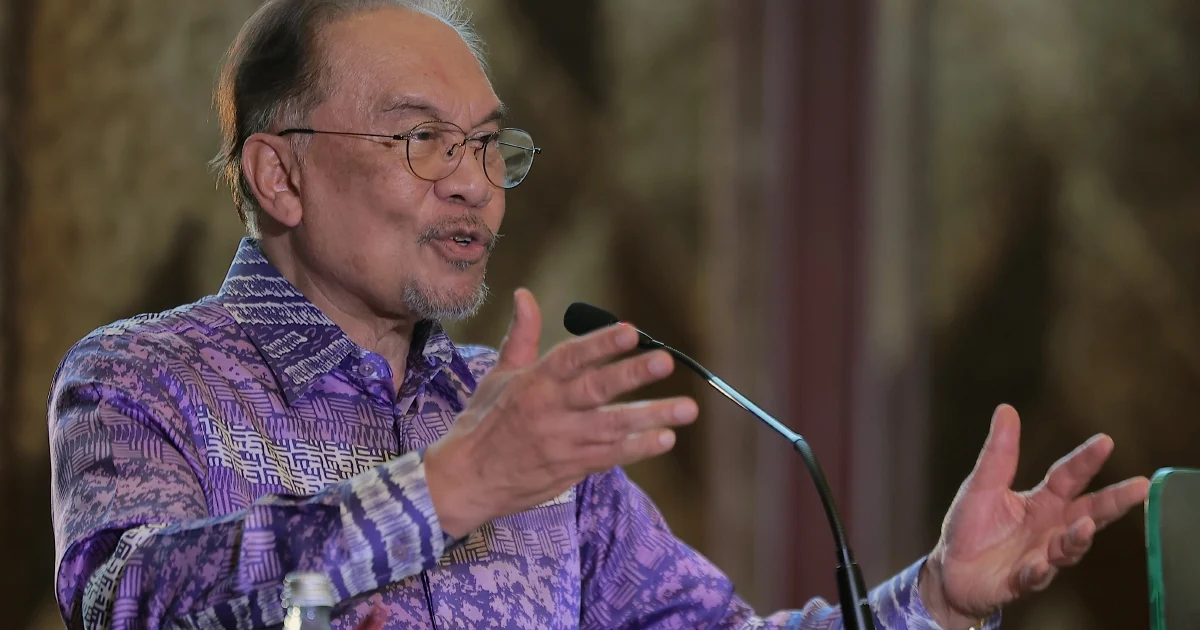
Prime Minister Datuk Seri Anwar Ibrahim will embark on a two-day working visit to Kazan beginning June 17, where he is expected to meet with Rais of the Republic of Tatarstan Rustam Minnikhanov as part of a broader diplomatic initiative to reinforce Malaysia's relationship with Russia and advance collective Southeast Asian engagement with Moscow.
The visit represents a significant moment for Malaysia's foreign policy positioning, particularly as the country navigates complex geopolitical currents in the region. Anwar's travel to Russia's economic heartland in the Volga region underscores Kuala Lumpur's commitment to maintaining substantive diplomatic relations beyond traditional Western-aligned partnerships, a stance that reflects Malaysia's longstanding non-aligned foreign policy tradition.
Kazan, the capital of Tatarstan, has emerged as a crucial hub for international cooperation and economic development in Russia's federal structure. The city hosts major international forums and serves as a platform for bilateral and multilateral engagements. The selection of Kazan as the venue for high-level Malaysian representation suggests that the discussions will encompass not merely ceremonial exchanges but substantive matters touching on trade, investment, cultural ties, and regional security considerations.
Rustam Minnikhanov, as the elected leader of Tatarstan, wields considerable influence within Russia's political and economic landscape. The autonomous republic has developed significant capabilities in petroleum refining, petrochemicals, and aerospace manufacturing, sectors where Malaysian interests intersect. The meeting between Anwar and Minnikhanov therefore carries commercial implications alongside its diplomatic dimensions, potentially opening avenues for Malaysian businesses to explore partnerships and access opportunities within the Tatarstan economy.
Malaysia's engagement with Russia has historically been characterized by pragmatism and mutual respect for sovereignty. The current visit builds upon this foundation at a time when broader geopolitical alignments are shifting. ASEAN members have collectively sought to maintain balanced relationships with major powers, and Malaysia's diplomatic initiatives reflect this regional consensus. By strengthening ties with Russia directly, Anwar reinforces the bloc's strategic autonomy and its capacity to engage with Moscow on matters of mutual concern.
The diplomatic engagement carries particular relevance given ongoing regional tensions and the importance of maintaining stable communication channels with all major powers. Russia's role in shaping international affairs, particularly in areas adjacent to Southeast Asia's extended strategic environment, makes sustained dialogue essential for regional stability. Malaysia's proactive engagement demonstrates its willingness to invest diplomatic capital in relationships that transcend conventional alliance patterns.
Asean-Russia cooperation remains a nascent but potentially fruitful avenue for regional development. The organization has sought to build stronger institutional frameworks with Moscow, and bilateral visits by senior government officials facilitate the momentum for broader collective engagement. Anwar's visit signals that Malaysia, as an ASEAN member, views deepening relationships with Russia as complementary to rather than competitive with the bloc's other partnerships.
The timing of the visit also reflects Malaysia's calendar of diplomatic activities and engagement with major powers. Such high-level visits typically follow careful planning and preparation, with technical teams and diplomats having laid groundwork for substantive discussions. The working nature of the visit suggests that concrete outcomes may emerge, whether through joint statements, commercial agreements, or renewed commitments to ongoing cooperation frameworks.
Bilateral economic relations between Malaysia and Russia have space for expansion. Russian investments in Malaysian sectors such as energy and technology remain modest relative to potential, while Malaysian investors have similarly limited presence in the Russian market. The visit provides an opportunity to identify sectors where mutual benefits can be achieved and to remove barriers that may hinder commercial engagement between the two nations.
Cultural and people-to-people exchanges represent another dimension of Malaysia-Russia relations that diplomatic visits can strengthen. Educational collaborations, tourism development, and artistic exchanges all contribute to deeper mutual understanding and relationship sustainability. The Malaysian embassy in Russia and its counterpart in Kuala Lumpur continuously work to foster these connections, and high-level political visits reinforce their efforts by signaling government commitment to relationship cultivation.
The visit also reflects Malaysia's status as a respected voice within ASEAN and its role in shaping the bloc's international engagements. As ASEAN chair rotations occur and strategic priorities evolve, Malaysia's diplomatic initiatives contribute to shaping the narrative around Southeast Asian autonomy and strategic partnerships. The Kazan visit demonstrates that Kuala Lumpur continues to pursue an independent foreign policy that serves national interests while respecting ASEAN's collective identity and positions.
Looking forward, the outcomes of Anwar's Kazan visit will likely influence the trajectory of Malaysia-Russia relations over the coming months and potentially shape ASEAN's broader engagement with Russia. Whether through enhanced trade mechanisms, expanded educational cooperation, or coordinated positions on regional issues, the visit promises to deepen connections between Malaysia and Russia in ways that benefit both nations and contribute to a more stable and balanced regional order.

