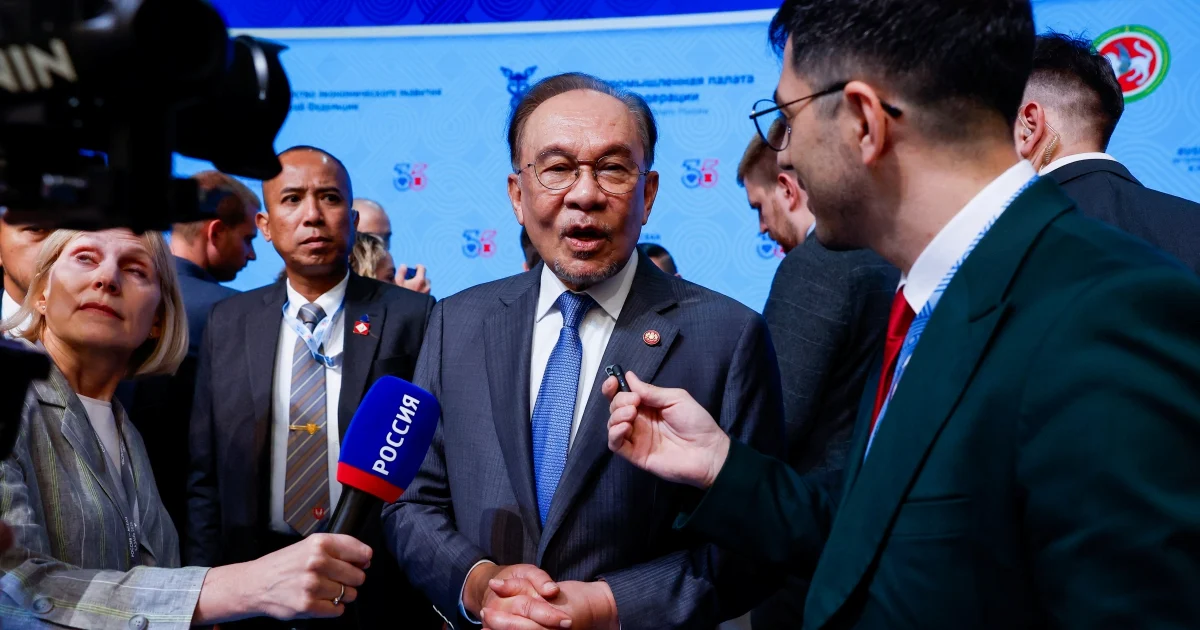
During his time in Kazan, Prime Minister Datuk Seri Anwar Ibrahim has made remarks highlighting a personal connection to Russian cultural traditions, specifically citing his enjoyment of Russian music and literature. The statement reflects a broader diplomatic philosophy that positions artistic and intellectual exchanges alongside conventional trade relationships as equally critical mechanisms for deepening bilateral bonds between countries.
Anwar's public acknowledgement of his appreciation for Russian cultural works serves multiple diplomatic purposes in the contemporary geopolitical landscape. By articulating personal engagement with another nation's artistic heritage, senior officials often signal openness to broader engagement and mutual respect that extends beyond transactional commercial interests. For Malaysia, a country increasingly seeking to diversify its international partnerships and strengthen regional influence, such cultural overtures carry significance in demonstrating non-aligned flexibility and genuine interest in understanding partner nations on multiple levels.
The emphasis on cultural exchange as a counterpart to economic cooperation reflects evolving perspectives on nation-building diplomacy in Southeast Asia. While Malaysia has traditionally prioritised trade, investment, and infrastructure development in its foreign relations, the recognition that soft power—encompassing arts, literature, education, and intellectual discourse—constitutes an equally valuable diplomatic tool represents strategic maturation. This approach aligns with broader trends across ASEAN nations, where countries increasingly recognise that sustainable partnerships require cultural understanding and people-to-people connections alongside government-to-government transactions.
Russia itself has invested considerably in cultural diplomacy across Asia and the Middle East, using literature, music, and educational exchanges as avenues for influence where Western dominance in popular culture remains strong. Russian classical music and nineteenth-century literature have enduring appeal in educated circles globally, and Russian cultural institutions actively promote their artistic heritage as soft power assets. Anwar's acknowledgement of this cultural output, whether or not driven by genuine personal preference, positions Malaysia as a receptive audience for Russian cultural initiatives and signals willingness to engage across multiple domains.
The timing of such remarks during a visit to Kazan, a historically significant cultural and educational hub in Russia, underscores their diplomatic intentionality. Kazan serves as a centre of Russian intellectual life and has long hosted prominent cultural institutions. By framing cultural appreciation as integral to bilateral relations while physically present in such a location, Anwar reinforces the message that Malaysia approaches Russia with multifaceted interests rather than narrow commercial objectives alone. This subtly communicates respect for Russian civilisation and intellectual traditions at a moment when Western nations have increasingly isolated Russia diplomatically and culturally.
For Malaysian audiences, particularly intellectuals, academics, and cultural practitioners, the Prime Minister's remarks validate the importance of cross-cultural engagement despite geopolitical tensions elsewhere. Malaysia's own multicultural identity has historically benefited from openness to diverse cultural influences, and official endorsement of continued exposure to international artistic traditions aligns with this foundational national principle. The statement implicitly argues that cultural boundaries should remain permeable even when political relationships face complexity or strain.
The articulation of personal literary interests also positions Anwar as a leader of intellectual depth and refined sensibilities, dimensions that resonate particularly with educated constituencies who value cultural literacy and global awareness. Literature and music serve as markers of educational sophistication in many societies, and by citing these preferences, national leaders often communicate that their foreign policy emerges from informed, nuanced understanding rather than mere pragmatic calculation. This dimension may prove particularly relevant given ongoing discussions about Malaysia's international standing and leadership competence.
The broader context of Malaysia-Russia relations suggests that such cultural overtures, while genuine, occur alongside practical considerations. Malaysia maintains careful diplomatic balance between Western alliances and relationships with non-aligned powers, and cultural engagement provides low-risk avenues for strengthening ties without triggering international criticism. Unlike explicit military cooperation or economic integration, cultural exchange initiatives face minimal opposition from Western partners while simultaneously deepening relationships with strategic alternatives.
For Southeast Asia more broadly, the Malaysian approach to cultural diplomacy with Russia carries implications. ASEAN nations collectively maintain strategic autonomy and resist pressure to choose exclusively between competing powers. Official embrace of Russian cultural contributions—at a moment when Western sanctions and isolation dominate international media coverage—subtly reinforces regional independence and non-alignment principles. This positions ASEAN states as arbiter of their own cultural consumption and relationship-building, free from external pressure regarding legitimate international engagement.
Anwar's remarks also reflect generational shifts within Malaysian leadership regarding openness to diverse international influences. Younger diplomatic cohorts have grown up with globalised access to world literature, music, and cinema, and treat cross-cultural appreciation as natural rather than ideologically fraught. This contrasts with earlier eras when cultural preferences sometimes became proxies for Cold War allegiances or postcolonial positioning. The ability to enjoy Russian songs and literature without requiring elaborate ideological justification represents evolved maturity in Malaysian international relations.
Looking forward, such cultural diplomatic initiatives may become increasingly important as Malaysia navigates complex relationships with major powers while pursuing independent foreign policy objectives. Cultural exchanges, academic partnerships, and artistic collaborations provide vehicles for relationship-maintenance that avoid the scrutiny and controversy accompanying military or sensitive commercial agreements. Investment in mutual cultural understanding, regardless of periodic political disagreements, builds resilience into long-term bilateral relationships.

