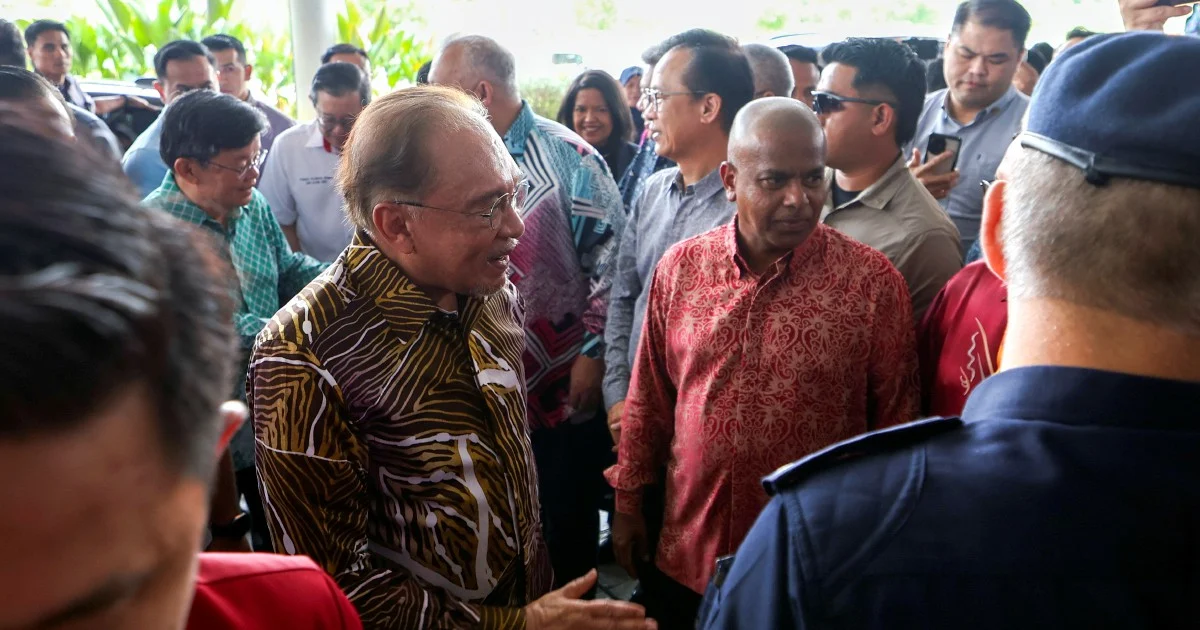
Prime Minister Datuk Seri Anwar Ibrahim has hailed Turkmenistan's decision to award two major gas fields to Petroliam Nasional Bhd (Petronas) as a significant achievement for Malaysia's long-term energy security and economic resilience. Speaking at Permatang Pauh, the premier characterised the development as marking a crucial turning point for the nation's hydrocarbon exploration portfolio and underscored Petronas's renewed capacity to compete on the global stage for upstream assets.
The allocation of these substantial gas fields represents a strategic breakthrough for Malaysia's state-owned energy company, which has faced intensifying competition from international oil majors and emerging economies for access to untapped reserves in Central Asia. Turkmenistan, blessed with some of the world's largest natural gas deposits, has traditionally been cautious in distributing exploration rights, making Petronas's successful bid particularly noteworthy. The deal signals enhanced diplomatic ties between Kuala Lumpur and Ashgabat, positioning Malaysia as a trusted partner in one of the globe's most geopolitically complex energy regions.
For Malaysia, a nation heavily dependent on energy revenues and facing gradual depletion of conventional onshore and offshore reserves, securing new exploration acreage abroad provides essential hedging against future supply constraints. The domestic gas production capacity has plateaued in recent years, and reliance on imports threatens the country's energy independence narrative. By establishing operations in Turkmenistan, Petronas can potentially supply feedstock for Malaysian liquefied natural gas (LNG) facilities, including the strategically important Bintulu LNG complexes, which remain engines of foreign exchange earnings and industrial development in East Malaysia.
The geopolitical dimensions of this arrangement merit careful attention. Turkmenistan sits at the intersection of Russian, Chinese, and Western energy interests, making any foreign investment there fraught with diplomatic sensitivities. Malaysia's success in securing these acreages demonstrates both diplomatic finesse and Petronas's technical credibility among international peers. The deal also reflects broader regional dynamics, where Southeast Asian nations are increasingly cultivating energy partnerships beyond traditional suppliers, reducing vulnerability to supply disruptions or price manipulation by dominant producers.
Petronas's operational expertise and capital deployment capacity have proven decisive in competing for these assets. The company brings decades of experience managing complex offshore developments in the South China Sea and across the region, technical capabilities that Turkmenistan values when evaluating which international partners can efficiently extract and commercialise its hydrocarbon wealth. The company's track record in managing gas monetisation—particularly through LNG production and downstream value addition—would have been attractive to Ashgabat's policymakers considering long-term revenue optimisation.
Economically, the venture carries substantial implications for Malaysian budgetary receipts and balance-of-payments positioning. Gas revenues have historically constituted a meaningful portion of Malaysia's federal revenues, particularly during periods of elevated commodity prices. New production streams from Turkmenistan, once brought into production, will extend the revenue horizon for the national government and provide stability to fiscal planning over the coming decades. Moreover, the investment itself generates employment opportunities for Malaysian petroleum engineers, project managers, and support services across the value chain.
The transaction underscores Malaysia's transition toward a multi-asset, diversified energy producer model. Rather than relying solely on domestic reserves, the nation's premier energy corporation is actively expanding geographical footprint across promising basins worldwide. This strategic reorientation mirrors global best practices among national oil companies, which increasingly view international exploration as essential to maintaining production and reserve replacement ratios in an era of energy transition and declining conventional demand growth.
However, challenges remain on the horizon. Converting exploration acreages into commercial production requires substantial capital investment, successful well drilling, and securing buyers or pipeline offtake agreements. Central Asian gas markets remain underdeveloped compared to Southeast Asian LNG hubs, necessitating either pipeline connections to existing markets or developing new monetisation pathways. The global energy transition, accelerating demand for renewable electricity, and mounting pressure from international financial institutions to divest from fossil fuel projects create headwinds that developers must navigate skillfully.
For Malaysian stakeholders, the Turkmenistan awards represent tangible progress in Petronas's international upstream strategy and a validation of the company's capabilities among sophisticated hydrocarbon-rich nations. The broader message signals that Malaysia remains a serious player in global energy markets, capable of competing for premium assets and delivering value to operating partners and governments alike. As the country transitions its economy while maintaining energy sector revenues, such international achievements become increasingly vital to sustaining investor confidence and macroeconomic stability.
The timing of this announcement also reflects Malaysia's renewed diplomatic engagement in Central Asia and the broader Indo-Pacific region, areas gaining heightened geopolitical prominence. By expanding Petronas's footprint eastward into this strategically significant zone, Malaysia enhances its influence networks and reinforces its positioning as a bridge between diverse economic blocs. The gas field awards thus transcend purely commercial dimensions, carrying implications for Malaysia's soft power and strategic autonomy in an increasingly multipolar international energy landscape.

