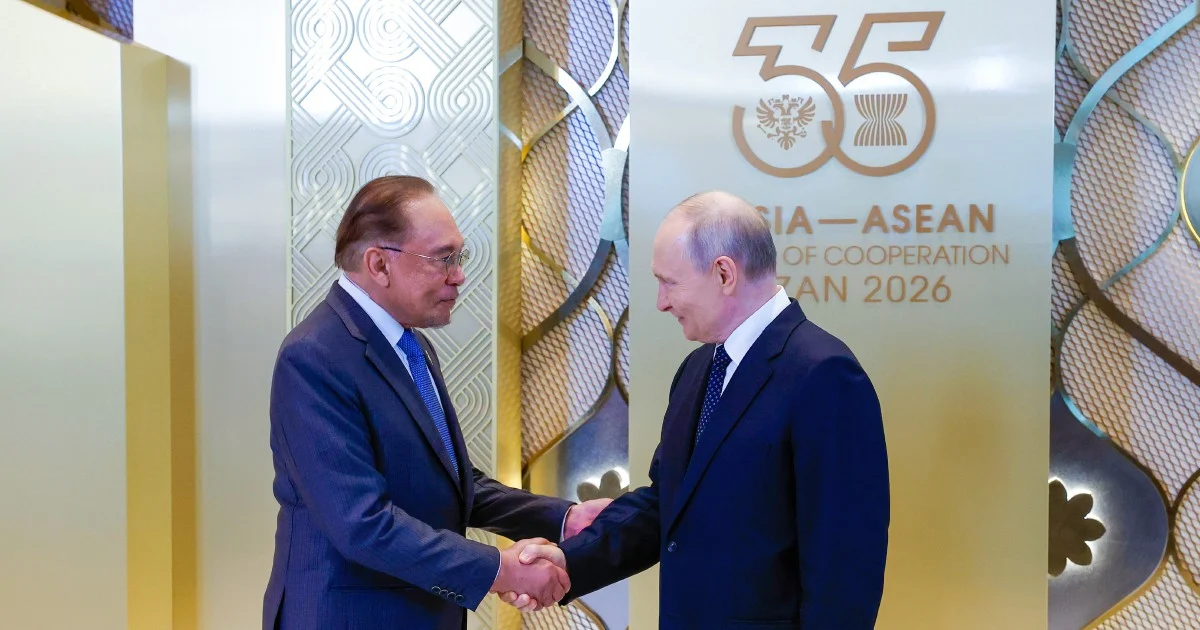
Prime Minister Datuk Seri Anwar Ibrahim and Russian President Vladimir Putin have opened discussions on reinforcing the bilateral relationship between Malaysia and Russia, with particular emphasis on energy cooperation and mechanisms to expand commercial activity through direct currency transactions rather than using third-party currencies like the US dollar.
The talks, held in Kazan, represent an important moment for Malaysia's strategic positioning amid evolving global economic structures. For Anwar's administration, the engagement reflects a calculated approach to diversifying Malaysia's international partnerships and securing long-term energy supplies at a time when regional demand continues to grow. Russia remains a significant energy producer despite international sanctions, and exploring energy security arrangements with Moscow could provide Malaysia with additional sources for oil and liquefied natural gas, reducing dependence on traditional suppliers and potentially stabilising energy costs.
The emphasis on conducting trade in local currencies—Malaysian ringgit and Russian rouble—carries considerable significance beyond mere commercial convenience. This mechanism reduces exposure to dollar fluctuations and transaction costs while simultaneously building financial infrastructure that bypasses Western-dominated payment systems. For Malaysia, a country with considerable trade ambitions across multiple regions, such arrangements strengthen economic sovereignty and offer flexibility in international dealings. The trend also reflects broader Southeast Asian efforts to de-dollarise commerce, a development that could reshape regional financial dynamics over the coming decade.
Energy security remains central to Malaysia's development trajectory. The nation requires substantial hydrocarbon imports to fuel its manufacturing sector and support electricity generation, particularly as industrial activity expands and urbanisation accelerates. By cultivating closer ties with Russia on energy matters, Malaysia expands its negotiating leverage with existing suppliers and creates alternative pathways for procurement. This is especially relevant given ongoing uncertainties in Middle Eastern oil markets and potential disruptions along major maritime trade routes that Malaysia depends upon.
The bilateral relationship between Malaysia and Russia has historically been modest compared to ties with other major powers, yet both nations share interests in maintaining constructive engagement across multiple sectors. Malaysia's non-aligned foreign policy tradition positions the country as a natural bridge between Western-aligned and alternative centres of power, a role that requires sustained diplomatic channels with Moscow. Anwar's outreach demonstrates recognition that comprehensive national interests demand engagement across ideological divides.
Trade expansion through local currency mechanisms also addresses practical business concerns. Malaysian companies exporting to Russia or purchasing Russian goods face currency conversion expenses and delays when transacting through intermediary currencies. Direct ringgit-rouble exchanges streamline these processes, making bilateral commerce more attractive to private enterprises. This could stimulate growth in sectors ranging from agricultural products to machinery, benefiting Malaysian exporters seeking to diversify market destinations.
For Russia, engagement with Malaysia and other Southeast Asian nations provides crucial economic counterweight to Western sanctions and international isolation. Malaysia, as a large Muslim-majority nation with considerable regional influence, carries diplomatic weight that Moscow values. Expanding economic ties with Southeast Asian partners helps Russia maintain geopolitical relevance and secure markets for its energy exports and manufactured goods, particularly as European markets become increasingly inaccessible.
The discussion also reflects Malaysia's broader hedging strategy in international relations. As pressures mount globally regarding alignment with either the Western bloc or alternative arrangements, Malaysia maintains a pragmatic stance of engaging all major powers while protecting its autonomous decision-making. This approach serves Malaysian interests by preventing forced choices and maximising the nation's leverage in multilateral negotiations affecting trade, climate policy, and regional security.
Energy cooperation specifically carries immediate practical benefits. Malaysia's power generation mix requires diversification beyond current sources, and Russian liquefied natural gas could supplement existing suppliers. Long-term supply contracts negotiated during such high-level discussions often result in more stable pricing than spot market purchases, providing certainty for Malaysian utilities and manufacturers dependent on consistent energy availability.
The currency dimension warrants particular attention for regional observers. If Malaysia and Russia successfully implement local currency trading at significant scale, other Southeast Asian nations may follow similar paths with various trading partners. This incremental shift in payment mechanisms, multiplied across numerous bilateral relationships, gradually reshapes international financial architecture in ways that reduce dependency on any single currency system.
Anwar's engagement with Putin also signals to international observers that Malaysia intends to maintain balanced relationships rather than align exclusively with any single bloc. This positioning becomes increasingly valuable as global competition between different economic and political models intensifies. For Malaysian businesses and citizens, the cultivation of diverse partnerships creates more options and opportunities while reducing vulnerability to sudden shifts in international alignments.
Moving forward, the success of these discussions will depend on translating rhetoric into concrete agreements—establishing energy supply contracts, creating banking mechanisms for local currency transactions, and identifying sectors where bilateral investment can expand. Malaysian observers will watch closely whether discussions generate tangible commercial opportunities or remain primarily symbolic diplomatic gestures.

