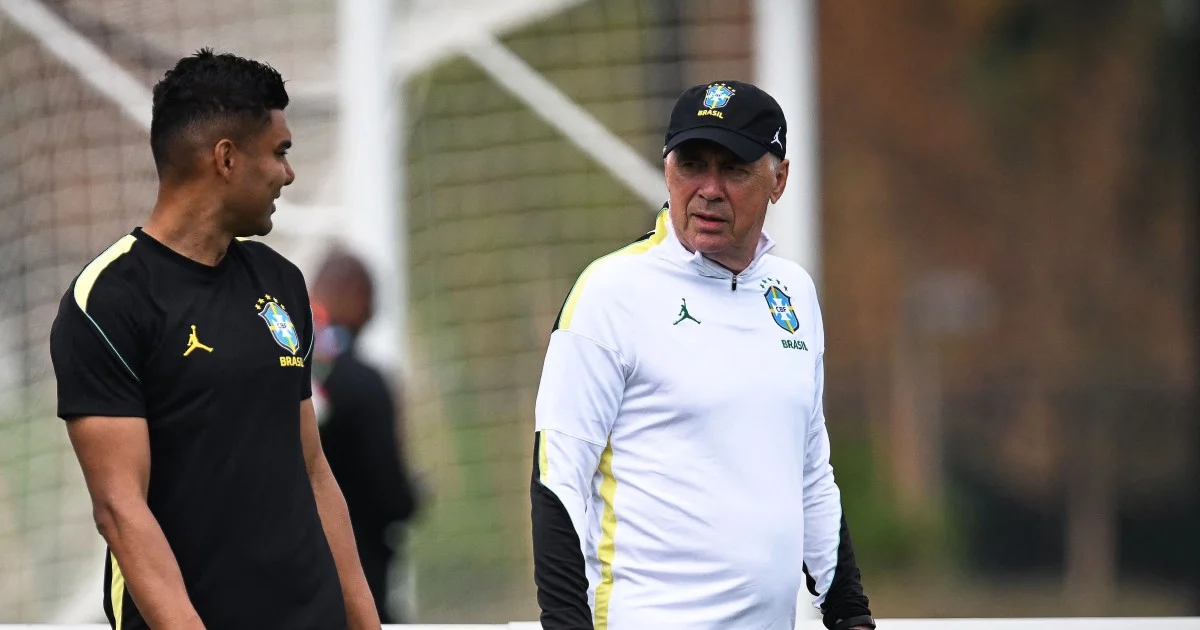
Brazil's World Cup campaign has gotten off to a tentative start, but coach Carlo Ancelotti is refusing to succumb to alarm despite the Seleção's failure to capitalize on their status as one of the tournament's favourites. The opening Group C fixture against Morocco ended in a 1-1 stalemate, leaving the five-time world champions searching for the intensity and cohesion that defined their qualification campaign. Yet rather than viewing this setback as a catastrophic failure, Ancelotti sees the upcoming Friday encounter with Haiti in Philadelphia as precisely the kind of fixture Brazil needs to rebuild their credentials and identify the corrections required to contest the tournament's latter stages.
Ancelotti's measured approach reflects his extensive experience managing elite European clubs, where he has become accustomed to navigating the psychological pressures of high-stakes football. His refusal to panic after a single disappointing result suggests a coach confident in his squad's ability to rectify technical and tactical shortcomings without requiring wholesale personnel changes or radical strategic overhauls. This measured temperament can either prove prescient or prove disastrous, depending entirely on how Brazil performs against Haiti and subsequently how the side develops throughout the remainder of their group campaign.
The draw with Morocco exposed defensive vulnerabilities that will trouble Ancelotti considerably more than the result itself. Brazil's backline, despite featuring several players from Europe's leading clubs, appeared vulnerable to Morocco's organised pressing and direct attacking approach. The Moroccan side demonstrated that with proper structure and tactical discipline, even teams lacking Brazil's technical resources can trouble the Seleção. This tactical lesson, if properly absorbed and implemented, could prove invaluable as Brazil faces increasingly demanding opponents in the knockout stages.
Haiti, by contrast, represents a fundamentally different challenge from Morocco. The Caribbean nation lacks the collective organisation and defensive structure that made Morocco such an awkward opponent for Brazil. Instead, Haiti will likely focus on capitalising on set pieces and attempting to frustrate Brazil through physical commitment and direct play. From Ancelotti's perspective, this is an ideal scenario to work on aspects of Brazil's game that require attention without facing the kind of organised resistance that Morocco provided. The coach can deploy his full attacking arsenal, build confidence among his strikers, and provide opportunities for players to demonstrate their form and readiness.
Brazil's midfield region, where the team generated few clear-cut chances against Morocco, demands particular attention. The balance between controlling play and creating genuine attacking opportunities has eluded Ancelotti's side so far, suggesting that either the midfield personnel require adjustment or the tactical approach needs modification. Haiti's less compact defensive structure should provide Brazil with greater space to work with, allowing the coaching staff to conduct meaningful experiments with their build-up play and attacking transition strategies.
For Malaysian and Southeast Asian football followers, Brazil's World Cup trajectory carries significant implications. The Seleção's struggles align them temporarily with other tournament-favourites who have underperformed relative to expectations, creating genuine unpredictability in the competition's format. This unpredictability benefits smaller nations whose tactical discipline and organisation can occasionally overcome superior individual talent. Moreover, Brazil's potential struggles could reshape the narrative around South American football's current competitive standing relative to European powerhouses, a conversation that extends beyond this tournament to influence how continental confederations structure future competitions.
Ancelotti's experience managing Paris Saint-Germain, Bayern Munich, Real Madrid, and Everton means he understands the psychological dynamics of recovering from disappointing starts. Panic and wholesale criticism, he believes, typically generate more problems than solutions. Instead, systematic analysis of video footage, tactical adjustments, and incremental improvements form the basis of his recovery strategy. Against Haiti, supporters should expect Brazil to dominate possession, create numerous opportunities, and substantially improve upon their display against Morocco.
The Friday fixture also provides a platform for Brazil's attacking talent to showcase the prowess that made them tournament favourites initially. Neymar, Vinícius Júnior, and Brazil's other attacking assets require confidence-building performances, and Haiti represents an opponent against whom those players can operate with freedom and fluency. Ancelotti's calm demeanour suggests confidence that his squad possesses sufficient quality to navigate beyond these early complications, provided they execute the corrections he identifies during the coming days' preparation.
Ultimately, Ancelotti's composure will be tested only if Brazil fails to defeat Haiti convincingly. A commanding victory would validate his measured approach and suggest the opening draw against Morocco truly represented merely a tactical stumble rather than a symptom of deeper structural problems. Conversely, should Brazil falter again, Ancelotti's refusal to panic in the immediate aftermath might come to represent the kind of misplaced optimism that prevents necessary intervention during crucial moments. For now, however, the Brazilian coach's stability and experience suggest a team in temporary difficulty rather than genuine crisis.

