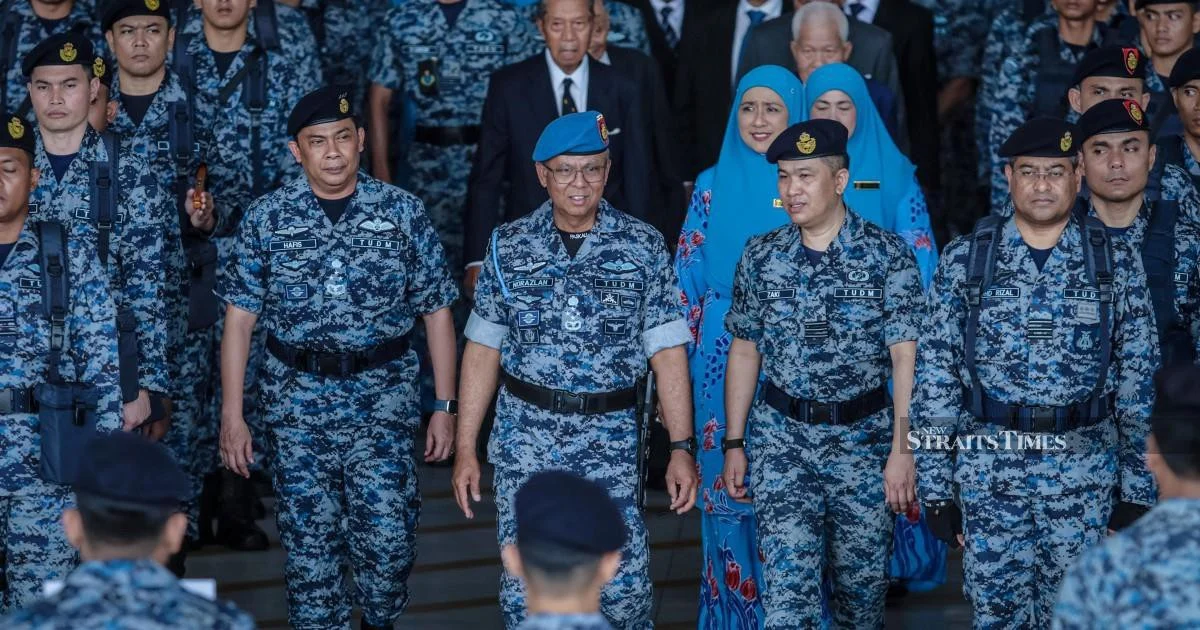
The Royal Malaysian Air Force has sounded an urgent call for strengthened aerial capabilities to protect Malaysia's extensive maritime interests, with chief General Tan Sri Muhamad Norazlan Aris warning that traditional security assumptions can no longer be relied upon in an increasingly turbulent regional environment. Speaking at Subang, the senior commander articulated concerns that extend beyond conventional maritime policing, pointing instead to the complex interplay of geopolitical pressures reshaping Southeast Asia's strategic landscape.
Malaysia's position as a major maritime nation places it at the intersection of some of the world's busiest shipping lanes, with the Strait of Malacca representing one of the most economically significant waterways globally. The country's economic prosperity depends substantially on unimpeded access to these routes, through which hundreds of billions of dollars in trade transit annually. Air power has become integral to monitoring and securing these passages, as maritime surveillance from the skies provides coverage that surface vessels alone cannot achieve across the vast distances involved.
The chief's emphasis on aerial capabilities reflects a broader regional military reality: the increasing sophistication of threats operating across maritime domains. These challenges range from irregular activities that evade conventional detection to more organised operations that demand rapid response capabilities. Air assets offer the speed and reach necessary to address threats quickly, a factor that becomes particularly valuable in a nation with Malaysia's geographical extent and the dispersed nature of its maritime claims.
Regional geopolitical dynamics have shifted noticeably in recent years, with multiple stakeholders asserting competing interests in Southeast Asian waters. Tensions in adjacent regions have spillover implications for Malaysia's security environment, while the modernisation of military capabilities among neighbouring nations continues at a steady pace. These developments create a pressure on Malaysian defence planners to ensure that the nation's aerial surveillance and response systems remain adequate for contemporary challenges rather than historical precedents.
The RMAF has long faced resource constraints that affect force modernisation and operational readiness. The service operates a fleet of maritime patrol and reconnaissance aircraft that are stretched across vast operational areas, with aging platforms requiring replacement and newer systems demanding significant capital investment. General Muhamad Norazlan Aris's public articulation of air power's importance carries implicit messaging about defence budget priorities, signalling to policymakers that aviation capabilities cannot be deferred indefinitely without accepting strategic risk.
Malaysia's maritime security challenges extend beyond military considerations into civilian spheres. Piracy, smuggling, illegal fishing, and human trafficking all persist as transnational problems requiring persistent aerial surveillance to combat effectively. Enhanced air capabilities would strengthen the nation's capacity to interdict these activities and coordinate with maritime law enforcement agencies, improving overall security across Malaysian waters and contributing to regional stability efforts.
The integration of air power with other maritime security instruments represents an operational necessity that defence planners must address comprehensively. Surface vessels, submarines, coastal radars, and maritime intelligence systems all depend on airborne assets for effective coordination. A comprehensive approach to maritime security cannot rely solely on any single platform or capability, yet air assets remain uniquely positioned to provide the wide-area surveillance and rapid response capacity that Malaysia's vast maritime domain requires.
From a Southeast Asian perspective, Malaysia's security concerns mirror those of other nations in the region managing extensive coastlines and maritime economic interests. The Philippines, Vietnam, and Indonesia all face similar pressures regarding maritime surveillance and protection. Statements from defence leaders across the region emphasising air capability requirements suggest a broader consensus that aerial modernisation has become a priority for regional maritime powers managing their interests in contested or congested waters.
The budgetary implications of the RMAF chief's remarks warrant attention from Malaysia's defence establishment and political leadership. Acquiring modern maritime patrol aircraft, upgrading surveillance systems, and maintaining trained personnel require sustained financial commitment extending across multiple budget cycles. The competing demands on government spending mean that defence investments must demonstrate clear strategic necessity, which General Muhamad Norazlan Aris's public advocacy appears designed to accomplish.
Looking forward, Malaysia faces decisions regarding which platforms and technologies best serve its maritime security interests, with considerations ranging from cost and maintenance requirements to operational effectiveness and interoperability with regional partners. The RMAF's stated requirement for enhanced air capabilities suggests that future defence acquisitions will likely prioritise maritime patrol and reconnaissance aircraft, whether through new purchases, refurbishment of existing systems, or collaborative arrangements with allied nations possessing complementary capabilities.