The Farmers' Organisation Authority (LPP) has embarked on an ambitious nationwide modernisation programme designed to transform its network of 90 agricultural retail outlets into competitive retail destinations comparable to established food and beverage chains and major retail operators. The initiative represents a strategic effort to enhance the market viability and consumer appeal of farmer-operated outlets operating under the Agricultural Farmers' Organisation (PPK) umbrella, addressing longstanding challenges around visibility and brand positioning in a crowded retail landscape.
According to Marlina Mohd, director of the LPP Economic Development Division, the modernisation effort has already brought tangible changes to 30 outlets, with comprehensive upgrades encompassing visual branding, promotional strategies, and product categorisation systems. These enhancements extend beyond superficial cosmetic improvements to include fundamental operational restructuring designed to improve consumer experience and facilitate inventory management. The director outlined an accelerated timeline for the programme, with plans to modernise an additional 30 outlets in the coming period, bringing the total upgraded stores to 60 of the 90-outlet network.
The strategic rationale underpinning this transformation reflects a broader recognition within the agricultural sector that farmer-operated retail must evolve beyond traditional models to capture contemporary consumer preferences. By adopting branding conventions, promotional mechanisms, and stock-keeping methodologies aligned with modern retail standards, these outlets can position themselves more effectively within competitive markets where consumer choice and purchasing convenience have become decisive factors. The approach acknowledges that farmer products, while often superior in quality and freshness, have historically struggled to gain market share against competitors with superior marketing and retail infrastructure.
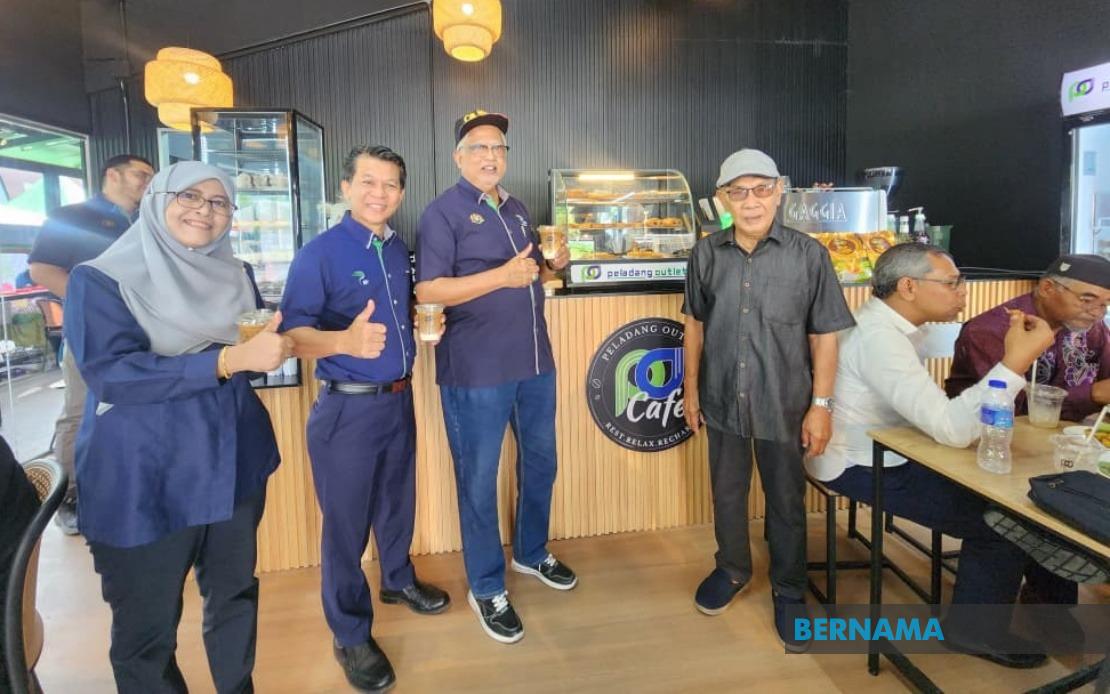
The LPP leadership demonstrated its commitment to this initiative by inaugurating the modernised Padang Siding PPK outlet during the 51st Farmers, Breeders, and Fishermen's Day celebrations held in Arau. The event, presided over by LPP chairman Datuk Mahfuz Omar and attended by director-general Amir Matamin, underscored the organisational significance attached to the retail modernisation agenda. The Padang Siding outlet serves as a flagship example of the envisioned transformation, showcasing how traditional farmer operations can be repositioned as contemporary retail venues.
Performance metrics from existing upgraded outlets provide encouraging indicators of consumer receptivity to the modernised format. The Padang Siding outlet, operational since April this year, has attracted more than 20,000 visitors within its initial months of operation, a figure suggesting substantial community interest in consolidated, quality-focused agricultural retail platforms. This visitor traffic validates the underlying premise of the modernisation strategy—that consumers actively seek reliable sources for locally-produced agricultural goods offered at competitive pricing, provided those outlets meet contemporary retail standards and convenience expectations.
The outlet network conceptually functions as a unified platform showcasing quality agricultural products sourced from local farmer entrepreneurs, with the modernisation initiative designed to enhance this positioning. Rather than operating as isolated farm stands or traditional farmer markets, the upgraded outlets present themselves as professional retail destinations featuring curated selections of local agricultural products. This repositioning carries significant implications for supply chain dynamics, as improved retail presentation and operational standards can facilitate better product selection and pricing transparency, directly benefiting both farmers and consumers.
Expansion remains a central component of the LPP's long-term strategy, with organisational leadership indicating intentions to broaden the outlet network's geographic footprint throughout the country. Such expansion would increase consumer accessibility to direct-source agricultural products, potentially disrupting traditional food distribution channels characterised by multiple intermediaries and associated markup accumulation. For Malaysian consumers, particularly those in underserved regions, expanded outlet networks could translate into improved access to fresh, locally-produced agricultural goods at prices reflecting reduced supply chain friction.
The modernisation programme carries particular significance within the Malaysian agricultural policy context, where supporting smallholder farmers and enhancing their market integration has emerged as a policy priority. By providing retail infrastructure that enables farmers to reach consumers directly without relying on conventional distribution channels dominated by larger traders, the initiative potentially addresses income stability concerns affecting agricultural communities. The emphasis on competitive pricing further suggests an intention to improve affordability of fresh agricultural products for Malaysian consumers while maintaining farmer viability.
From a regional perspective, Malaysia's experience with farmer outlet modernisation may offer relevant lessons for other Southeast Asian economies grappling with similar challenges of agricultural commercialisation and retail modernisation. The methodical approach of upgrading existing networks while simultaneously planning expansion demonstrates a recognition that transformation in agricultural retail requires sustained institutional effort rather than episodic intervention. The focus on branding, inventory systems, and consumer experience reflects contemporary retail standards increasingly expected across Southeast Asian markets as middle-class consumers demand higher service standards.
The financial implications of the modernisation programme warrant attention, as substantial capital requirements for outlet upgrades—encompassing physical renovations, point-of-sale systems, and promotional materials—necessarily impact programme feasibility and sustainability. The staggered implementation approach, upgrading 30 outlets initially and planning 30 additional upgrades, suggests careful calibration of budgetary allocation and technical capacity. Understanding funding mechanisms, whether through government allocation, farmer cooperative contributions, or public-private partnerships, would clarify the programme's financial sustainability and potential scalability across the full 90-outlet network.
The consumer reception metrics from the Padang Siding outlet provide preliminary validation of market demand for modernised farmer retail platforms, yet longer-term success will depend on maintaining operational standards, consistently ensuring product quality, and sustaining competitive pricing despite modernisation investments. The challenge lies in achieving the dual objectives of improving farmer incomes while maintaining consumer affordability—a balance that requires careful management of cost structures and value capture throughout the supply chain. The modernisation programme's ultimate success will be measured not merely by outlet renovation metrics but by tangible improvements in farmer profitability and consumer satisfaction sustained over multiple years of operation.

