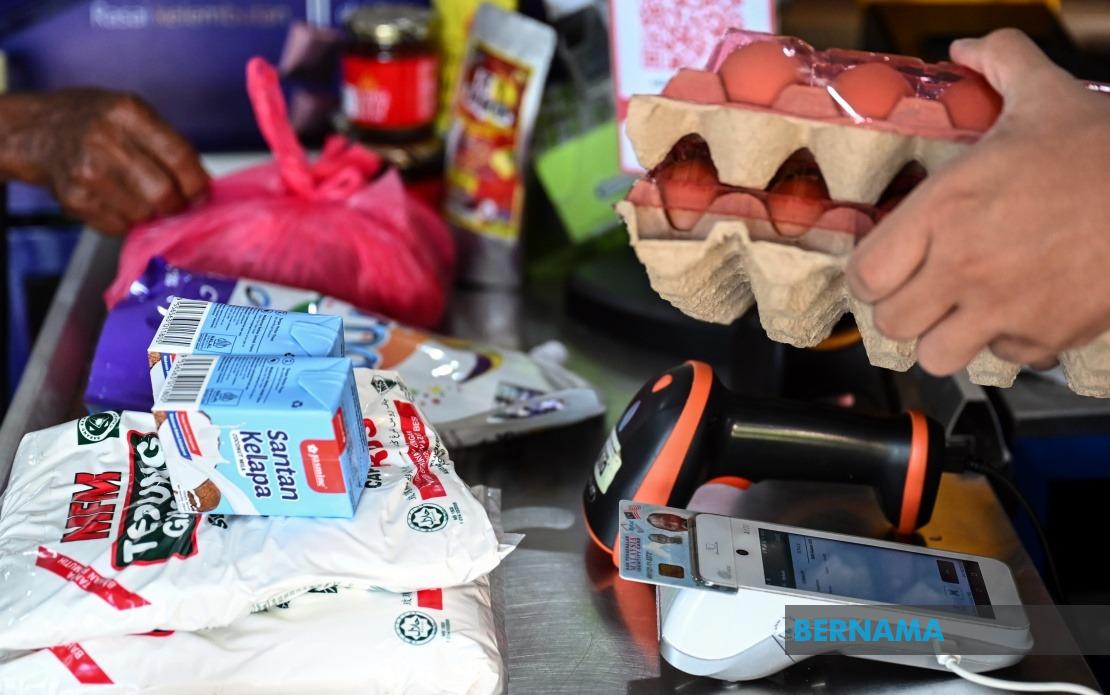
Malaysia's Ministry of Finance has begun rolling out Phase 3 payments of the Sumbangan Tunai Rahmah (STR) cash assistance scheme from today, extending help to 5.3 million households and individuals across the country through a RM1.2 billion allocation. The expansion marks a significant broadening of the safety net, growing from five million recipients at the start of the year—a testament to the government's commitment to addressing cost-of-living pressures that continue to weigh on ordinary Malaysians.
The composition of this expanded beneficiary pool reveals the dual focus of the assistance framework. Some 3.9 million recipients come from low- and middle-income households, the traditional constituency for cash transfers, while a separate 1.4 million comprise single senior citizens, reflecting a deliberate policy shift to protect elderly citizens living alone. This segmentation allows the scheme to tailor support according to specific vulnerabilities, recognising that poverty and hardship manifest differently across demographic groups.
Payment amounts under Phase 3 vary according to individual circumstances. Households categorised by income level and family composition will receive between RM150 and RM600, providing flexibility in the distribution of resources. Single senior citizens receive a standardised RM150, ensuring a baseline income floor for this vulnerable group. When combined with earlier phases and the complementary monthly SARA basic aid programme, qualifying recipients can accumulate up to RM3,300 by August 2026, not counting separate one-off SARA payments available to all citizens aged 18 and above.
The broader context reveals a structural redesign of Malaysia's approach to welfare assistance. Starting in 2026, the government has recalibrated its spending rhythm away from irregular disbursements towards a more consistent support architecture. STR payments now arrive quarterly rather than sporadically, while SARA delivers monthly stipends to those meeting eligibility criteria. This regularisation aims to provide households with more predictable cash flows, enabling better financial planning for essential expenses rather than treating assistance as windfall gains.
Prime Minister Datuk Seri Anwar Ibrahim framed the expansion within a broader economic strategy, acknowledging that while cost-of-living challenges persist, targeted aid functions as a crucial interim measure. His statement emphasised that the government views assistance not as a permanent solution but as a bridge supporting citizens while structural economic reforms take effect. The recognition that the number of low- and middle-income households receiving STR has grown from 3.7 million to 3.9 million since January suggests either economic headwinds pushing more families towards eligibility thresholds, or improved targeting capturing previously uncovered beneficiaries.
From an implementation standpoint, the Ministry has designed distribution mechanisms to maximise accessibility while minimising administrative friction. Recipients maintaining bank accounts will receive Phase 3 payments through direct electronic transfer beginning today, ensuring immediate access without travel requirements. Those without banking relationships can collect cash payments at any Bank Simpanan Nasional outlet nationwide, guaranteeing that financial exclusion does not become a barrier to assistance. This dual-track approach reflects practical recognition that financial inclusion remains incomplete across Malaysia.
Safeguarding against fraud and leakage has received explicit attention in the scheme's architecture. New applications and appeals for STR remain continuously available throughout the calendar year via the official portal at bantuantunai.hasil.gov.my, preventing the artificial scarcity that can breed corruption and ensuring genuinely needy households can access support when circumstances change. The provision of comprehensive FAQs and warnings against fraudulent links signals heightened awareness of scam risks that may target vulnerable recipients, a growing concern as welfare schemes become digital.
The fiscal commitment underpinning these initiatives reaches unprecedented levels. Total allocation for STR and SARA combined in 2026 amounts to RM15 billion, the largest social assistance budget in federal history and nearly triple the Bantuan Rakyat 1Malaysia (BR1M) payments distributed in 2016. This expansion reflects both population growth and recognition that previous assistance levels proved inadequate. The government attributes its fiscal capacity to undertake such spending to financial restructuring and improved revenue collection, suggesting that enhanced governance has generated additional resources available for redistribution.
For Malaysian households living at or near the poverty line, these schemes provide material relief during a period of elevated prices for food, fuel, and housing. The quarterly STR payments combined with monthly SARA transfers create a more stable income baseline, particularly valuable for elderly citizens and families with children where expenses are both non-discretionary and substantial. However, the very need for such expanded assistance raises questions about wage stagnation and employment quality, suggesting that income from work alone proves insufficient for growing numbers of working-age families.
The emphasis on guarding against scams and directing users to official channels reflects broader digitalisation challenges facing welfare administration in Malaysia. As assistance increasingly flows through electronic systems, the risk landscape shifts from traditional corruption towards cybercrime and fraudulent redirection of funds. The ministry's explicit warnings and provision of verified portal links acknowledge this evolving threat, though the effectiveness of such safeguards ultimately depends on public awareness and digital literacy levels that remain uneven across target populations.
Looking forward, the sustainability of RM15 billion annual spending on STR and SARA depends on continued economic growth and fiscal discipline elsewhere in the budget. While the government frames assistance as temporary support pending economic strengthening, demographic trends and potential economic headwinds suggest such programmes may become structural rather than transitional. The policy challenge ahead involves balancing generosity towards struggling households with incentive structures that encourage labour force participation and entrepreneurship, ensuring assistance supplements rather than substitutes for earned income.

