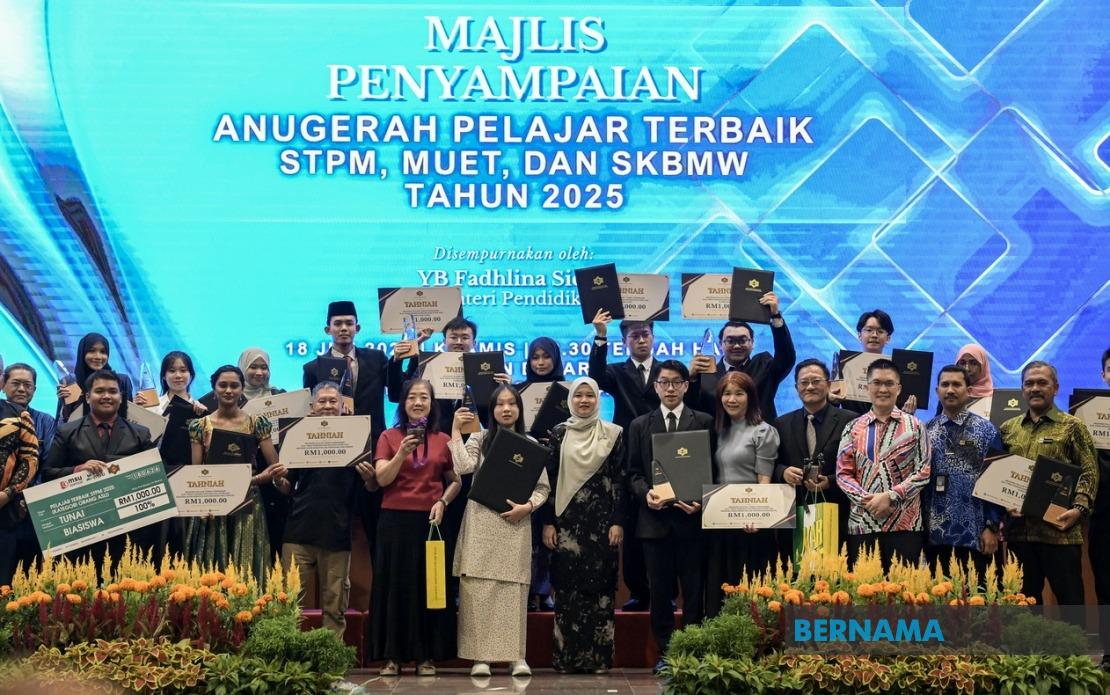
A prestigious scholarship scheme has been introduced to recognize academic excellence among Malaysia's top Form Six students. Education Minister Fadhlina Sidek announced that 18 outstanding performers in the 2025 Sijil Tinggi Persekolahan Malaysia (STPM) examination will be awarded Bachelor's degree scholarships covering tuition fees by public universities across the country. This marks a significant expansion of support for pre-university education pathways in Malaysia's secondary education system.
The initiative represents a strategic pivot in government policy toward strengthening Malaysia's Form Six ecosystem. Rather than allowing top talent to migrate exclusively toward the International Baccalaureate or other alternative pre-university routes, the scholarship scheme directly incentivizes excellence within the local STPM framework. Fadhlina emphasized that all public universities have committed to participating in this new programme, demonstrating institutional consensus around the importance of nurturing homegrown academic talent through established Malaysian qualifications.
The scholarship awards were presented during a formal ceremony at the Malaysian Examinations Council building in Kuala Lumpur, where the ministry also recognized top performers across multiple qualification levels including the University of Malaysia English Test and the Certificate of Proficiency in Malay for Foreigners. The event underscored government commitment to celebrating academic achievement across different educational pathways and international testing frameworks.
Context for this announcement includes broader ministerial efforts to revitalize the Form Six system, which had experienced declining enrolment in recent years as families increasingly explored private and international pre-university options. The scholarship scheme complements other ongoing initiatives such as expansion of Form Six Colleges nationwide, technological infrastructure improvements including the installation of smartboards in classrooms, and financial assistance programmes like the MADANI Book Vouchers designed to reduce barriers to participation.
Performance data released alongside the scholarship announcement suggests the Form Six ecosystem is responding positively to these interventions. The national Cumulative Grade Point Average for 2025 STPM cohorts rose to 2.88 from 2.85 in the previous examination year, a modest but meaningful improvement that signals strengthening academic rigor and student preparation within the system. Fadhlina framed this metric as evidence that targeted investments in the Form Six environment are yielding measurable educational outcomes.
The scholarship programme carries particular significance for Malaysian students from middle-income and lower-income families who demonstrate exceptional academic ability but may lack financial capacity to pursue university education. By eliminating tuition costs for top STPM performers, the scheme removes a critical barrier that might otherwise push talented students toward employment or alternative educational pathways rather than degree studies. This targeted approach toward merit-based support aligns with broader government equity objectives in educational access.
For public universities, the scholarship initiative represents both an investment in talent acquisition and a statement of institutional responsibility toward national talent development. By committing to fund top STPM performers, universities signal confidence in the qualification's rigour and align their own strategic interests with national educational priorities. The scheme also potentially strengthens the competitive position of public universities relative to private institutions in attracting Malaysia's highest-achieving Form Six students.
The announcement reflects ongoing tensions within Malaysia's education landscape regarding qualification pathways and university entry routes. While STPM remains the dominant locally-administered pre-university qualification, competing frameworks including matriculation programmes, A-Levels, and the International Baccalaureate have fragmented the secondary-tertiary transition landscape. By creating tangible financial incentives for STPM excellence, the government attempts to reinforce STPM's position as the preferred pathway while simultaneously signalling that achievement will be recognized and rewarded.
For Malaysian parents and secondary students currently making educational pathway decisions, the scholarship scheme provides additional motivation to pursue the STPM route. Top academic performers now have concrete prospects of receiving fully-funded undergraduate places at public universities, eliminating a traditional disadvantage where STPM graduates sometimes faced higher out-of-pocket tertiary education costs compared to alternative pathway students who benefit from existing scholarship programmes. This level playing field in financial support strengthens STPM's attractiveness as an educational option.
The initiative also addresses workforce development priorities at the national level. By channelling top academic talent through public universities rather than toward overseas higher education, Malaysia retains intellectual capital that can contribute to domestic economic and technological advancement. Public university graduates funded through this scheme will enter the Malaysian labour market, theoretically strengthening the nation's capacity for innovation and professional expertise across sectors.
Deputy Education Minister Wong Kah Woh and senior officials from the Malaysian Examinations Council and Education Malaysia attended the announcement ceremony, reflecting institutional alignment behind the scholarship initiative. This cross-agency presence suggests the scheme reflects coordinated government strategy rather than isolated ministerial action, potentially increasing likelihood of sustained implementation and adequate resourcing across multiple budget cycles.
Looking forward, the sustainability and impact of the scholarship programme will depend on consistent government funding allocation and public university participation levels beyond initial enthusiasm. If maintained and expanded to include additional top performers beyond the initial 18 recipients, the scheme could significantly reshape Malaysian pre-university education landscape by materially improving financial prospects for students pursuing the STPM pathway. The programme thus represents both immediate recognition for 2025's top students and a potentially transformative signal regarding government educational priorities for subsequent examination cohorts.

