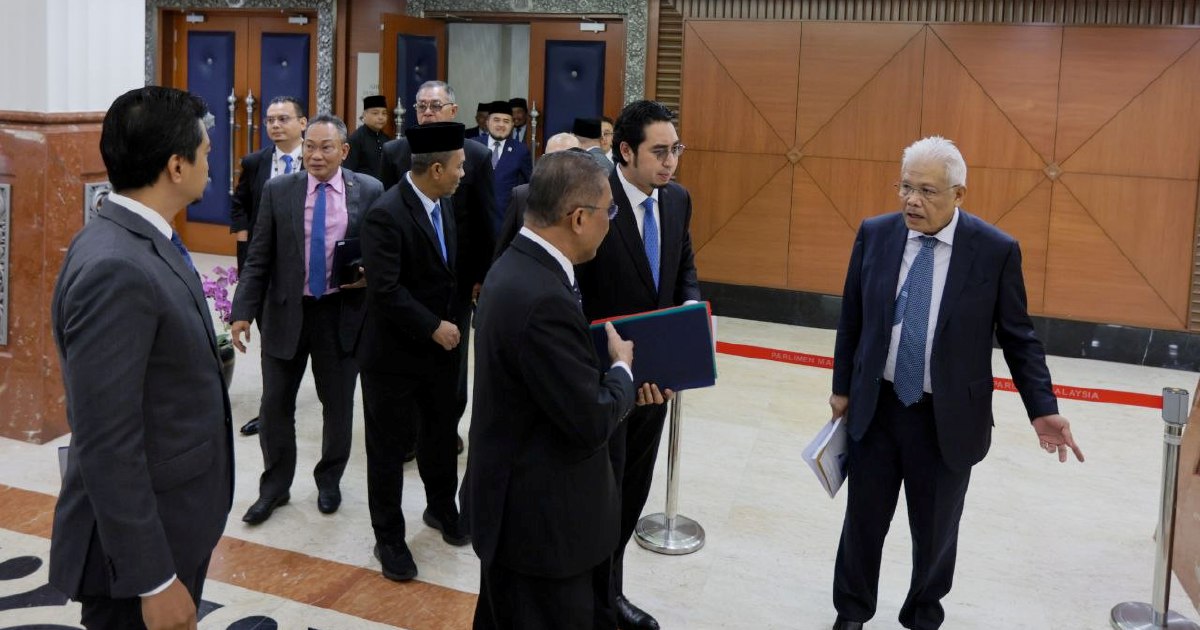
The Minister in the Prime Minister's Department (Religious Affairs), Dr Zulkifli Hasan, has extended a public invitation to opposition members of Parliament to return to the Dewan Rakyat chamber and participate in parliamentary deliberations on the Royal Commission of Inquiry report examining Tabung Haji's operations and governance.
The appeal underscores an apparent breakdown in parliamentary attendance from the opposition benches, raising concerns about the legislative body's ability to conduct meaningful scrutiny of consequential public institutions. Tabung Haji, officially the Pilgrimage Fund Board, manages savings and investments for Malaysian Muslims intending to perform the hajj pilgrimage, holding significant assets and public trust. The RCI was constituted to investigate matters relating to the institution's operations, financial management, and governance standards.
Dr Zulkifli's intervention suggests that government leadership views the examination of the RCI findings as sufficiently important to warrant cross-party participation and robust parliamentary discourse. His public request carries diplomatic weight, effectively placing the onus on the opposition to justify their absence from deliberations on matters affecting millions of Malaysian Muslims who have entrusted their funds to Tabung Haji.
The context of opposition boycotts or absences from parliament has emerged periodically as a political strategy in Malaysian legislative practice, though such actions typically attract criticism from public commentators and observers concerned with parliamentary effectiveness. When major reports on significant national institutions undergo parliamentary examination, widespread attendance is generally considered a mark of institutional seriousness and democratic engagement.
Tabung Haji's operations have faced considerable public scrutiny in recent years, with concerns raised about investment returns, administrative transparency, and governance structures. The RCI report would likely contain findings and recommendations intended to strengthen institutional accountability and restore public confidence. Without opposition engagement in parliamentary debate, the government's narrative regarding the inquiry's conclusions and proposed remedial measures would proceed unopposed, diminishing the legislative chamber's role as a forum for diverse perspectives and competing ideas.
For Malaysian opposition parties, parliamentary boycotts or selective participation create strategic dilemmas. While such actions may communicate political displeasure or signal disagreement with procedural matters, they simultaneously cede parliamentary space and reduce opposition influence over policy development and institutional oversight. The decision to absent themselves from discussions on consequential institutions like Tabung Haji inevitably attracts questions about opposition commitment to legislative scrutiny versus partisan positioning.
The Tabung Haji RCI report carries implications extending well beyond administrative technicality. Millions of Malaysians, particularly from the Malay-Muslim demographic majority, depend on this institution to facilitate fulfilment of one of Islam's five pillars. Any findings regarding mismanagement or governance deficiencies would rightfully demand thorough parliamentary examination from all sides of the aisle. Transparent debate about institutional reform, accountability mechanisms, and future safeguards serves the public interest regardless of which party ultimately leads government deliberations.
Dr Zulkifli's appeal also reflects the government's interest in validating the RCI process itself through broad parliamentary endorsement. When a royal commission investigates significant institutions, the subsequent legislative response carries weight in determining whether such inquiries are perceived as genuine fact-finding exercises or politically motivated exercises. Opposition participation lends legitimacy to the process, whereas absence allows critics to question whether the inquiry's conclusions were predetermined.
From a regional perspective, Malaysia's parliamentary dynamics influence perceptions of institutional governance across Southeast Asia. The extent to which parliament functions as an effective checking mechanism for executive power, and whether opposition voices meaningfully participate in major institutional reviews, contributes to broader assessments of democratic health and institutional resilience. Debates surrounding Tabung Haji governance thus possess significance transcending domestic politics, touching on fundamental questions about public accountability in Muslim-majority societies.
The minister's intervention represents an unusually direct appeal for opposition participation, suggesting frustration with existing attendance patterns. Whether opposition parties respond positively will reveal much about their legislative priorities and their calculus regarding parliamentary engagement versus boycott strategies. For Malaysian citizens invested in Tabung Haji's future governance and accountability, the upcoming parliamentary debate promises clarity on institutional remedies and reform pathways—provided that both government and opposition representatives demonstrate commitment to substantive engagement with the RCI findings.
Moving forward, Dr Zulkifli's invitation remains open, and the ball rests with opposition leadership to determine their participation level. The credibility of parliamentary oversight ultimately depends on multiple actors fulfilling their institutional responsibilities, including the willingness to engage rigorously with inquiries into significant public institutions regardless of political colour or prevailing partisan dynamics.

