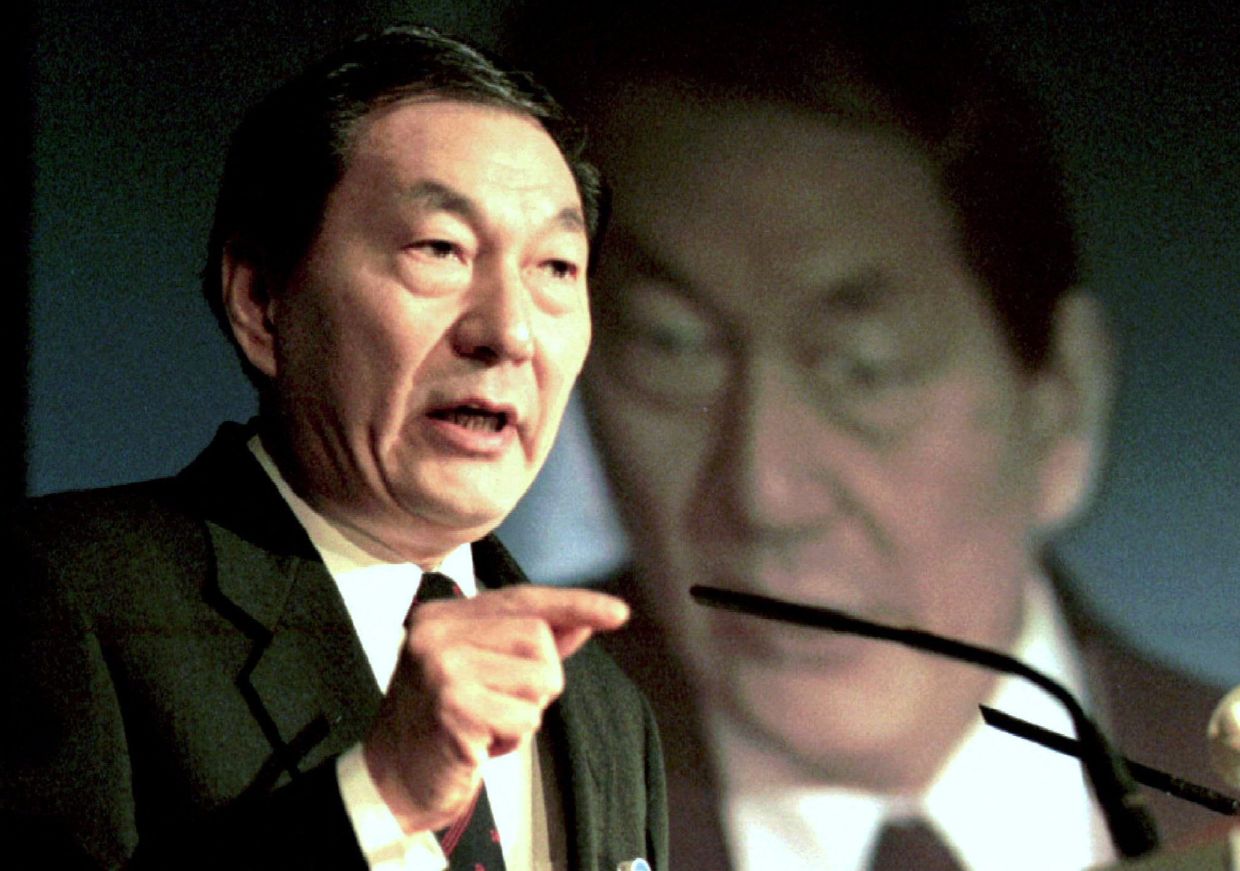
Zhu Rongji, the former premier of China who fundamentally reshaped the country's economic landscape through controversial state-enterprise restructuring and facilitated the nation's integration into global trade structures, has died in Beijing at the age of 98. According to the official Xinhua News Agency, Zhu succumbed on Wednesday, August 12 morning after medical interventions for an unspecified ailment proved unsuccessful. His departure marks the end of an era for a generation of Chinese technocrats who prioritized market-oriented reforms during the 1990s and early 2000s.
During his tenure as the nation's chief economic architect and subsequently as premier from 1998 to 2003, Zhu orchestrated the closure and restructuring of thousands of inefficient state-owned enterprises spanning telecommunications, banking, and energy sectors. This sweeping overhaul resulted in the displacement of tens of millions of workers as China transitioned toward private-sector-led growth. The initiative confronted mounting debt burdens while attempting to modernize an economy hamstrung by unprofitable state companies. His willingness to implement these politically perilous decisions distinguished him as a leader prepared to absorb substantial short-term social costs for purported long-term economic gains, a philosophy that marked a notable departure from contemporary approaches.
Zhu's strategic vision extended beyond domestic restructuring to China's engagement with the international economic order. In 2000, he held crucial discussions with then-European Union Trade Commissioner Pascal Lamy in Beijing that helped resolve contentious negotiations, ultimately facilitating China's accession to the World Trade Organization the following year. This watershed moment integrated the world's most populous nation into the rules-based global trading system, a decision that subsequently enabled China's ascent to the position of the world's second-largest economy, with gross domestic product expanding roughly elevenfold since that pivotal juncture. However, the subsequent decades have witnessed persistent criticisms from trading partners regarding Beijing's compliance with WTO obligations, including allegations of state subsidies, tariff circumvention, and intellectual property violations.
Before ascending to the premiership, Zhu demonstrated exceptional acumen during his tenure as governor of the People's Bank of China from 1993 to 1995. During this period, he broadened China's aperture to foreign financial institutions by establishing experimental programmes for international financial firms and orchestrating the nation's inaugural global bond issuance. These initiatives represented deliberate steps toward financial liberalization and external capital integration. His collaborative work with investment banking institutions, most notably an October 1997 Hong Kong initial public offering of what would become China Mobile Ltd., exemplified his hands-on involvement in transforming state enterprises into market-oriented entities. John Thornton, the former co-president of Goldman Sachs, recalled how Zhu demonstrated remarkable command of technical operational details and asked searching questions that rivaled those posed by corporate chief financial officers, underscoring his command of economic minutiae.
A particularly consequential initiative came in 1999 when Zhu orchestrated the establishment of asset-management companies tasked with acquiring 1.4 trillion yuan, equivalent to approximately US$220 billion, in non-performing loans from the nation's top four state-owned banks. These financial institutions had accumulated substantial bad debt through lending to uneconomical state enterprises, a legacy of earlier command-economy practices. The debt transfer represented a critical structural intervention enabling the banks to rehabilitate their balance sheets and subsequently transition to public shareholding beginning in 2005, thereby facilitating their evolution toward greater market discipline. This intervention demonstrated Zhu's capacity to address structural financial imbalances that threatened banking system stability.
Zhu's predecessors and contemporaries recognized his exceptional capabilities. Deng Xiaoping, the paramount leader who initiated China's reform trajectory, designated Zhu a "rare talent" who possessed genuine economic comprehension and demonstrated readiness to confront formidable challenges. His credentials were further burnished by fluency in English and considerable personal charisma that resonated with international interlocutors. During a 1999 joint press conference with United States President Bill Clinton, when addressing allegations of Chinese political donations to American political parties, Zhu deployed wit and numerical illustration to defuse tensions. He noted that if such contributions were genuinely efficacious, his country's foreign-exchange reserves of $146 billion would surely justify allocations substantially exceeding the alleged $300,000, a response that generated considerable laughter from assembled journalists.
Beyond his economic portfolio, Zhu championed an anti-corruption agenda and undertaken bureaucratic streamlining efforts that earned him the colloquial designation "one-chop Zhu," referencing the official seals required to authenticate administrative decisions in China. His initiative to curtail administrative complexity and reduce required governmental approvals represented a concurrent effort to enhance governmental efficiency and reduce opportunities for official malfeasance. These complementary programmes reflected a worldview emphasizing meritocratic governance, institutional transparency, and reduced state involvement in quotidian economic decision-making. His 2000 statement to the National People's Congress candidly articulated his aspirations for posthumous assessment, expressing hope that observers would regard him as an uncorrupted official and, should charitable judgment prevail, as someone who "got some real things done."
Zhu's pathway to preeminence encompassed considerable adversity and personal resilience. Born in October 1928 in Hunan province, he attended Tsinghua University from 1947 to 1951 as an electrical engineering student, joining the Communist Party during the crucial founding month of October 1949. His early career at the state planning apparatus from 1952 to 1969 included critical commentary on Maoist economic policies articulated during the Hundred Flowers Campaign, when freedom of expression was temporarily permitted. Authorities subsequently branded him a "rightist" and demoted him, resulting in five years of manual labor during the Cultural Revolution involving agricultural work and pig husbandry. Following his political rehabilitation in 1978, he methodically ascended governmental hierarchies, serving as Shanghai's mayor from 1987 before elevation to vice premier in 1991 and Politburo Standing Committee membership in 1992.
Following his transition from the premiership to Wen Jiabao in 2003, Zhu devoted himself to advancing his alma mater Tsinghua University's international standing and channeled book royalties toward rural educational institution development. His children pursued careers within the financial sector, with his son Levin Zhu heading China International Capital Corp from the early 2000s through 2014, while his daughter Zhu Yanlai occupied senior management positions at Bank of China (Hong Kong). This trajectory from revolutionary survivor to institutional elder embodied broader patterns of Communist Party technocratic ascendancy. The contemporary regime under President Xi Jinping has pursued markedly divergent economic philosophy, advocating a "stronger, better, and bigger" state-controlled economy designed to serve national strategic imperatives, a fundamental reorientation from Zhu's market-oriented paradigm that underscores the evolution of Chinese policy priorities across successive leaderships.

