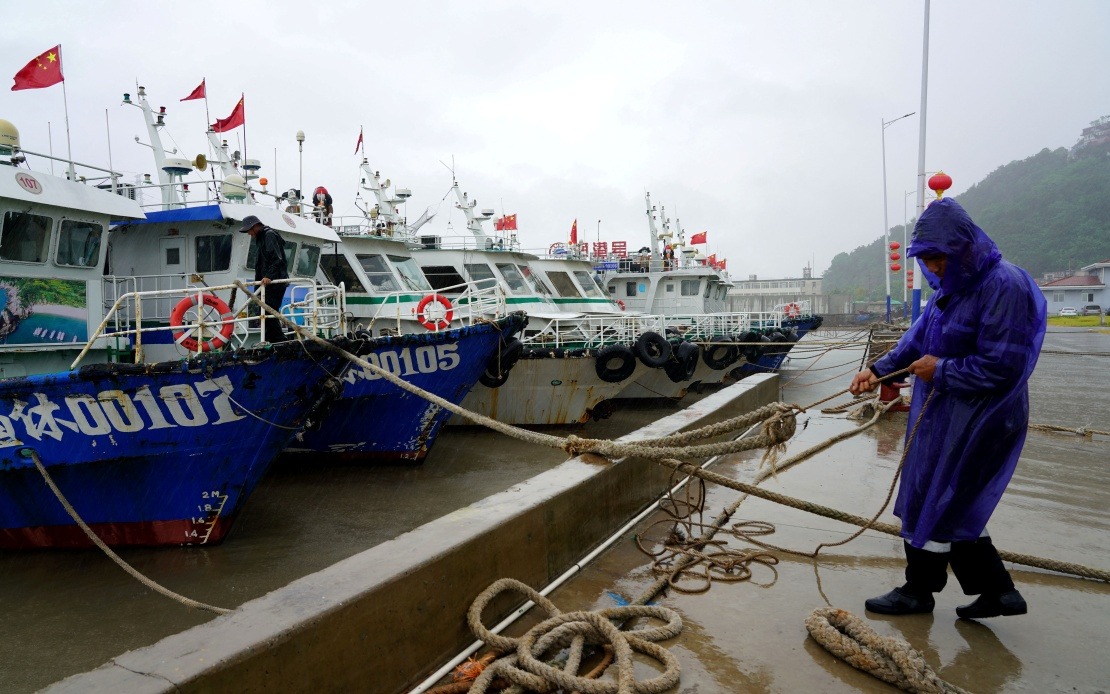
Authorities in Zhejiang Province, China's eastern industrial heartland, have ratcheted up their emergency response to Typhoon Dolphin from Level IV to Level III, signalling an intensification of precautionary measures as the destructive storm system bears down on the coast. The decision, made at noon on Friday, reflects growing concern about the path and intensity of what has become the 13th significant typhoon recorded during 2026, with meteorological officials increasingly confident the system will strike somewhere along the densely populated eastern seaboard.
At 8 am on Friday morning, the Zhejiang Meteorological Observatory confirmed that Typhoon Dolphin remained positioned approximately 763 kilometres east of Wenling, a coastal city in Zhejiang known for its petrochemical industries and manufacturing base. Despite its distance at that time, the typhoon's projected trajectory and gathering strength prompted rapid mobilisation across the provincial administration. Forecasters expect the system to advance in a westward direction at a measured pace of 15 to 20 kilometres per hour, giving authorities and residents a compressed window to prepare for impact.
The National Meteorological Centre's yellow-level alert, issued on Thursday evening, pinpoints the expected landfall corridor along China's eastern coastline between Shanghai and Fuqing in neighbouring Fujian Province, with Sunday or Monday identified as the most probable arrival window. This geographic zone encompasses some of the nation's most economically significant regions, home to major shipping ports, manufacturing hubs, and millions of residents. The forecast anticipates Typhoon Dolphin will maintain its intensity or potentially strengthen slightly during its approach, with the system expected to develop into either a full typhoon or severe typhoon classification by the time it makes contact with land.
Zhejiang's geographical position between Shanghai to the north and Fujian to the south places it directly in the potential path of maximum impact. Lou Xiaofen, serving as chief forecaster at the Zhejiang Meteorological Observatory, has emphasised that the province faces a substantial likelihood of experiencing a direct hit from the typhoon's most destructive core. Such a scenario would expose the region to significant disaster risks, including storm surge along the coast, inland flooding from torrential rainfall, and wind damage to infrastructure, agricultural land, and residential areas across multiple districts.
In response to the escalating threat, Zhejiang's maritime and transportation authorities have implemented sweeping operational shutdowns. All 162 passenger ferry routes serving the province have been suspended, effectively isolating island communities and disrupting logistics networks that depend on regular sea transport. The decision to halt operations at all 193 offshore projects represents a major economic disruption, as these facilities—primarily oil and gas extraction platforms, renewable energy installations, and aquaculture operations—generate substantial provincial revenue. Additionally, authorities have ordered 474 construction vessels to return to port, removing potentially vulnerable assets from open waters where they could be endangered or damaged.
The provincial maritime authorities have adopted an aggressive early-warning strategy to maximise preparation time across affected communities and industries. In the days preceding the expected landfall, officials distributed 86,000 early warning messages to residents, businesses, and municipal governments, ensuring that information about the typhoon's projected path and expected impacts reaches the broadest possible audience. Simultaneously, maritime inspectors have conducted safety audits of 24,000 vessels to verify compliance with storm-readiness protocols and ensure that ships are either secured in protected anchorages or have departed the region entirely.
Emergency services are positioning specialised assets to enable rapid response once the typhoon makes contact. High-powered tugboats equipped for rescue operations stand on alert across multiple ports, prepared to be deployed for emergency assistance operations, evacuation support, or recovery efforts in the aftermath of landfall. These vessels represent essential resources in coastal regions where storm surge and heavy seas can isolate communities and create dangerous conditions for stranded populations or those attempting to reach safety.
The escalation to Level III emergency response triggers a cascade of mandatory protocols across Zhejiang's administrative machinery. Local authorities at every level must maintain continuous monitoring of the typhoon's development, issuing regular updates to the public and refining forecasts as new meteorological data becomes available. Early warning systems must operate at maximum alert status, with authorities prepared to sound alarms and initiate emergency broadcasts when danger becomes imminent. Evacuation procedures must be activated in vulnerable zones, moving people away from areas anticipated to experience storm surge, flooding, or structural damage. Public guidance systems must disseminate actionable information that enables residents and workers to make informed decisions about sheltering, securing property, and protecting their families.
For Malaysia and the broader Southeast Asian region, the unfolding situation in Zhejiang underscores the typhoon season's continuing impacts across East Asia. While Malaysian territory sits south of the typical path of such storms, regional weather patterns and monsoon systems can occasionally redirect tropical cyclones southward, bringing heavy rainfall and isolated hazards to Peninsular Malaysia, Sabah, and Sarawak. The comprehensive preparation demonstrated by Chinese authorities offers instructive lessons about coordinating transportation systems, commercial operations, and emergency services in advance of major weather events. Thailand, the Philippines, and Vietnam similarly face seasonal typhoon threats and could benefit from studying Zhejiang's multi-layered approach to advance coordination and resource positioning.
The economic implications extend beyond Zhejiang's borders, given the province's role as a manufacturing and logistics hub integrated into regional and global supply chains. Disruptions to port operations, industrial output, and transportation networks can ripple outward, affecting suppliers and customers across Southeast Asia who depend on goods transiting through Shanghai and other Zhejiang facilities. Japanese, South Korean, and Taiwanese companies operating manufacturing facilities in the province could face temporary production stoppages, potentially delaying shipments to markets throughout the region and affecting inventory levels at retailers and distributors in Malaysia and neighbouring countries.

