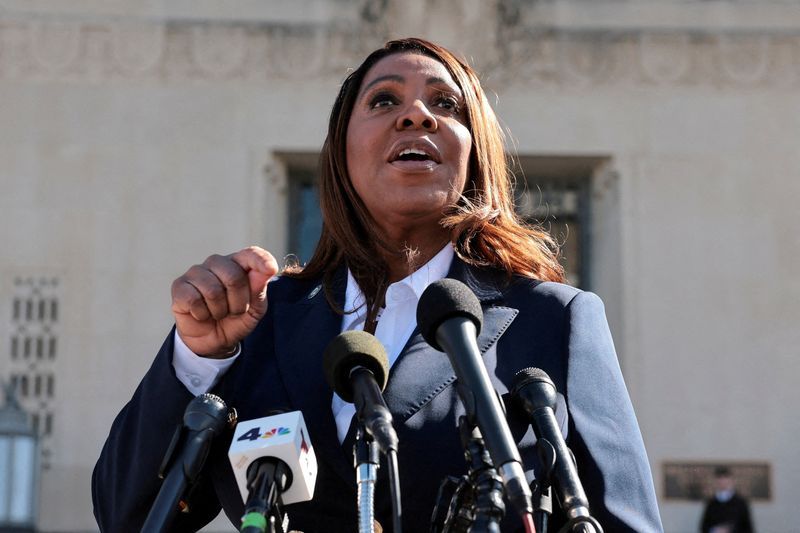
A New York court has dealt Zelle a significant legal setback by refusing to dismiss a major lawsuit accusing the electronic payment platform of neglecting consumer safety in pursuit of rapid growth and market dominance. Justice Phaedra Perry-Bond of Manhattan's state court found on Tuesday that New York Attorney General Letitia James had presented sufficient evidence to support allegations that Zelle's parent company, Early Warning Services, deprioritized security measures in favour of speed-to-market, accessibility and user adoption—decisions that allegedly cost consumers more than $1 billion in fraudulent transactions.
The ruling marks a critical moment for one of America's largest peer-to-peer payment networks, which operates as a consortium owned by seven major banks: Bank of America, Capital One, JPMorgan Chase, PNC, Truist, US Bank and Wells Fargo. By allowing James's case to proceed beyond the dismissal stage, the court has signalled that her allegations warrant examination at trial, validating her core argument that Zelle made deliberate choices that created conditions ripe for fraud. The decision carries implications across the digital payments sector, where platforms balance convenience against security in increasingly competitive markets.
James's investigation revealed a troubling pattern: despite objections from Zelle's own banking partners regarding security vulnerabilities, the platform rushed forward with its 2017 launch. The attorney general documented that only in 2023—after both the federal Consumer Financial Protection Bureau and congressional probes intensified scrutiny—did Zelle implement what she characterised as "basic" safeguards that the platform had itself proposed as necessary four years earlier. This four-year gap became central to Perry-Bond's reasoning, suggesting a deliberate deferral of protective measures rather than technical impossibility.
The specific fraud schemes plaguing Zelle users revealed in court filings present a troubling picture of vulnerability. Scammers gained unauthorised access to user accounts and executed transfers without permission, persuaded unsuspecting consumers to send money for goods and services that never materialised, and impersonated legitimate institutions including banks, government agencies and utility providers. Such tactics exploited the platform's design choices and marketing claims, which positioned Zelle as secure and trustworthy precisely because major banks backed it. Perry-Bond noted that this gap between marketing promises and actual protections formed the basis of James's allegations.
A particularly damaging element of the case involves Zelle's continued collection of transaction fees from fraudulent transfers. Perry-Bond flagged this practice as raising questions about whether the platform implicitly or expressly condoned fraudulent activity by profiting from it. This observation suggests that even after fraud occurred, Zelle maintained a financial incentive structure that failed to adequately penalise or prevent the bad actors exploiting its system. For Malaysian readers familiar with regional fintech platforms, this scenario illustrates the risks when rapid commercialisation outpaces protective infrastructure.
Zelle's defence strategy hinged on two main arguments, both rejected by the court. The company contended that advertising safety and security features was not inherently misleading, and that it bore no liability for what it termed "passive nonfeasance"—the allegation that Zelle merely failed to act rather than actively causing harm. Perry-Bond's decision effectively dismantles these defences by finding that marketing claims of safety became misleading when the company knowingly withheld critical protective measures, transforming alleged inaction into actionable negligence that enabled foreseeable harm.
The political and regulatory backdrop to this case shapes its significance. James pursued her lawsuit after the federal CFPB dropped a similar enforcement action in March 2025, shortly after Donald Trump began his second presidential term. The CFPB subsequently scaled back most enforcement activities, creating a vacuum that state-level attorneys general have begun to fill. For jurisdictions like Malaysia, where regulatory coordination between national and state-level authorities remains an evolving challenge, this pattern demonstrates how political shifts in enforcement priorities can create uneven protections for consumers across different legal territories.
Zelle's public response dismissed the allegations as politically motivated recycling of "meritless" claims that courts elsewhere have rejected. Company spokesperson Eric Blankenbaker characterised fraud reports as "exceptionally low," a claim that contradicts both the attorney general's documented losses exceeding $1 billion and widespread consumer complaints. This defensive posture may backfire if the case proceeds to trial, where discovery could expose internal documents, communications and risk assessments that either support or undermine the company's public positioning on safety awareness.
The competitive context surrounding Zelle's position in the payments ecosystem adds another layer to this dispute. Launched in 2017, Zelle competes directly with PayPal's Venmo and Block's Cash App, platforms that face similar pressures to balance growth with security. However, Zelle's distinctive feature—its backing by major traditional banks—created both an advantage in attracting mainstream users and a liability by generating expectations of institutional-grade security. If courts ultimately find that this banking consortium prioritised profits over protections, it could reshape how legacy financial institutions approach fintech partnerships and security obligations.
For Southeast Asian businesses and consumers, the Zelle case offers instructive lessons as regional payment platforms expand across borders. Malaysia's own fintech ecosystem, including platforms like Boost and GCash, operates within a regulatory framework that increasingly emphasises consumer protection and fraud prevention. The principle established here—that marketing security credentials while knowingly deferring protective measures constitutes actionable misconduct—may influence how Malaysian regulators scrutinise similar practices among regional payment providers. Courts recognising this liability theory could accelerate pressure on all platforms to implement security features contemporaneously with market launch rather than years later.
The pathway forward remains uncertain, but Perry-Bond's ruling guarantees that James's allegations will receive substantial judicial examination. Discovery will likely expose how Zelle's leadership and banking partners evaluated fraud risks, what internal debates occurred around implementation timelines, and whether cost considerations drove the decision to postpone security features. Such evidence could prove devastating if it demonstrates explicit choices to prioritise profitability over consumer welfare. For a regulatory environment like Malaysia's, where fintech supervision continues evolving, this case exemplifies how courts can enforce consumer protection principles even when companies insist their practices were lawful under existing standards.

