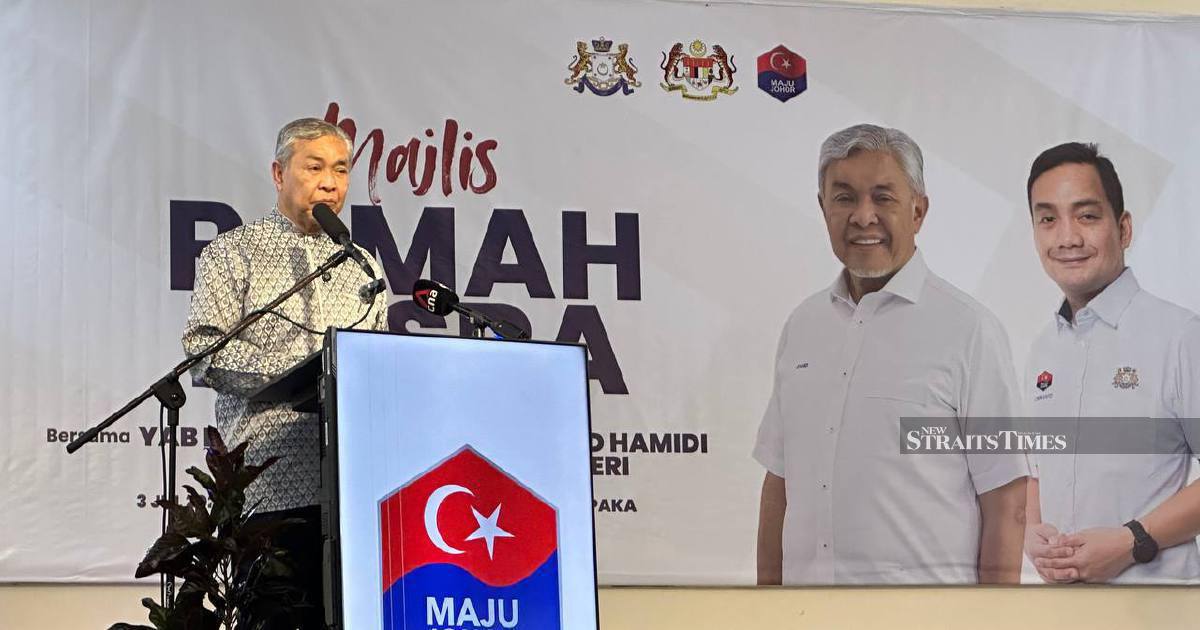
Barisan Nasional chairman Datuk Seri Dr Ahmad Zahid Hamidi has signalled the need for his unity government coalition to maintain cohesion by moving past historical tensions, urging alliance partners to avoid weaponising old criticisms of Umno during the Johor state election campaign. The appeal underscores growing awareness within Malaysia's ruling coalition that internal bickering over past disputes threatens to undermine its unified front at a critical electoral moment.
The timing of Zahid's intervention reflects the delicate political balance required to hold together the diverse partnership that constitutes the current government. Malaysia's unity coalition, formally established to ensure governmental stability and economic recovery, brings together parties with fundamentally different constituencies, histories, and electoral interests. Each component—from Umno-led Barisan Nasional to the Pakatan Harapan components and other aligned parties—carries its own narrative of past conflicts and perceived slights that could easily destabilise the arrangement if permitted to resurface during high-stakes elections.
The Johor state election presents an immediate test of this coalition's ability to function harmoniously. Johor, a traditionally Umno-dominated state, carries significant symbolic weight in Malaysian politics. A strong performance here could reinforce the unity coalition's credibility heading into subsequent electoral contests, while internal divisions or public recriminations between coalition partners would signal fundamental weakness to both the electorate and opposition forces.
Historically, Umno has been the subject of intense criticism from Pakatan Harapan components during and following the 2018 general election. Those attacks focused on governance, corruption allegations, and institutional reform. While the parties have since found common ground in governance through the unity arrangement, grievances and disagreements persist beneath the surface. The risk exists that during a competitive state election, one or more coalition members might invoke these historical critiques to mobilise their own support base, inadvertently undermining the coalition's collective message.
Zahid's appeal to his partners represents a preventive diplomatic maneuver. By publicly requesting that allies desist from raising old disputes, the Barisan Nasional chairman is attempting to establish a clear boundary around acceptable campaign conduct. The statement serves simultaneously as a direct message to coalition partners and as a signal to the broader public that internal conflicts will not dominate campaign discourse.
The strategic calculus here extends beyond Johor itself. Maintenance of the unity coalition remains central to Malaysian political stability. Should this arrangement fracture, it would likely trigger a new cycle of political instability, potentially leading to fresh elections and uncertain outcomes. For Umno, which emerged from the 2020 general election significantly weakened and has since rebuilt through the coalition arrangement, protecting this alliance is paramount to institutional relevance and future electoral viability.
For Pakatan Harapan components within the coalition, the equation is similarly complex. While these parties retain the option of leaving the arrangement to pursue opposition politics, they derive tangible benefits from participatory governance and the ability to shape policy outcomes. Launching attacks on Umno during elections risks provoking a backlash that could destabilise the entire coalition structure, harming those parties' own interests.
The Johor campaign therefore becomes a test case for whether diverse political parties can subordinate their historical grievances to collective electoral success. Success would demonstrate that the unity coalition possesses sufficient institutional maturity to manage internal disagreements privately while presenting unified messaging to voters. Failure—manifested in public recriminations and mutual attacks—would suggest the arrangement remains fundamentally fragile and susceptible to collapse.
From a Southeast Asian perspective, Malaysia's experience managing coalition governance carries broader implications. Regional democracies frequently grapple with coalition-building challenges, and how Malaysian political actors navigate these difficulties offers lessons in conflict management within multiparty systems. A coalition that cannot control its internal dynamics risks becoming either ineffectual or prone to sudden collapse, outcomes that extend beyond electoral consequences to affect macro-economic and social stability.
Zahid's intervention also reflects practical campaign calculations. In a competitive state election, message discipline becomes crucial. Voters often respond more readily to positive visions of governance and development than to defensive battles over historical grievances. A coalition that can focus campaign messaging on future plans and policy achievements rather than relitigating the past positions itself more advantageously against opposition critics.
The underlying tension remains unresolved, however. For Pakatan Harapan components, the decision to enter into alliance with Umno represented a significant departure from their 2018 election positioning. Some party members and supporters view this arrangement as compromising their stated principles regarding institutional reform and accountability. Maintaining strict discipline around campaign messaging does not eliminate these underlying tensions; it merely postpones confrontation until after electoral contests conclude.
Moving forward, the sustainability of Malaysia's unity coalition will likely depend on how effectively it manages multiple competing elections, internal policy disagreements, and the inevitable reopening of historical disputes during succession contests or power-sharing negotiations. Zahid's appeal to allies suggests coalition leadership recognises these challenges and is attempting to establish protocols for managing them. Whether such diplomatic efforts prove sufficient remains an open question as Malaysian politics enters this new phase.

