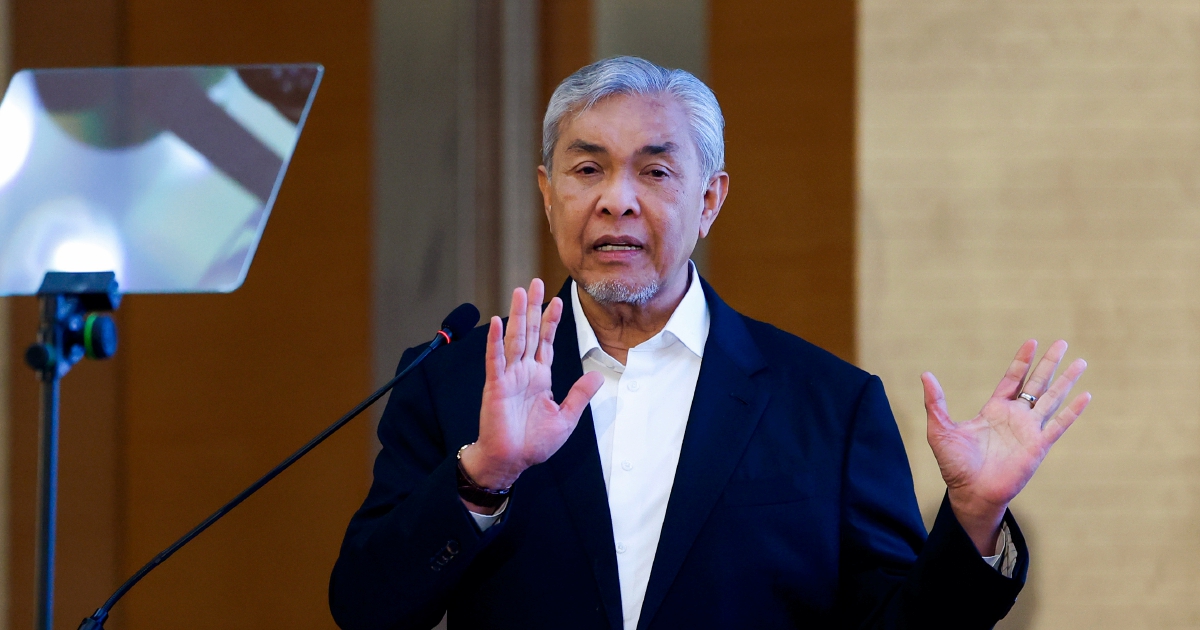
Barisan Nasional's top leadership has issued a fresh appeal for political restraint ahead of the Negri Sembilan state election, with chairman Datuk Seri Dr Ahmad Zahid Hamidi calling on all contending parties to avoid contentious subjects tied to identity and authority. Speaking in Seremban, Zahid stressed the necessity of respecting recent guidance from the palace, underscoring that divisive rhetoric around the so-called 3R matters—race, religion and royalty—have no place in the upcoming campaign discourse.
The timing of Zahid's remarks reflects growing concern within the political establishment about maintaining campaign civility and protecting institutional sensitivities during state-level contests. The Negri Sembilan palace had previously signalled its expectations regarding campaign conduct, and Zahid's statement amplifies that institutional message, positioning it as a priority for all participants rather than a matter of partisan advantage. This framing suggests that BN views respect for such boundaries as essential not merely for its own strategic positioning, but for the broader health of political discourse across the country.
The issue of 3R matters has proven consistently volatile in Malaysian politics, with historical incidents demonstrating how such topics can rapidly escalate tensions and polarize communities along deep social faultlines. By explicitly asking parties to exercise restraint on these fronts, Zahid appears to be attempting to establish common ground on what constitutes acceptable campaign behaviour, even as rival coalitions compete vigorously on policy platforms and performance records. This approach recognizes that while electoral competition is legitimate and necessary, certain boundaries around sensitive constitutional and cultural matters require mutual respect across party lines.
The palace's position carries particular weight in Malaysian governance structures, where the institution occupies a unique constitutional role and commands broad public reverence. Zahid's invocation of the palace's expectations—rather than framing the restraint appeal as purely his own initiative—lends legitimacy and authority to the call, making it harder for individual politicians to justify crossing those lines without appearing to disrespect royal guidance. This strategic deployment of institutional authority reflects sophisticated understanding of how Malaysian political messaging works and what carries persuasive power within the national context.
For BN specifically, the statement serves multiple purposes beyond the immediate campaign. It positions the coalition as the custodian of stability and institutional respect at a moment when such positioning matters electorally. By emphasizing adherence to palace guidance, Zahid signals that BN prioritizes national harmony and constitutional propriety over short-term campaign advantage. This messaging may resonate particularly with voters who view themselves as stakeholders in maintaining Malaysia's political stability and protecting its constitutional framework from destabilizing rhetoric.
The call also implicitly acknowledges that opposition parties or other political actors might be tempted to mobilize around 3R issues as a way to energize their own support bases or exploit community sensitivities. By establishing a clear expectation of restraint before the campaign intensifies, Zahid is attempting to raise the political cost of any party choosing to pursue such tactics, framing any violation as disrespect for both the palace and the broader consensus around appropriate campaign conduct. This preemptive messaging strategy attempts to set the terms of acceptable debate from the outset.
From a broader Southeast Asian perspective, Malaysia's approach to managing sensitive questions around religion, ethnicity and traditional authority reflects particular institutional and historical contexts that shape how political competition unfolds. Unlike many neighbouring democracies, Malaysia has evolved specific norms and constitutional provisions designed to protect certain societal sensitivities while permitting robust democratic contestation in other spheres. Zahid's statement illustrates how senior politicians navigate this distinctive landscape, balancing genuine electoral competition with respect for institutional boundaries.
The emphasis on palace guidance also underscores the continuing centrality of monarchical institutions to Malaysian governance, even in an era of expanding democratic participation. Negri Sembilan, as a state with its own palace structure and constitutional arrangements, provides an appropriate venue for reinforcing these expectations. The state's electoral process becomes an occasion for reaffirming broader principles about how Malaysian democracy functions and what constraints are understood to apply to political actors across ideological and partisan divides.
As campaigning accelerates across Negri Sembilan, Zahid's intervention establishes a baseline expectation that all contenders should monitor their rhetoric and that of their supporters. The statement serves notice that violations of this expected restraint will carry reputational costs beyond immediate electoral calculations. For mainstream political parties accustomed to operating within established institutional frameworks, such guidance typically shapes behaviour accordingly. Whether all campaign participants—particularly at grassroots levels where messages sometimes diverge from official party lines—will observe these boundaries remains an open question that will test the effectiveness of such preemptive appeals.

