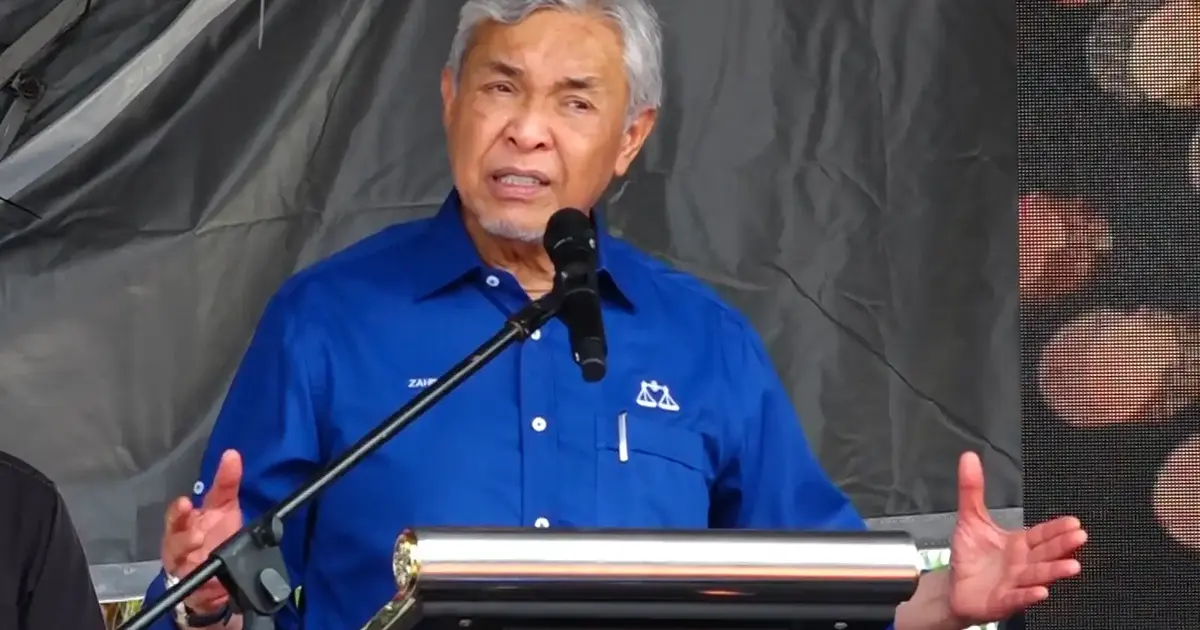
Umno president Zahid Hamidi has advised the party's election machinery to simply dismiss any public statements made by former party leader Puad Zarkashi regarding Barisan Nasional candidates contesting in the upcoming Johor state elections, signalling a deliberate strategy to prevent divisive internal commentary from derailing the coalition's electoral campaign.
The directive reflects deepening tensions within Umno's leadership ranks as the party prepares for a crucial electoral test in Johor, Malaysia's second-largest state by population and a traditional Barisan Nasional stronghold. Zahid's instruction to effectively tune out Puad's criticism underscores his determination to maintain party discipline and present a unified front to voters during a sensitive political period.
Puad, who previously held senior positions within Umno before stepping back from frontline politics, has been publicly voicing concerns about the suitability and credentials of certain Barisan Nasional nominees selected to contest in Johor. His willingness to speak candidly about the candidate selection process has created an awkward dynamic, as internal party dissent risks undermining the coalition's messaging and energising opposition critics.
This tactical response by Zahid essentially amounts to instructing party operatives and campaign teams to treat Puad's commentary as noise rather than substantive policy critique deserving engagement. By categorising his remarks as something to be ignored rather than refuted, the Umno president appears intent on denying Puad a platform that would amplify his concerns among party members and the broader electorate.
The situation reflects a broader pattern in Malaysian politics where senior figures who have stepped back from active roles occasionally attempt to influence party direction through public criticism. Zahid's approach—dismissal rather than debate—represents a common institutional response designed to protect party cohesion during electoral campaigns when any appearance of internal disagreement could be exploited by political opponents.
For Malaysian voters and political observers, such internal Umno dynamics carry particular significance given the party's central role in federal governance and its outsized influence within Barisan Nasional. The manner in which Umno leadership manages dissenting voices from within its own ranks frequently signals broader governance approaches and the degree of internal democracy the party values.
Johor elections hold particular strategic importance for Barisan Nasional, as electoral performance in the state serves as a barometer for the coalition's prospects in future national elections. Any perception of weakness, disunity, or poor candidate quality could translate into lost votes, making Zahid's concern with controlling the narrative entirely understandable from a campaign management perspective.
Puad's intervention, while coming from a respected former leader, comes at an inopportune moment for Umno's electoral preparations. The party has already faced various challenges to its authority and credibility in recent years, and internal criticism about candidate selection—which touches on questions of meritocracy and party renewal—risks reopening sensitive debates about organisational governance.
The tension between Zahid's instruction to ignore Puad and the former leader's apparent determination to voice concerns suggests an underlying anxiety within Umno about whether current candidate selections represent the party's best choices. If Puad's criticisms were truly baseless, the party might be more inclined to engage with and refute them directly rather than simply dismissing them.
For political observers across Southeast Asia watching Malaysian developments, this episode illustrates how established parties attempt to manage internal dissent while maintaining electoral momentum. The balance between permitting internal debate and enforcing campaign discipline remains a constant challenge for political organisations competing in multi-party democratic systems.
Zahid's directive also reflects the realities of modern campaign management, where unified messaging across all party channels is considered essential to electoral success. In an era of social media and rapid information dissemination, even isolated remarks from senior figures can quickly gain traction if they appear to challenge official party positions on candidate selection and electoral strategy.
Moving forward, the extent to which Umno members and machinery actually heed Zahid's instruction to ignore Puad will partly determine whether this episode fades quickly or develops into a more significant internal controversy. The Johor electoral campaign will ultimately reveal whether Zahid's strategy of dismissal successfully neutralised Puad's criticism or merely suppressed it temporarily.

