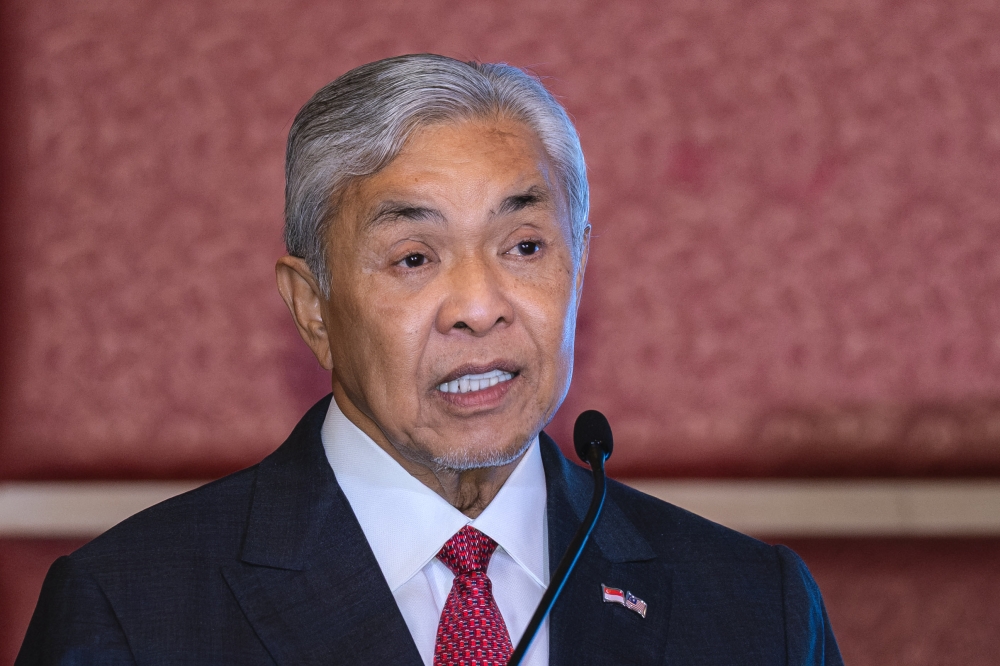
Umno president Datuk Seri Dr Ahmad Zahid Hamidi has firmly rejected suggestions that his party has entered into a binding agreement with PAS specifically for Negeri Sembilan, whilst simultaneously signalling that Umno maintains strategic flexibility in how it approaches coalition-building in the state. Speaking in Kuala Lumpur on July 13, Zahid underscored that no formal arrangement exists between Umno and the Islamic party at the state level, a clarification that comes as Malaysian politics enters a period of intense speculation about federal and state-level alliances ahead of potential elections.
The Umno leader's carefully worded statement carries implications extending well beyond Negeri Sembilan's immediate political landscape. His assertion that "goalposts can change anytime" reflects the broader uncertainty characterizing Malaysian politics, where coalition partners frequently adjust their positions based on electoral calculations, internal party dynamics, and shifts in public sentiment. This flexibility has become a defining feature of contemporary Malaysian political strategy, particularly among parties navigating the complex relationship between federal and state-level governance.
Negeri Sembilan has emerged as a focal point for coalition negotiations because of its mixed electoral environment and the delicate balance of power between competing political forces. The state's political composition—where no single party commands overwhelming dominance—means that alliance decisions carry outsized significance. For Umno, a party traditionally dominant in Negeri Sembilan, any decision regarding PAS cooperation touches directly on electoral viability and the composition of the state government. Zahid's denial of a formal pact suggests Umno is preserving its options, potentially exploring multiple partnership configurations before committing to a single approach.
The distinction Zahid drew between formal and informal arrangements warrants careful analysis. In Malaysian political discourse, such differentiations frequently signal that while no binding agreement exists, discussions and preliminary understandings may be occurring. This ambiguity serves a tactical purpose, allowing both Umno and PAS to maintain their respective support bases whilst keeping collaborative possibilities open. Umno supporters concerned about PAS's Islamic agenda receive reassurance through Zahid's denial, whilst PAS retains the possibility of future cooperation if circumstances prove advantageous.
The regional context amplifies the significance of these coalition calculations. Southeast Asian political observers note that Malaysian coalition-building increasingly reflects the region's broader trend toward fluid, issue-based alliances rather than permanent ideological partnerships. The emergence of Perikatan Nasional as a competing federal coalition has fundamentally altered the landscape, forcing traditional partners like Umno and PAS to continuously reassess their strategic positioning. Each state presents distinct electoral dynamics that may warrant different alliance configurations, making Zahid's emphasis on flexibility not merely tactical positioning but a reflection of genuine strategic uncertainty.
For Malaysian voters in Negeri Sembilan and beyond, Zahid's statement underscores the contingent nature of contemporary Malaysian politics. Elections are no longer primarily contests between fixed coalitions with predetermined agendas, but rather fluid processes where final alliances often crystallize only in the weeks preceding polling. This reality creates both opportunities and frustrations—voters enjoy greater leverage in negotiations between fluid parties, yet face uncertainty about which groups will ultimately govern and how priorities may shift following electoral outcomes.
The role of PAS in these negotiations deserves particular attention. The Islamic party's political trajectory has shifted dramatically in recent years, particularly following its alignment with Perikatan Nasional at the federal level. Its relationship with Umno remains complicated by ideological differences and competition for Malay-Muslim voter support. In Negeri Sembilan specifically, PAS's electoral strength varies significantly by district, making statewide cooperation calculations more nuanced than simple national-level assessments might suggest. Zahid's careful language acknowledges this complexity whilst avoiding commitments that might constrain future decision-making.
The timing of Zahid's statement carries additional weight. As Malaysia navigates governance questions following recent federal developments and potential electoral timelines emerge, coalition decisions at the state level gain urgency. Parties must balance the desire to maximise electoral prospects through strategic alliances against the need to maintain distinct identities and core supporter bases. For Umno, a party historically accustomed to dominant positioning, accepting subordinate roles in coalitions represents a significant adjustment that requires justification to members and supporters.
Looking forward, the Negeri Sembilan situation exemplifies broader challenges facing Malaysian political parties in an era of coalition fluidity. The ability to maintain credibility with supporters whilst remaining strategically flexible demands sophisticated political communication and genuine policy clarity about non-negotiable principles. Zahid's assertion that the party retains flexibility suggests Umno is prepared to pursue whichever coalition configuration appears most likely to secure state control, provided such arrangements do not fundamentally compromise party interests or ideological positioning.
The Malaysian political system continues adapting to these realities, with state-level elections increasingly serving as testing grounds for new coalition configurations and political strategies. Zahid's statement regarding Negeri Sembilan reflects not simply tactical maneuvering but an acknowledgment that contemporary Malaysian politics operates within a fundamentally different framework from previous decades, where alliance decisions remain contingent upon circumstances and strategic calculations that themselves remain subject to ongoing reassessment.

