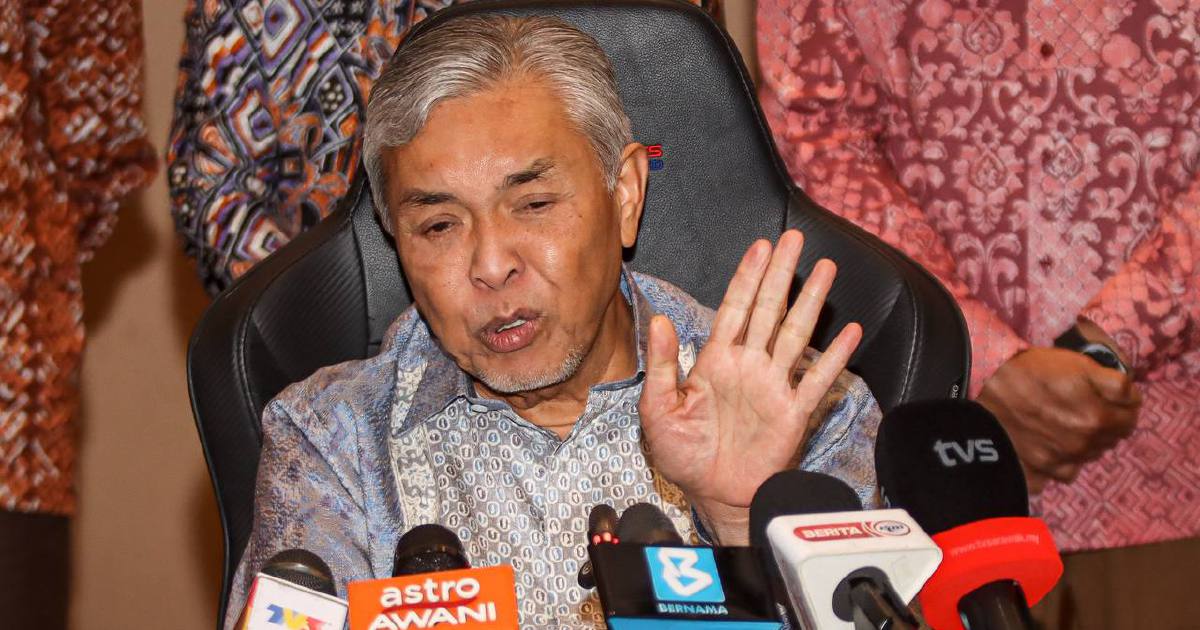
Speaking in George Town, UMNO Deputy President Datuk Seri Dr Ahmad Zahid Hamidi moved swiftly to extinguish persistent speculation about challenges to the Prime Minister's authority, making clear that Barisan Nasional maintains its dedication to the stability framework that underpins Malaysia's current political arrangement. His statement arrived at a critical juncture when observers have grown increasingly attentive to fissures within the unity government coalition, particularly as the administration approaches mid-term and various interest groups jockey for influence ahead of the next general election.
Zahid's reaffirmation carries particular weight given his position as deputy president of UMNO, the dominant force within Barisan Nasional and traditionally the coalition's kingmaker in determining the direction of Malaysian politics. By explicitly dismissing any manoeuvre against Anwar's position, he sought to inoculate the government against destabilising narratives that periodically surface whenever tensions emerge between coalition partners. This kind of public statement represents standard damage control in Malaysian politics, where unofficial networks often conduct sensitive negotiations away from public scrutiny, making reassurances from senior figures strategically important for market and investor confidence.
The unity government itself remains a delicate architecture, bringing together historical rivals from different political ecosystems. Barisan Nasional's alliance with Pakatan Harapan and other partners created an unprecedented power-sharing arrangement that emerged from the 2022 general election's fractured outcome. This configuration has delivered stability compared to the chaotic period preceding it, yet structural tensions persist as coalition members maintain distinct ideological foundations and separate voter bases. Each party within the arrangement competes for credit on policy achievements whilst simultaneously protecting its own electoral prospects.
Zahid's statement functioned to reset expectations about the coalition's trajectory, particularly important given occasional statements from figures within the government's ranks that invite interpretation as veiled criticism. In Malaysian political discourse, careful attention to language and positioning proves essential, as statements that might appear innocuous to external observers often carry coded messages within the sophisticated internal networks of party leadership. By providing this clear declaration of support, Zahid attempted to create a baseline of stability that could anchor subsequent negotiations and prevent opportunistic defections.
The commitment to maintaining coalition stability until the 15th Parliament's conclusion assumes particular significance given the electoral arithmetic that sustains the current administration. The government's parliamentary majority, while functional, lacks the commanding dominance that would insulate it from sudden shifts in coalition dynamics. Individual backbencher behaviour thus carries magnified consequences, and senior leaders must periodically signal that the broad partnership remains intact even as disagreements occur over specific policy matters. This balancing act defines the current political moment, requiring constant attention to coalition management.
For Malaysian readers and regional observers, this type of assurance from Zahid holds practical implications regarding policy continuity and economic stability. Governments operating under uncertainty regarding their longevity typically struggle to implement longer-term reform programmes or undertake investments that require multi-year commitments. By projecting confidence in the government's ability to persist, Zahid helped create space for the administration to pursue its agenda without constant speculation about imminent collapse. International investors and trading partners similarly calibrate their engagement partly on expectations about political stability, making such statements strategically valuable beyond domestic audiences.
The emphasis on parliament's full term operates as both genuine commitment and political calculus. The 15th Parliament's tenure extends several years into the future, providing adequate runway for coalition members to satisfy various constituencies whilst preserving the partnership's logic. Calculations regarding the timing of fresh elections factor heavily into these public commitments, as parties must evaluate whether remaining within the unity framework offers superior advantages compared to attempting dissolution and returning to voters. Zahid's statement implicitly suggested that Barisan Nasional's strategists have concluded that stability remains preferable to the uncertainties that would accompany early dissolution.
Contextually, these remarks arrived as Malaysia navigates complex regional developments and economic adjustments that benefit from governmental focus and continuity. Southeast Asia's evolving geopolitical environment and the region's economic integration trajectories create environments where abrupt political transitions generate friction. Neighbouring countries' experiences with political instability have not escaped Malaysian policymakers' notice, reinforcing arguments that maintaining functional coalitions represents the mature approach to governance. Zahid's reaffirmation thus connected his statement to these broader concerns about stability and predictability in an uncertain regional environment.
The dismissal of toppling speculation also reflected UMNO's apparent calculation that the current arrangement serves its organisational interests better than alternatives. As the largest party within Barisan Nasional and a key pillar of the unity government, UMNO derives considerable influence and patronage capacity from its position. Anwar Ibrahim, despite leading Pakatan Harapan, lacks sufficient independent parliamentary numbers to govern without coalition support. This structural reality incentivises UMNO to maintain the partnership whilst continually negotiating for advantage on specific issues and cabinet positions. Zahid's statement essentially codified these underlying interests into public commitment language.
Looking forward, the stability Zahid described will face periodic testing as the government grapples with difficult policy choices and competing coalition members pursue distinct agendas. Economic pressures, identity-based political movements, and inter-party rivalries will continue generating friction that requires active management. This statement represented one moment in an ongoing process of coalition governance, establishing a baseline of commitment against which future disputes would be measured. Whether the unity government ultimately persists until parliament's natural conclusion will depend on the success of such coalition management efforts across multiple quarters and policy domains.

