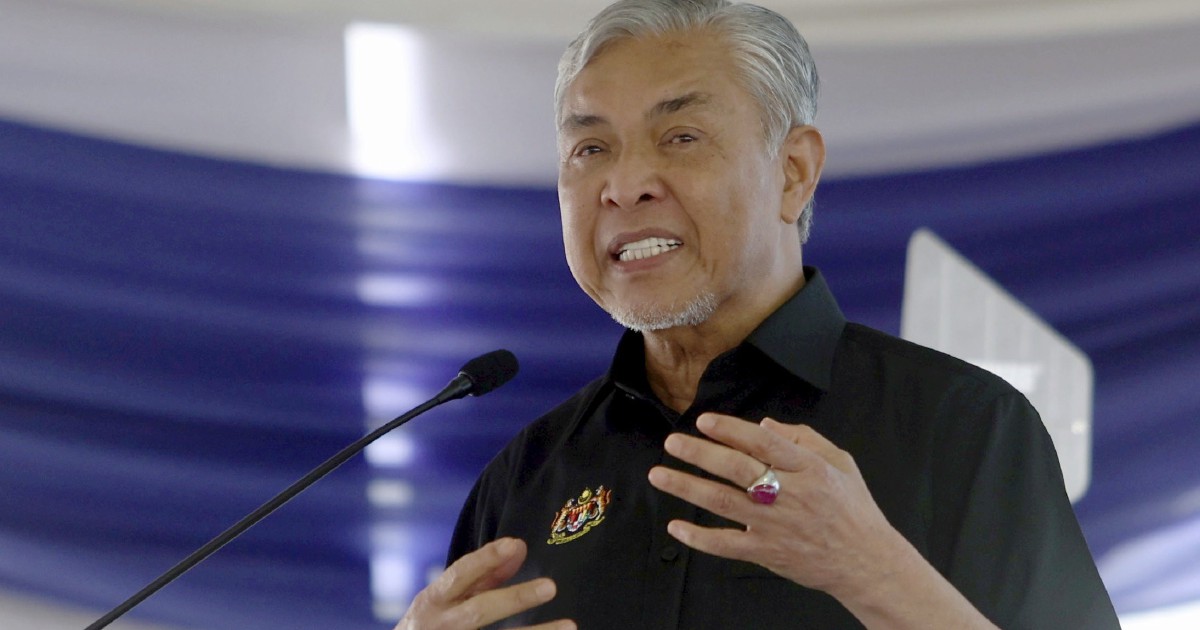
Malaysia's political leadership has moved to quell persistent talk of an early general election, with Deputy Prime Minister Datuk Seri Dr Ahmad Zahid Hamidi firmly rejecting the notion during remarks in Tampin. His comments represent an attempt to steady investor and public confidence as the country navigates an evolving political landscape following the previous electoral cycle.
Zahid's statement carries particular weight given his position within the federal administration and his influence over coalition dynamics. The Deputy Prime Minister's dismissal of early election speculation signals that the current government coalition views its working majority as sufficient to govern through the constitutionally mandated electoral timeline. Such pronouncements are carefully calibrated to reassure market participants, particularly given Malaysia's reliance on stable governance for economic performance and investor sentiment.
The persistence of election rumours within Malaysian political circles reflects deeper structural realities. Federal coalitions cobbled together from multiple parties frequently experience pressure from various factions pursuing divergent interests, creating conditions where the political calculus around early elections shifts regularly. Zahid's explicit denial serves to counteract speculation that periodically emerges when coalition tensions surface or when political operators calculate potential electoral advantages.
From an economic perspective, early election chatter creates measurement challenges for policymakers and investment planners. Businesses require visibility around government continuity to commit to medium and long-term expansion plans, infrastructure partnerships, and sectoral development initiatives. By publicly stating that no substantive discussion of early elections has occurred, Zahid aims to provide the certainty necessary for Malaysia to maintain its competitive positioning within Southeast Asia's economic competition.
The current parliamentary configuration has generally provided sufficient stability for legislative business, though observers note that the various coalition partners maintain distinct policy priorities. Zahid's remarks effectively communicate that the government intends to maintain its existing arrangement and timeline, avoiding the administrative disruption and campaign-induced policy paralysis that accompany election periods. This stance aligns with signals from other senior government figures who have similarly indicated commitment to governing through the scheduled electoral date.
Domestic political considerations intersect with Malaysia's regional standing. Southeast Asian stability depends partly on member governments maintaining functional capacity to deliver on ASEAN commitments and regional security cooperation. Governments consumed by election campaigns sacrifice diplomatic focus and policy implementation capability. Zahid's statement should be understood within this broader context of regional responsibility and institutional continuity.
The Deputy Prime Minister's intervention also reflects the calculated management of political narrative that characterises contemporary Malaysian governance. Rather than allow speculation to develop unchecked, senior officials proactively address circulating rumours with categorical denials. This approach attempts to occupy the information space and establish the authoritative account of government intentions before alternative narratives gain traction among commentators or market participants.
Within the broader coalition structure, Zahid's position as Deputy Prime Minister places him in a coordination role among various coalition partners with divergent electoral prospects. Some parties within the governing arrangement may harbour private calculations about optimal election timing, yet public unity around maintaining the existing schedule remains essential for coalition cohesion. Zahid's statement effectively enforces coalition discipline by establishing the official narrative that no serious reconsideration of electoral timing is underway.
The fiscal implications of early elections extend beyond campaign expenditure. Government budgeting requires multi-year planning horizons, and election uncertainty creates technical complications for departmental allocations and infrastructure investment schedules. The Deputy Prime Minister's clarification allows Treasury and sectoral ministries to proceed with confidence in their planning timelines, without the contingency adjustments that election-adjacent periods typically impose.
Looking forward, Zahid's remarks establish a baseline expectation against which future developments will be measured. Should coalition tensions mount or political circumstances shift substantially, this statement will serve as the reference point from which observers gauge changing trajectories. The Deputy Prime Minister has essentially committed the government to the scheduled electoral timeline, creating political costs to any subsequent reversal of this position.
For Malaysian citizens and business communities, such assurances carry practical consequence. Consumer confidence and business investment decisions respond to perceived governmental stability. When senior figures publicly rule out electoral disruption, they reduce the precautionary hoarding and delayed investment commitments that accompany political uncertainty. This mechanism through which political reassurance translates into economic behaviour operates continuously within Malaysia's political economy.

