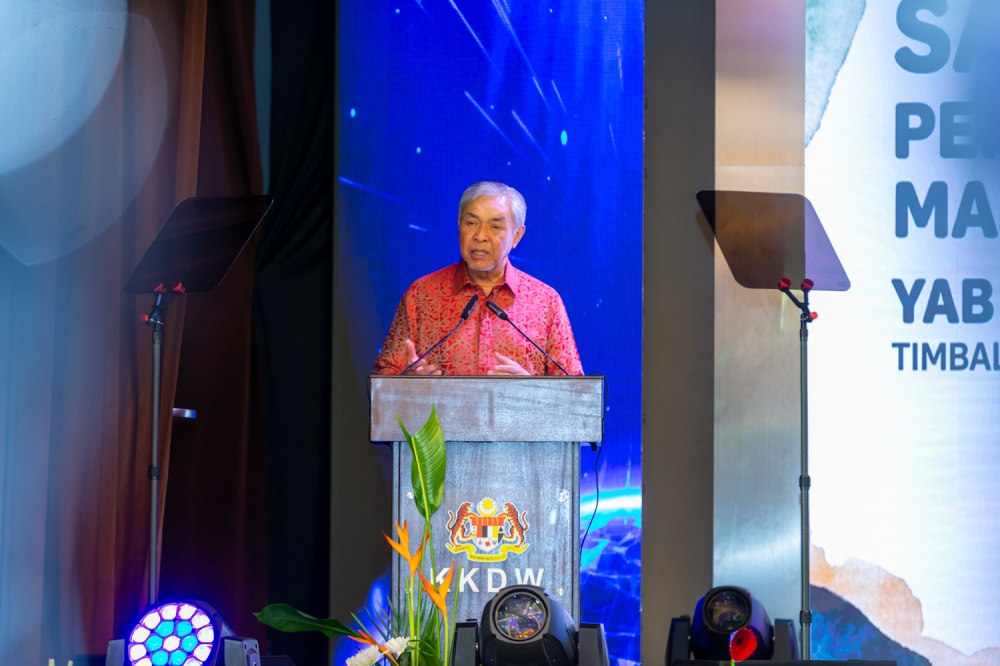
Deputy Prime Minister Datuk Seri Ahmad Zahid Hamidi has categorically denied circulating reports that prominent figures from Barisan Nasional held discussions with leaders of rival Perikatan Nasional, Gabungan Parti Sarawak, and Gabungan Rakyat Sabah, describing such claims as baseless speculation designed to destabilize the coalition government. Speaking in Putrajaya on July 21, Zahid stressed that these allegations lacked credibility and served no purpose beyond sowing discord among ruling coalition members.
The denial comes amid persistent rumours across social media and political circles suggesting that backroom negotiations were underway between the governing alliance and opposition parties. Such speculation has periodically surfaced since the formation of the Pakatan Harapan-Barisan Nasional-Sabah-Sarawak unity administration, reflecting ongoing tensions within Malaysia's fractious political landscape. Zahid's public rebuttal represents an attempt to reassure both coalition partners and the electorate that the government remains cohesive and focused on shared governance objectives.
As the second-highest official in the federal government, Zahid's position carries particular weight in such declarations. His emphasis on dismissing these reports underscores the sensitivity surrounding coalition stability, a persistent concern for administrations dependent on multi-party cooperation. The unity government, formed following the 2022 general election, has frequently faced internal strains as member parties balance competing interests and factional priorities. Each credible or semi-credible report of inter-party talks triggers fresh anxiety about the arrangement's longevity.
The Deputy Prime Minister reiterated his personal and organisational commitment to the existing unity coalition, seeking to establish a clear public record of BN's intentions. This reaffirmation is strategically important, particularly as the government navigates complex policy challenges and manages diverse political stakeholders. By explicitly rejecting speculation about alternative alliances, Zahid aims to preempt further rumour-mongering and maintain forward momentum on government business without distraction.
The claims Zahid dismissed suggest potential discussions involving PN, which comprises the Islamist Perikatan Keadilan Rakyat parties and others, alongside GPS, Sarawak's dominant political force, and GRS, which holds sway in Sabah. Such a combination would theoretically command substantial parliamentary representation, making it an alternative configuration that opposition groups might explore. However, the ideological distances separating these parties, combined with their distinct regional power bases, render such a coalition inherently unstable and unlikely to function effectively in practice.
Malaysia's political ecosystem has become increasingly volatile since 2020, when the Muhyiddin Yassin administration first introduced the concept of backdoor government formation. The subsequent musical chairs involving PKR, DAP, PKR defectors forming Perikatan, and various realignments have trained Malaysian voters and observers to expect sudden shifts in coalition membership. This backdrop of instability means that even unfounded rumours can gain traction and cause genuine concern among investors, policymakers, and citizens seeking governmental predictability.
Zahid's denial addresses not only internal BN cohesion but also the broader stability expectations of Malaysia's financial markets and international partners. Foreign investors and trading partners require confidence that the government can deliver on economic programmes and fulfil contractual obligations. Persistent uncertainty about which parties hold legislative power disrupts long-term planning and can trigger capital outflows. The Deputy Prime Minister's emphatic reassurance, therefore, serves an economic dimension alongside its political messaging.
The Deputy Prime Minister's comments reflect a broader pattern of BN and government leaders using public statements to manage coalition optics. Since 2022, both Prime Minister and senior cabinet figures have repeatedly affirmed their commitment to unity governance whenever signs of strain emerged. These reinforcements typically accompany small adjustments to ministerial posts or policy priorities designed to accommodate partner concerns. The rhythm of crisis-affirmation-adjustment has become almost ritual in Malaysian governance.
Looking forward, Zahid's unequivocal stance suggests that BN leadership intends to pursue stability over opportunistic realignment, at least in the near term. This posture aligns with broader government messaging emphasizing continuity, economic recovery, and policy implementation. However, Malaysia's volatile political dynamics mean that such commitments remain contingent on managing internal disputes, delivering electoral benefits to coalition partners, and maintaining sufficient parliamentary numbers to govern effectively.
The implications for Malaysian and Southeast Asian observers extend beyond immediate domestic politics. A destabilized Malaysian government would complicate regional affairs, disrupting ASEAN cohesion, bilateral diplomacy, and economic coordination. Singapore and other neighbours monitor Malaysian coalition stability closely, recognizing that internal chaos translates into diminished Malaysian engagement on regional matters. Zahid's reassurances thus carry broader strategic weight beyond Malaysia's borders, contributing to wider perceptions of Southeast Asian institutional stability and predictability.

