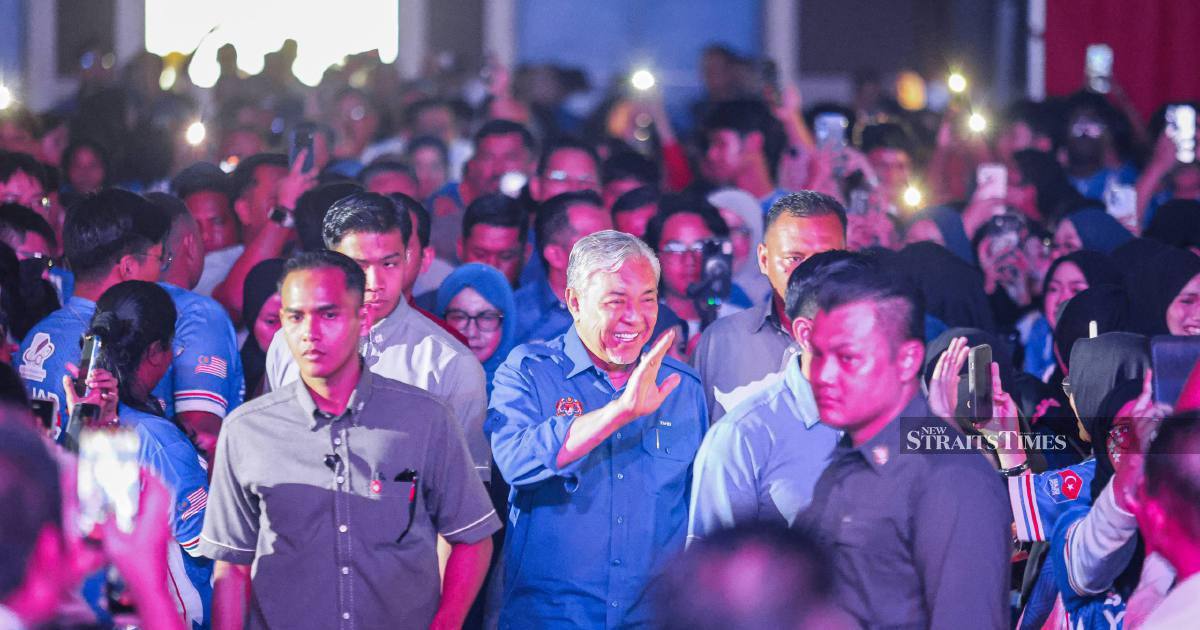
Barisan Nasional is intensifying efforts to consolidate youth support in Johor ahead of the July 11 state election, with senior party figures urging voters to maintain their backing of caretaker menteri besar Datuk Onn Hafiz Ghazi. The coalition has strategically positioned Ghazi as its flagship candidate, banking on his appeal to younger voters and his track record in the state to secure another mandate for continued governance.
The push to retain youth enthusiasm represents a crucial element of BN's electoral strategy in Johor, a state that has demonstrated significant political volatility in recent years. Young voters have become an increasingly important demographic in Malaysian politics, particularly in states like Johor where urbanisation and economic development have reshaped the voting landscape. By concentrating its messaging around development continuity and the stewardship of an established administrator, the coalition seeks to counter perceptions of instability and present a coherent vision for the state's future.
Onn Hafiz's elevation as BN's primary face in Johor reflects broader calculations within the coalition about electoral competitiveness. As caretaker menteri besar, he carries the advantage of incumbency and can point to specific projects and initiatives undertaken during his tenure. This positioning allows BN to frame the election as a choice between proven governance and untested alternatives, a narrative designed to resonate particularly with first-time and younger voters who may lack strong partisan attachments.
The timing of the youth-focused campaign reflects awareness within BN ranks that Johor's political dynamics have become increasingly unpredictable. The state has swung between different political administrations with notable frequency, and maintaining momentum requires active engagement with constituencies that might otherwise drift toward opposition parties or abstain from voting altogether. Youth engagement initiatives thus serve both immediate electoral purposes and longer-term party-building objectives.
Johor's economic profile makes the development message particularly salient. The state accounts for a significant portion of Malaysia's manufacturing, port operations, and agricultural output, and younger professionals and entrepreneurs have substantial stakes in policy decisions affecting business environment, infrastructure, and investment climate. By anchoring the campaign narrative around development continuity, BN appeals to economic interests while simultaneously framing opposition as potentially disruptive to growth trajectories.
The coalition's strategy also reflects confidence in its administrative record in the state. Infrastructure projects, industrial zone developments, and port expansions undertaken during BN's tenure provide tangible evidence of state-level governance capability. For youth voters evaluating which party to support, such concrete accomplishments can outweigh ideological appeals, particularly when economic concerns rank prominently in personal calculations.
However, the campaign faces inherent challenges. Opposition parties are likely to counter with their own youth outreach initiatives and alternative visions for Johor's development. The national political environment, characterised by complex coalition dynamics and shifting public sentiment regarding governance, creates uncertainties that state-level campaigns cannot entirely insulate themselves from. Additionally, youth voters increasingly differentiate between federal and state-level politics, potentially supporting different coalitions at different electoral levels.
The emphasis on Onn Hafiz as a unifying figure also carries implicit acknowledgment that BN's broader brand has experienced erosion in some quarters. By concentrating campaign resources on elevating a specific leader seen as competent and development-focused, the coalition attempts to transcend negative perceptions about the parent organisation and create space for swing voters to support BN without perceiving themselves as endorsing the entire coalition's historical record.
Regionally, the Johor election carries implications beyond state boundaries. The state's economic importance and its position as Malaysia's southeastern hub means that governance outcomes affect not only its residents but also investors, traders, and entrepreneurs throughout the region. A decisive BN victory would suggest that development-centred campaigns retain electoral appeal even in Malaysia's competitive contemporary political environment, while an opposition success would indicate vulnerability in previously reliable coalition strongholds.
For Malaysia's broader political trajectory, the Johor contest represents a significant test case. The nation's politics have become characterised by fluid coalitions, cross-factional negotiations, and unpredictable electoral outcomes. Johor's result will provide insights into whether specific leadership personalities, administrative track records, and development messaging can still command decisive electoral support, or whether structural factors and broader political sentiments have rendered such traditional campaign approaches insufficient for securing clear mandates.
The youth focus also reflects generational shifts in Malaysian politics. Younger voters typically demonstrate stronger issue-based rather than party-based voting patterns, requiring campaigns to articulate specific, achievable policy objectives rather than relying on historical party loyalties. BN's decision to centre its campaign on tangible development promises and proven administrative capacity rather than solely on party heritage signals adaptation to these evolving electoral dynamics, even as the coalition simultaneously attempts to mobilise traditional voter bases.

