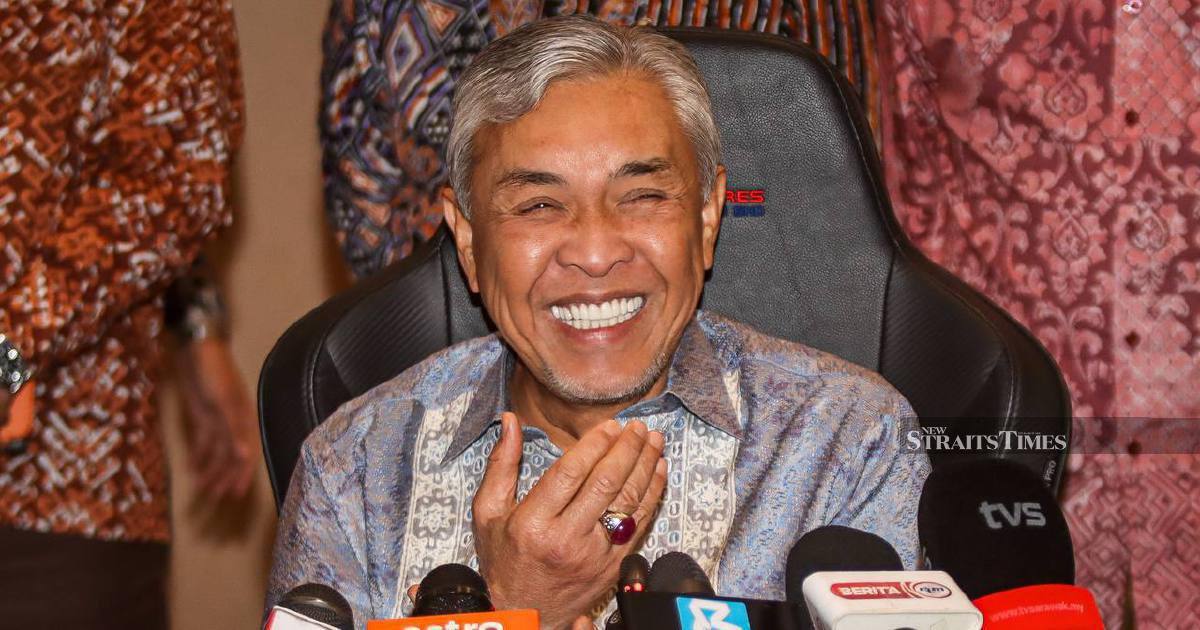
Deputy Prime Minister Datuk Seri Dr Ahmad Zahid Hamidi delivered a measured response to Prime Minister Datuk Seri Anwar Ibrahim's recent call for national unity, choosing the traditional pantun—a form deeply rooted in Malaysian cultural expression—as his medium. Speaking in George Town, Zahid countered the PM's four-line verse with his own composition, employing the classical Malay poetic form as a vehicle for political messaging rather than direct confrontation.
The exchange underscores an interesting dynamic within Malaysia's current political landscape, where senior government figures occasionally resort to pantun to communicate ideas and sentiments that might otherwise risk public controversy. This measured deployment of traditional verse reflects the delicate balance required in leading coalition governments where multiple stakeholder groups must be managed simultaneously. The use of pantun—traditionally a vehicle for wit, wisdom, and social commentary—transforms potentially divisive political disagreement into something more culturally palatable and symbolically significant.
Anwar Ibrahim's original pantun had centred on themes of unity and collective purpose, messaging consistent with his repeated calls for Malaysians to work together across partisan lines. Zahid's response, focusing on imagery of roofs and storms, carries implicit meaning about resilience and protection during turbulent times. The choice of meteorological metaphor suggests acknowledgement of challenging political and economic conditions facing the nation, while the roof imagery conventionally represents leadership and stability.
The pantun tradition carries particular weight in Malaysian political communication, dating back centuries as a form through which community leaders expressed viewpoints on governance and social order. The resurgence of pantun exchanges among contemporary political leaders signals respect for traditional cultural forms while simultaneously allowing figures to address substantive disagreements through encoded language. This approach permits plausible deniability while satisfying audiences who appreciate the artistry and subtlety of the form.
George Town's selection as the venue for Zahid's response holds relevance beyond mere logistics. Penang's historical position as a major political and cultural hub, combined with its diverse electorate, makes it a significant stage for leadership messaging. The Deputy Prime Minister's willingness to engage publicly through verse in such a setting demonstrates confidence in reaching audiences beyond immediate political supporters, seeking to frame his position within accepted cultural parameters.
The timing of this poetic exchange occurs against Malaysia's broader political backdrop, where coalition stability and leadership succession remain perpetual considerations. Both Anwar and Zahid occupy positions requiring them to maintain visibility and relevance while navigating complex internal party and coalition dynamics. Using pantun allows them to signal engagement with national issues while maintaining sufficient distance from direct policy confrontation that might undermine governmental stability.
For Malaysian readers, these pantun exchanges serve as a barometer of political temperature. When leaders abandon verse for direct statements, tensions typically rise visibly. Conversely, the maintenance of traditional poetic exchange suggests underlying confidence in institutional frameworks and coalition structures, even when disagreements exist on substantive matters. The cultural sophistication required to compose meaningful pantun also reinforces the importance placed on intellectual engagement within Malaysian political culture.
The broader significance extends to how Malaysia's political elite maintain legitimacy across diverse constituencies. By employing forms cherished in Malay-Muslim culture while addressing issues of national concern, figures like Anwar and Zahid appeal to core voter bases while signalling inclusivity toward broader national audiences. This balancing act becomes increasingly important as economic pressures and demographic shifts reshape Malaysian political alignments.
Zahid's compositional response demonstrates that disagreements within Malaysia's governing coalition need not manifest as immediate public rupture. The Deputy Prime Minister's engagement suggests calculated acceptance of Anwar's framework for dialogue, even while asserting his own distinct perspective through subtle poetic language. This implicit agreement on forms of acceptable discourse itself constitutes a form of political agreement about how Malaysia's government will conduct internal business.
Looking forward, observers of Malaysian politics should view such pantun exchanges as serious political communication, not mere cultural flourishes. The content, imagery, and timing of these verses often contain meaningful signals about policy positions, coalition dynamics, and leadership priorities. As Malaysia continues navigating economic recovery and social cohesion challenges, the willingness of senior figures to engage through traditional cultural forms suggests ongoing confidence in consensus-building approaches rather than authoritarian decision-making from above.
The exchange also reflects Malaysia's unique political culture, where Islamic and Malay traditional forms remain integral to elite communication even as the country modernises economically and technologically. This fusion of traditional and contemporary political practice distinguishes Malaysian governance approaches from regional peers and illustrates the importance of cultural continuity within processes of institutional development and change.

