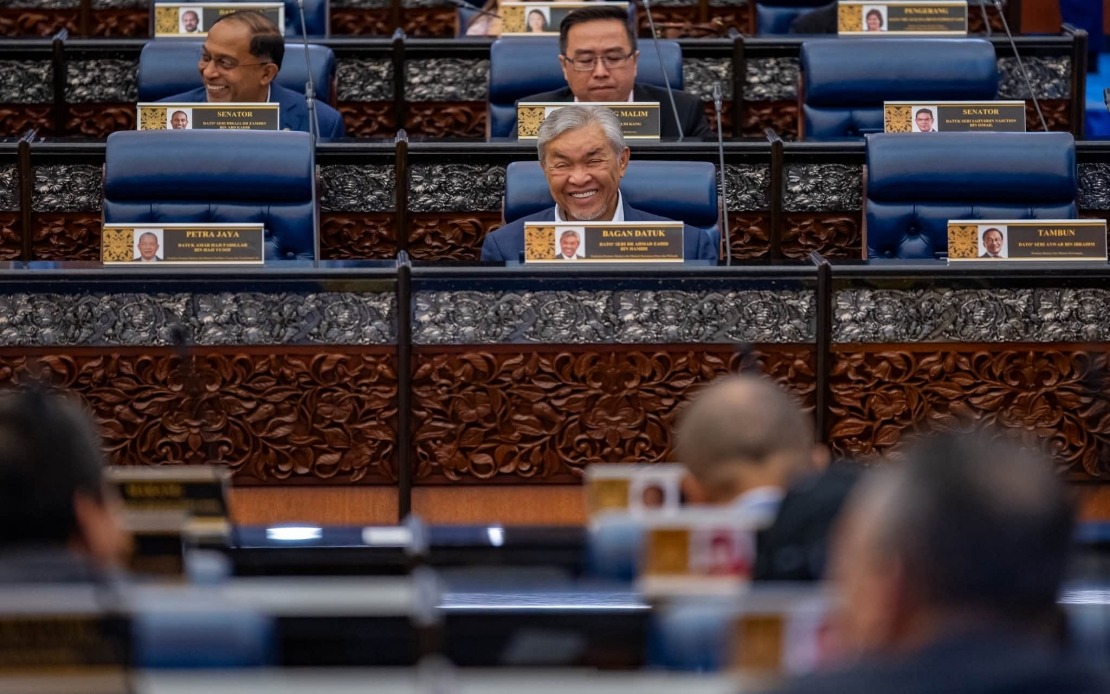
Deputy Prime Minister Datuk Seri Dr Ahmad Zahid Hamidi has stressed that any critical observations directed at Lembaga Tabung Haji should be accompanied by tangible, responsible measures rather than remaining as mere commentary. Speaking in the wake of a parliamentary debate on findings affecting the pilgrimage fund, Zahid emphasised that such scrutiny must translate into meaningful reform if the venerable Islamic institution is to retain public confidence and avoid becoming mired in ongoing disputes.
Zahid, who holds the additional portfolio of Rural and Regional Development Minister, framed his remarks within the context of parliamentary accountability. He noted that legislators have been furnished with a dedicated platform to thoroughly examine, discuss, and work towards resolving outstanding matters surrounding Tabung Haji during a special sitting of the Dewan Rakyat. This forum, he suggested, represents an opportunity for substantive engagement rather than a venue for unsubstantiated claims or conjecture detached from factual foundation.
The Deputy Prime Minister's intervention reflects broader concerns about the need to balance legitimate oversight with institutional stability. Tabung Haji, as the nation's primary vehicle for facilitating hajj pilgrimage for Malaysian Muslims, carries deep religious and financial significance for millions of citizens. Any prolonged reputational damage or loss of confidence could undermine its ability to fulfil this crucial social function. Zahid's call for responsibility appears designed to establish a framework whereby criticism contributes constructively to improvement rather than becoming an end in itself.
The special parliamentary sitting was convened following the government's decision to declassify and publicly release findings from a Royal Commission of Inquiry into Tabung Haji operations on July 29. This unprecedented step represented a significant transparency initiative, granting Members of Parliament access to detailed examination of the institution's performance. The move enabled lawmakers to scrutinise evidence, debate implications, and extract commitments for corrective measures within a formal legislative setting.
The Royal Commission's investigation concentrated on Tabung Haji's management and operational practices spanning the 2014 to 2020 period, a timeframe that witnessed considerable institutional stress and public controversy. The inquiry's findings documented multiple operational shortcomings and structural weaknesses that required systematic attention. The commission subsequently formulated 25 distinct recommendations aimed at strengthening governance, financial controls, and operational transparency across the organisation.
Implementation progress on these recommendations has been reasonably encouraging, with Tabung Haji reporting that approximately 75 per cent of the 25 recommended measures had been executed by the end of July. This pace suggests institutional responsiveness to identified problems, though completion of the remaining quarter of recommendations remains essential. The variability in implementation progress underscores the importance of sustained parliamentary attention to ensure follow-through on commitments.
Zahid's emphasis on moving beyond mere allegation toward constructive resolution carries particular resonance in Malaysia's current political environment. Public institutions frequently become caught between legitimate demands for accountability and politically motivated attacks designed to undermine confidence. By explicitly distinguishing between criticism grounded in evidence and baseless conjecture, Zahid attempted to elevate the tone of discourse and redirect focus toward institutional strengthening rather than partisan scoring.
The Deputy Prime Minister invoked religious and patriotic sentiment in calling for wisdom and sincerity from all stakeholders engaged with the Tabung Haji issue. His appeal for solutions that serve the broader Muslim community—the ummah—and national interests frames reform not as punishment or blame but as collective responsibility. This framing may help depoliticise what could otherwise become a divisive issue.
For Malaysian pilgrims and their families, the practical implications of this institutional reform agenda are significant. Tabung Haji manages savings accumulated over years for one of Islam's five pillars, and any mismanagement directly affects individuals' ability to fulfil religious obligations. Restoring and maintaining confidence in the institution's governance therefore represents not merely an administrative concern but a matter touching personal faith and financial security for hundreds of thousands of Malaysians.
The transparency initiative represented by the RCI report's public release also establishes an important precedent for institutional accountability in Malaysia's Islamic finance sector and governance more broadly. By subjecting a religiously significant institution to formal inquiry and parliamentary examination, the government signalled that no organisation remains beyond scrutiny. Whether this precedent will extend to other bodies remains to be seen, but it reflects evolving expectations regarding public accountability.
Looking forward, the effectiveness of Malaysia's Tabung Haji reform efforts will depend on sustained implementation momentum and continued parliamentary vigilance. The special sitting provided a formal occasion for debate, but real change will be measured through operational improvements, enhanced transparency mechanisms, and restored public confidence. Zahid's call for responsible action paired with criticism provides a reasonable framework for this ongoing process, though success ultimately depends on institutional commitment and political will to see reforms through to completion.

