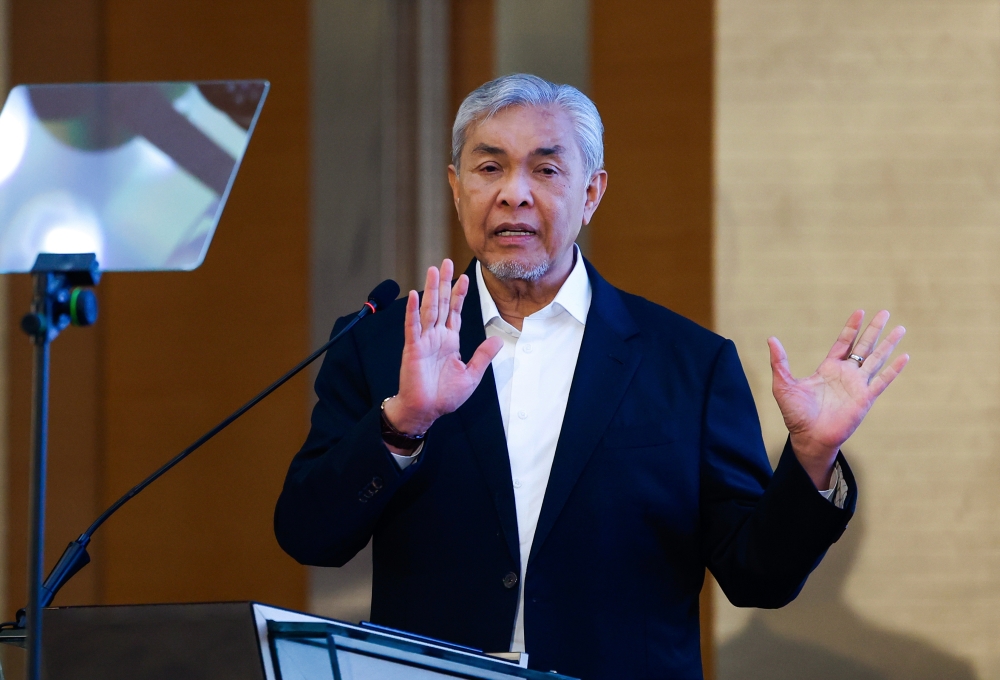
Deputy Prime Minister Zahid Hamzah has signalled that Malaysia's government intends to expand the scope of the Royal Commission of Inquiry scrutinising Tabung Haji beyond investigating what went wrong during the initial crisis period, recommending instead that the review encompass the fund's rehabilitation efforts and operational changes made since losses were discovered.
Speaking in Seremban on July 30, Zahid articulated this position as the Cabinet prepares formal recommendations regarding the inquiry's parameters. His intervention suggests growing consensus within the government that a comprehensive examination must address not only the decision-making and investment strategies that depleted the pilgrimage fund's reserves, but also how effectively management has worked to restore public confidence and financial stability.
Tabung Haji, the state-owned institution responsible for managing savings from Muslim Malaysians preparing for the Hajj pilgrimage, faced severe reputational and financial damage after acknowledging substantial investment losses. The scale of the shortfall shocked ordinary depositors who rely on the fund as a secure savings mechanism, and prompted calls from civil society and opposition politicians for thorough accountability. The decision to establish an RCI reflected the government's acknowledgment that the matter demanded independent investigation of the highest order.
The significance of Zahid's proposal lies in its implicit recognition that understanding institutional failure requires examining the complete trajectory. A narrow investigation confined to the period when losses occurred risks overlooking critical questions about governance improvements, management accountability, and whether current leadership possesses the competence to prevent recurrence. By extending the inquiry's remit to recovery operations, the government signals willingness to expose whether reform initiatives represent genuine structural change or merely superficial adjustments.
This approach carries particular importance for Malaysia's broader governance narrative. At a moment when public trust in government institutions remains fragile following various scandals, demonstrating rigorous oversight of agencies managing public assets matters substantially. Depositors in Tabung Haji are predominantly ordinary Malaysians of modest means who depend upon the fund's integrity. An RCI that merely catalogues historical failures without evaluating whether the institution has truly transformed would leave fundamental questions unresolved about whether Malaysians can trust their savings to state-managed entities.
The extended scope also reflects practical necessity. Recovery from such institutional trauma involves multiple phases: acknowledging losses, identifying responsibility, implementing structural reforms, rebuilding operational capacity, and restoring stakeholder confidence. Investigating only the crisis phase produces an incomplete historical record and fails to test whether management learned from failure or merely circled the wagons. An inquiry examining recovery efforts can determine whether promised improvements actually materialised and whether current custodians genuinely comprehend what precipitated the disaster.
For Malaysian pilgrims and their families, the broader RCI mandate carries direct consequences. Hajj preparation represents a significant financial commitment undertaken years in advance, often involving careful household budgeting. Depositors must have absolute confidence that their accumulated savings remain protected and accessible when pilgrimage obligations mature. An inquiry that validates management's recovery efforts—or conversely, reveals continued inadequacy—provides the transparency depositors deserve before entrusting further resources to the institution.
The extension of the RCI's review period also addresses a potential accountability gap that narrower investigations might overlook. Management teams can appear cooperative during inquiries into historical decisions whilst simultaneously resisting scrutiny of their own remedial actions. By mandating examination of the recovery phase, the Cabinet ensures that contemporary leadership cannot escape accountability simply by blaming predecessors. This approach incentivises current administrators to ensure that recovery efforts genuinely reflect best practices and international standards for pilgrimage fund management.
Zahid's intervention also hints at potential tensions within government regarding how comprehensively the RCI should operate. Some officials may prefer limiting the inquiry's scope to minimise operational disruption and shield current administrators from extended scrutiny. By publicly advocating for broader parameters, Zahid signals that Cabinet leadership favours accountability over convenience, though whether this preference translates into formal RCI terms of reference remains pending.
Regionally, Malaysia's handling of the Tabung Haji inquiry could influence how other Southeast Asian nations manage similar institutional crises. Should the RCI conduct a genuinely independent and comprehensive examination extending through the recovery phase, it establishes a precedent for rigorous investigation of state agencies. Conversely, a narrowly confined inquiry might suggest that political expediency trumps accountability even when public assets and ordinary citizens' savings are at stake.
The practical implementation of an extended RCI mandate presents logistical challenges. Investigators must examine not only historical documents but also ongoing operations, current management decisions, and evolving circumstances. This complexity demands substantial resources and time. Yet the alternative—a superficial inquiry that avoids examining recovery efforts—would ultimately serve neither public interest nor institutional rehabilitation.
Moving forward, the Cabinet's formal decision on RCI parameters will indicate how seriously government intends to pursue genuine accountability. If Zahid's position prevails, Malaysian depositors will gain assurance that their concerns receive comprehensive investigation. If the inquiry's scope remains restrictive, however, questions about whether meaningful reform actually occurred will persist, potentially continuing to undermine confidence in Tabung Haji's stewardship.

