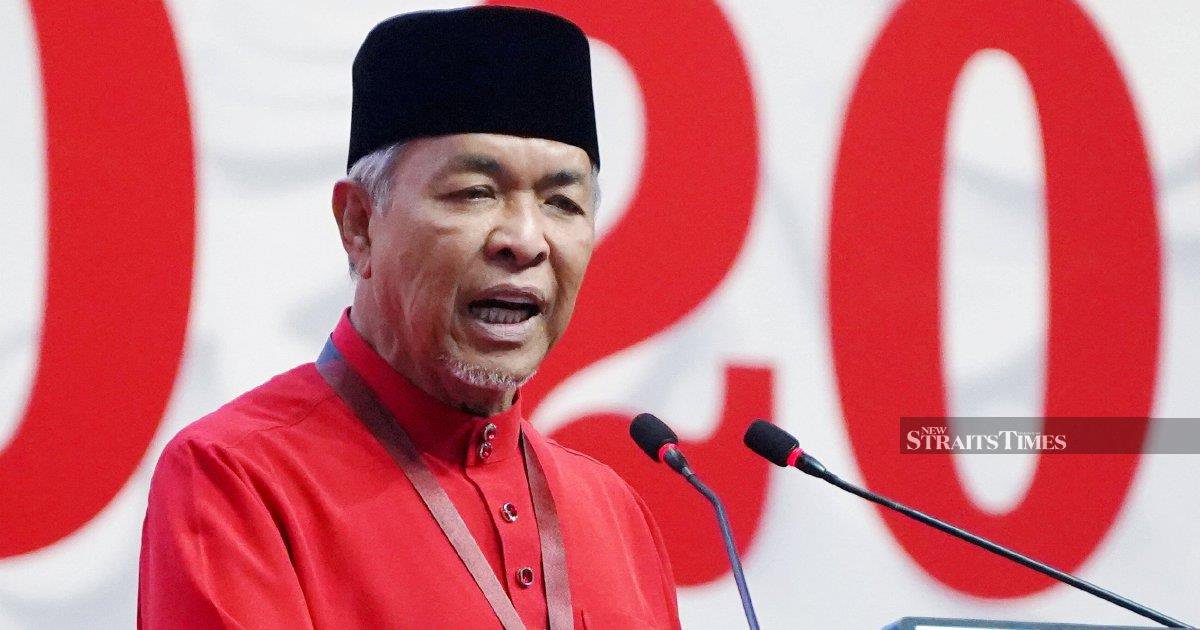
Datuk Seri Dr Ahmad Zahid Hamidi, the chairman of Barisan Nasional and president of Umno, has pledged that neither coalition nor party will offer protection to individuals or groups found culpable by the forthcoming Royal Commission of Inquiry into Tabung Haji, should the investigation uncover evidence of wrongdoing, criminal breach of trust, or deficient governance.
The statement carries particular weight given Malaysia's ongoing efforts to rebuild institutional credibility following high-profile corruption scandals. Zahid's declaration suggests a willingness to subject party members and affiliated officials to scrutiny, a posture that could either signal genuine commitment to accountability or represent a tactical positioning ahead of the inquiry's eventual findings. The nuance matters considerably for understanding how Malaysian political power structures respond when faced with evidence of institutional failure.
Tabung Haji, the pilgrimage fund that manages savings for Malaysian Muslims intending to perform the Hajj, has long served as a financial institution of considerable public trust. Its governance troubles have sparked widespread concern within the Muslim community and among ordinary Malaysians who view the fund as a custodian of personal religious savings. The deterioration of public confidence in TH's management prompted calls for a comprehensive investigation, leading to the establishment of the RCI.
Zahid's pronouncement on this matter reflects broader political calculations within BN and Umno circles. Both entities face persistent scrutiny over governance standards and institutional management, particularly in the years following the 2018 electoral transition when the coalition lost federal power. The commitment to non-interference in inquiry findings, if implemented consistently, could serve to differentiate the party's approach to accountability from perceptions of past patronage-driven governance.
The specific language employed—refusing to compromise—suggests an awareness that partial measures or selective accountability would undermine credibility. In the Malaysian context, where political dynasties and factional loyalty have historically complicated justice mechanisms, such unambiguous positioning against protectionism carries symbolic value beyond its immediate application. Whether this reflects institutional reform or political repositioning depends heavily on how subsequent events unfold.
The TH crisis encompasses multiple dimensions: potential mismanagement of pilgrim funds, questionable investment decisions, governance lapses in oversight structures, and possible conflicts of interest among decision-makers. Each of these areas involves not merely individual culpability but systemic questions about how Islamic financial institutions should operate under public trust. The RCI's mandate will likely extend beyond identifying specific wrongdoers to examining structural vulnerabilities.
For Malaysian readers across diverse backgrounds, the implications extend beyond internal party politics. A pilgrimage fund serving millions of Muslims represents a unique nexus of religious obligation, financial security, and state responsibility. Public confidence in such institutions affects not only personal savings but also social cohesion. The inquiry's findings and subsequent accountability measures will signal whether Malaysia's institutional frameworks can effectively address high-level governance failures.
The regional dimension cannot be overlooked. Southeast Asia's Islamic finance sector, growing rapidly across Malaysia, Indonesia, Brunei, and other nations, watches closely how major players manage crises and enforce accountability. The handling of TH's troubles could influence perceptions of Islamic financial governance across the region, affecting investor confidence and institutional development.
Zahid's statement also merits examination in light of ongoing political realignments in Malaysian politics. As Umno rebuilds its political position and BN recalibrates its coalition strategy, positioning on accountability issues shapes party identity and electoral appeal. Different constituencies value transparency and governance standards differently; managing expectations across these groups while maintaining credibility presents genuine strategic challenges.
The actual test of such commitments emerges when RCI findings implicate specific individuals with political influence or party connections. The statement's strength lies in its categorical nature—offering no conditional language or escape clauses. However, the gap between public pledges and institutional follow-through remains a persistent feature of Malaysian political practice. Implementation will require not merely party directives but sustained pressure from civil society, media scrutiny, and institutional independence in prosecution mechanisms.
Observers should anticipate that the inquiry's recommendations will likely extend beyond individual accountability to systemic reforms in TH's governance structure, oversight mechanisms, and stakeholder representation. Implementing such reforms while maintaining public trust requires genuine political will that transcends factional considerations within governing coalitions. The coming months will reveal whether Zahid's pledge represents genuine institutional commitment or political rhetoric designed to navigate immediate reputational challenges.
Ultimately, the credibility of Malaysia's governance institutions depends on sustained implementation of accountability principles, not merely rhetorical commitments. The TH inquiry presents a tangible opportunity to demonstrate whether Malaysian political and institutional leadership can subordinate partisan interests to public accountability requirements. The outcome will resonate across Malaysian society and potentially influence institutional development patterns throughout Southeast Asia.

