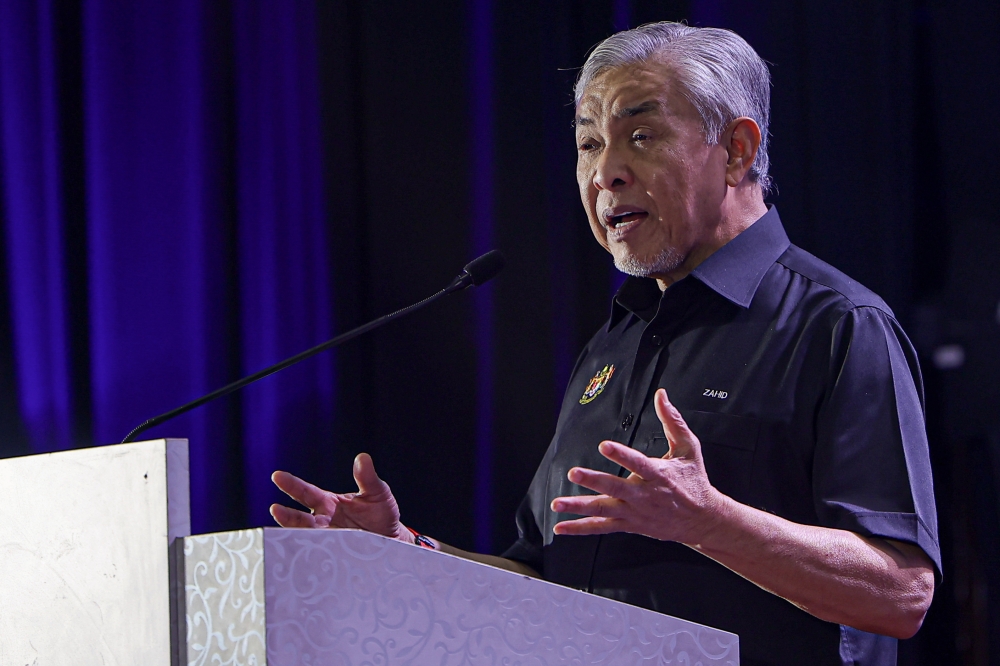
Deputy Prime Minister Datuk Seri Ahmad Zahid Hamidi has raised concerns about the conduct of ministry officials, contending that some employees faced pressure to participate in events organised by or associated with Barisan Nasional during the recent state election campaigns. Speaking in Putrajaya on August 6, Zahid characterised the alleged incidents as troubling examples of potential politicisation within the bureaucracy, a sensitive matter in Malaysia's governance framework where civil service neutrality is constitutionally enshrined.
The allegation touches on a longstanding tension in Malaysian politics regarding the boundary between government machinery and ruling coalition activities. While the distinction between state apparatus and party apparatus can blur during electoral periods, explicit pressure on public servants to support partisan campaigns violates established ethical guidelines. Zahid's public airing of these grievances suggests internal tensions within the administration over campaign practices, particularly given the competitive nature of recent state-level contests where Barisan Nasional faced challengers from opposition coalitions.
The Deputy Prime Minister's comments occur against a backdrop of heightened scrutiny on electoral conduct in Malaysia. International observers and domestic watchdog groups have increasingly focused on whether state resources and personnel are being deployed equitably across competing political entities. Any systematic pressure on civil servants to attend party-linked gatherings would undermine the principle of impartial governance that underpins Malaysia's democratic institutions and the public trust in bureaucratic processes.
Zahid's intervention signals that concerns about such practices have reached senior levels of government, suggesting the issue extends beyond isolated incidents at departmental level. The fact that a deputy premier felt compelled to address the matter publicly indicates that complaints from affected officers may have accumulated or that the practice became sufficiently visible to warrant acknowledgment. This represents a notable instance of internal accountability mechanisms at work, even if the full extent of any irregularities remains unclear.
Malaysia's civil service regulations explicitly prohibit officers from engaging in partisan political activity or allowing themselves to be used in ways that compromise the neutrality of government institutions. The Public Officers' Code of Ethics sets out expectations that employees perform their duties without favour or prejudice towards any political party. When ministry staff are pressured to attend events with explicit political affiliations, this creates an uncomfortable grey area where personal participation and official capacity become conflated.
The timing of Zahid's remarks, following state election campaigns, suggests these incidents occurred during a period of intense political mobilisation. State polls typically generate significant activity around campaign events, and the temptation for party machinery to mobilise government resources—whether resources, venues, or personnel—intensifies during such contests. The Deputy Prime Minister's willingness to acknowledge that such pressure occurred indicates a recognition that standards may have been breached, even if by party allies or campaign strategists rather than formal government directives.
For Southeast Asian observers, Malaysia's experience offers a case study in maintaining civil service impartiality during competitive elections. The region has seen numerous instances where electoral contests become entangled with state machinery, undermining democratic principles. Zahid's public statement, while not amounting to a formal inquiry or disciplinary action, at least acknowledges the problem and creates space for discussion about remedial measures. This transparency, however limited, contrasts sharply with contexts where such issues are concealed entirely.
The implications for Malaysian civil servants themselves deserve attention. Officers who felt pressured to attend partisan events face difficult choices between career considerations and professional integrity. Zahid's acknowledgment of their predicament may provide some cover for those who resisted such pressure, while also signalling to future campaign organisers that explicit coercion of public employees will not be tolerated at the most senior levels. Yet without formal investigation or clear consequences for those who applied pressure, the protective effect remains largely rhetorical.
Moving forward, the issue raises questions about enforcement mechanisms and accountability structures within Malaysia's bureaucracy. If ministry officers were indeed pressured, identifying and addressing the actors responsible—whether party officials, senior bureaucrats, or campaign coordinators—becomes necessary to restore confidence in state institutions. Zahid's comments suggest awareness of the problem but leave open whether substantive action will follow, particularly if those involved are politically well-connected individuals unlikely to face serious consequences.
The Deputy Prime Minister's remarks also carry implications for the broader project of strengthening Malaysia's democratic institutions. Public confidence in fair and impartial governance depends partly on the perceived neutrality of civil servants, and allegations of politicisation, even when raised by government insiders, can erode that confidence. The challenge for policymakers lies in translating Zahid's acknowledgment into concrete reforms that prevent future pressure campaigns and establish clear remedies for affected officers.
As Malaysia continues to navigate competitive electoral politics in a diverse, federal democracy, the question of civil service neutrality will likely remain contested. The Deputy Prime Minister's intervention suggests that at least some within government recognise the risks of allowing state machinery to become too closely entangled with partisan operations. Whether this recognition translates into systemic reforms or remains a periodic reminder of standards that are routinely bent during election seasons will shape the trajectory of Malaysian governance.

