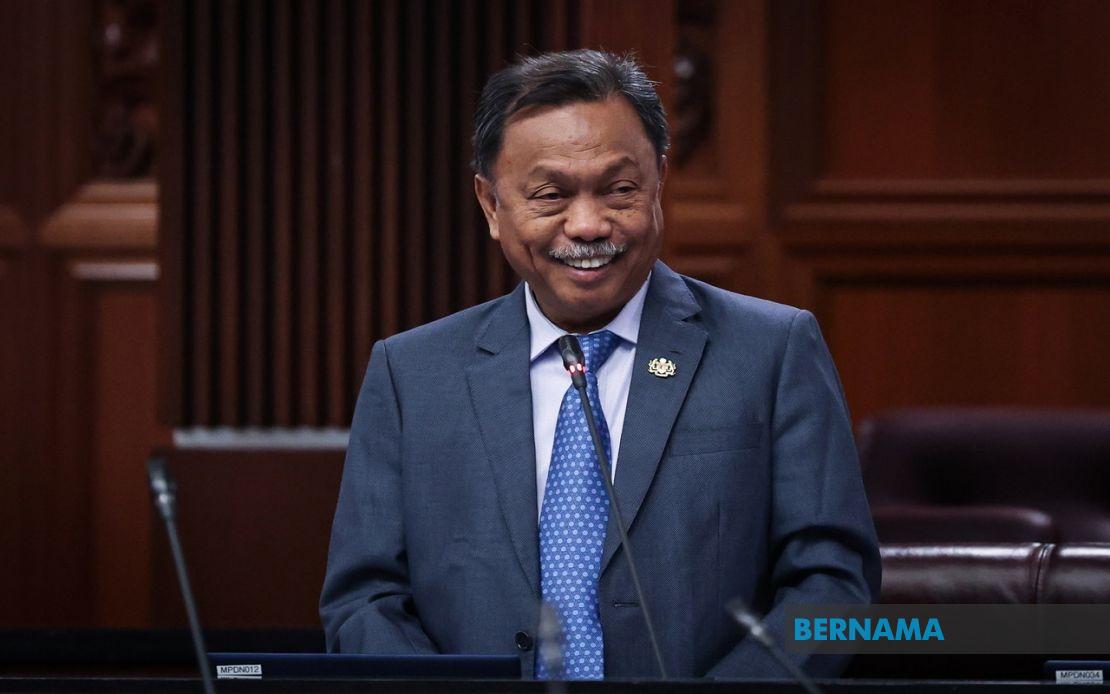
Datuk Dr Mohammad Yusof Apdal, the Deputy Minister for Science, Technology and Innovation, moved swiftly to extinguish speculation about his political future by categorically denying that he has stepped down from his ministerial position. Speaking from his constituency base in Lahad Datu, the Parti Warisan politician issued a public statement through national news agency Bernama rejecting allegations that have gained traction across social media platforms over recent hours.
The specific nature of the claims suggests a coordinated effort to undermine the stability of the Unity Government coalition by targeting a relatively junior member of the ministerial hierarchy. Posts circulating online asserted that Yusof Apdal had formally decided to resign, with the purported resignation effective from the date of the announcement itself. Such claims, were they true, could signal broader fractures within the ruling coalition that has governed Malaysia since late 2022.
Yusof Apdal's response emphasises his continued participation in and loyalty to the federal administration. He explicitly stated his intention to remain embedded within the Unity Government machinery and to persist in executing the responsibilities that his position demands. This straightforward reassurance was designed to put to rest any doubts among his constituents, political allies, and the broader public about the status of his ministerial appointment and his political standing.
The minister characterised the false claims as not merely inaccurate but deliberately malicious in intent. By using the term "malicious," Yusof Apdal suggested that whoever orchestrated the rumour possessed motivation beyond simple misunderstanding. In Malaysian politics, where social media has become a potent tool for character assassination and political manoeuvre, such accusations often precede broader campaigns designed to destabilise ministerial coalitions or create pressure for cabinet reshuffles.
The dissemination of unverified political gossip carries consequences that extend beyond the individual minister. Yusof Apdal noted that such false information damages public trust in government institutions and political information ecosystems. When citizens encounter contradictory claims about governmental stability, they may question the reliability of official communications and become vulnerable to further misinformation. This erosion of informational trust undermines the government's ability to communicate policy effectively to the public.
Yusof Apdal's position as Lahad Datu Member of Parliament adds a constituency dimension to his statement. Lahad Datu, located in eastern Sabah, has particular significance in Malaysian politics as both a symbolic and strategic constituency. By addressing the issue directly from his parliamentary base, Yusof Apdal demonstrated attentiveness to his constituents' concerns and reinforced his commitment to representing their interests at both state and federal levels.
The role of Parti Warisan in the current political configuration remains noteworthy. As a Sabah-based political party, Warisan represents regional interests within the broader Unity Government framework. Any departure by a Warisan minister would carry implications for the coalition's representation of East Malaysian perspectives and could create ripple effects within Sabah's political landscape, where coalition stability depends on careful management of party interests and ministerial portfolios.
Yusof Apdal's appeal to the public to resist spreading unverified information reflects an increasingly common challenge facing governments across Southeast Asia. The speed and reach of social media dissemination means that false claims can circulate globally within minutes, making it essential for officials to respond rapidly and authoritatively. By urging citizens to rely on official sources, Yusof Apdal attempted to redirect information flows away from unmoderated social platforms toward institutional channels perceived as more reliable.
The incident illuminates the vulnerability of coalition governments to destabilisation tactics. The Unity Government, which comprises multiple political parties with distinct interests, provides potential fracture points that opponents can exploit through rumour campaigns. By targeting mid-level ministers like Yusof Apdal, critics test the coalition's resilience and attempt to create headlines suggesting instability. Each such claim, even when quickly denied, contributes to an atmosphere of uncertainty that can gradually erode public confidence in governmental continuity.
Yusof Apdal's Science, Technology and Innovation portfolio represents areas increasingly central to Malaysia's economic transformation agenda. The denial of his resignation therefore carries symbolic weight beyond his individual position. Continuity in ministerial tenure, particularly in technical portfolios requiring sustained implementation of complex policies, matters for governmental effectiveness. Frequent ministerial turnover disrupts policy continuity and institutional learning.
The response also reflects evolved communication strategies within Malaysian government, whereby ministers now regularly use news agency statements to address public concerns directly rather than waiting for formal parliamentary questioning. This approach allows officials to frame narratives quickly and reach both domestic and international audiences simultaneously. For Yusof Apdal, the Bernama statement served as both clarification and political insurance against the rumour gaining further traction.
Looking forward, the incident serves as a reminder that the Unity Government's coalition dynamics continue generating political friction. Whether through genuine disagreements on policy, competition for resources, or opportunistic destabilisation by opposition figures, such challenges will likely persist. How the government manages these pressures, both through clear communication and substantive addressing of underlying tensions, will shape its ability to maintain coherence through the remainder of its term.

