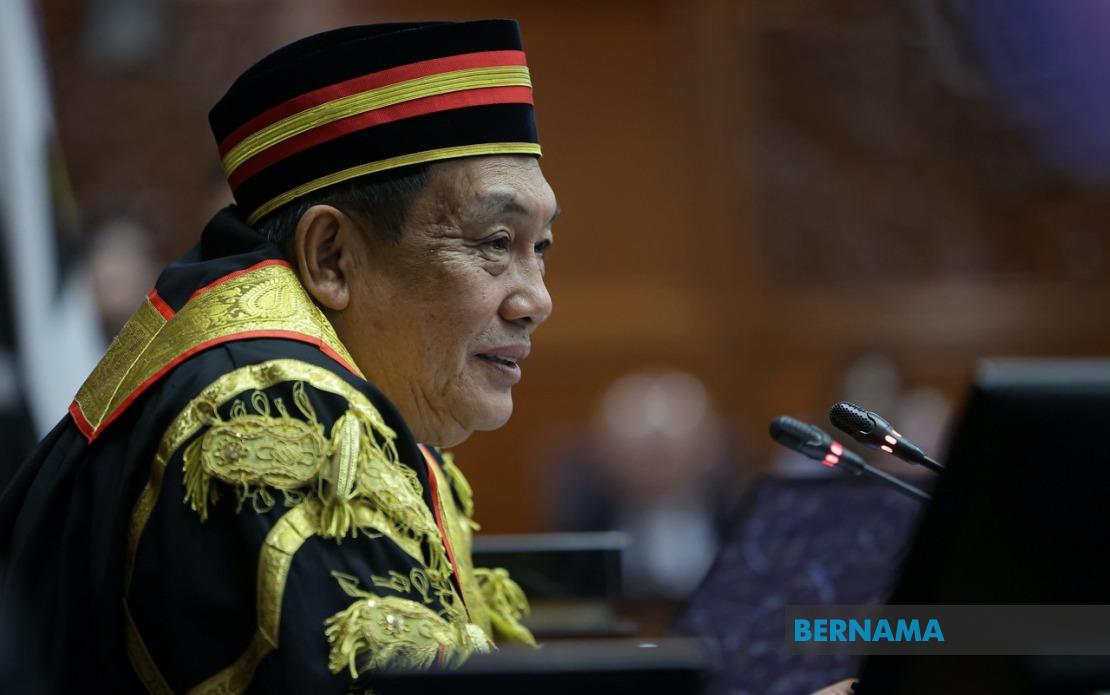
Dewan Negara President Datuk Awang Bemee Awang Ali Basah has characterised Malaysia's Youth Parliament (PBMy) as a transformative institution capable of shaping citizens who grasp democratic principles, engage in reasoned discourse, and communicate their convictions with maturity. Speaking during the "Tranung Mari! From Campus to Parliament: Youth Voices Shaping Malaysia's Future" programme at Universiti Malaysia Terengganu on August 27, Awang Bemee underscored the significance of creating institutional pathways that allow young people to absorb the mechanics and philosophy of democratic governance.
The Senate president positioned Youth Parliament as a pedagogical instrument where participants acquire hands-on familiarity with democratic institutions and practices. Through engaging in deliberation, articulating positions, responding to pushback, and ultimately accepting collective determinations, young participants develop an understanding that advocacy and leadership inherently carry obligations. Awang Bemee stressed that authentic leadership transcends mere oratory prowess; it demands attentiveness to constituents, problem-solving capacity grounded in empathy, and recognition that holding authority means serving collective interests rather than pursuing personal ambition.
Within Malaysia's institutional architecture, Parliament functions as the apex decision-making body, yet Youth Parliament fulfils a complementary function by channelling the perspectives and energy of the younger demographic. Awang Bemee argued that this complementarity enriches democratic deliberation by ensuring generational diversity of thought influences policy conversations. He emphasised that young citizens represent the nation's forward momentum and potential, and their involvement in parliamentary processes—whether symbolic or substantive—signals institutional commitment to intergenerational dialogue and continuity.
The Senate president articulated three foundational pillars essential for empowering youth within democratic societies. The first pillar centres on cultivating inclusive and transparent democracy wherein governments create substantive opportunities for citizens, particularly youth, to express viewpoints, receive acknowledgement, and witness their concerns meaningfully addressed. He highlighted Malaysia's multicultural composition as a potential strength, contingent upon deliberate cultivation of cross-community understanding and reciprocal respect. Without these conditions, demographic diversity risks becoming a source of fragmentation rather than enrichment.
The second pillar focuses on educational frameworks extending beyond conventional academic metrics to encompass competencies increasingly vital in contemporary contexts. Awang Bemee identified critical reasoning, technological literacy, artificial intelligence comprehension, inventive capacity, interpersonal communication, and informed civic participation as essential learning domains. He further linked educational development to emerging economic frontiers, particularly the Blue Economy—encompassing marine resource sectors, tourism, renewable energy generation from oceanic sources, and shipping logistics—alongside environmental stewardship and infrastructure expansion in coastal regions. This framing connects youth development to tangible economic pathways, suggesting that Malaysia's youth possess agency in accessing novel opportunities if adequately equipped.
Responsibility accompanies freedom constitutes the third pillar. Awang Bemee cautioned that democratic societies granting expansive expressive liberty simultaneously impose ethical obligations, particularly regarding technology and digital communication platforms. He articulated a framework of digital citizenship emphasising verification protocols, critical evaluation of information, contextual comprehension before forming judgments, and contemplation of consequences preceding action. This injunction against spreading unsubstantiated claims or malicious falsehoods reflects concerns about information ecosystem degradation in Southeast Asian contexts where social media significantly shapes political discourse.
The Youth Parliament initiative functions as component of Parliament Malaysia's broader outreach strategy aimed at strengthening youth engagement within parliamentary democracy and narrowing institutional distance between universities and the national legislature. The roadshow element of the programme deliberately brings parliamentary processes and representatives to campuses, democratising access to legislative spaces that many young citizens rarely encounter. By hosting forums such as "Malaysian Youth: Drivers or Spectators?," the initiative creates structured dialogue between Parliament's senior administrators, including Parliament Malaysia chief administrator Datuk Dr Ahmad Husaini Abdul Rahman, and student populations. These exchanges permit youth to articulate concerns directly to institutional decision-makers rather than channelling feedback through intermediaries.
The broader initiative operates alongside secondary objectives encompassing cultivation of leadership characterised by ethical foundations and development of a cohort simultaneously knowledgeable, conscientious, and prepared to assume greater responsibilities in steering Malaysia's trajectory. Implicit within this framing is recognition that youth political disengagement or cynicism poses risks to institutional legitimacy and democratic renewal. By investing in structures permitting substantive youth participation, Parliament signals that generational renewal of democratic commitment requires institutional adaptation and genuine accommodation of emerging voices.
For Malaysia specifically, Youth Parliament initiatives carry particular significance given regional dynamics and domestic challenges. Southeast Asian democracies face evolving pressures from disinformation, polarisation, and voter apathy, particularly among younger populations. Countries within the region have experienced democratic backsliding or institutional weakening in recent years, heightening stakes around whether succeeding generations develop robust commitment to democratic norms or gravitate toward alternatives emphasising order over participation. Malaysia's explicit investment in youth democratic formation thus represents a strategic commitment to sustaining institutions against these broader currents.
Awang Bemee's framing of Youth Parliament as a "school of democracy" carries implications for how Malaysia positions itself regionally and internationally. Neighbouring democracies and authoritarian systems alike observe how established democracies nurture younger cohorts. A Malaysia demonstrably committed to cultivating informed, ethically grounded, and engaged youth sends signals about institutional confidence and long-term institutional stability. Conversely, if such initiatives remain peripheral rather than central to national education and civic policy, youth disengagement risks deepening, with consequences for electoral participation, institutional trust, and democratic vitality.
The emphasis on diversity, mutual respect, and cross-community understanding within Youth Parliament contexts also addresses specific Malaysian circumstances. Multiethnic and multireligious societies require deliberate institutional mechanisms fostering understanding across lines of difference. Youth Parliament forums bringing together students from varied backgrounds potentially generate solidarity and shared civic identity transcending communal categories. Such outcomes remain contingent upon programme design genuinely facilitating inter-group exchange rather than reproducing existing hierarchies or divisions. Awang Bemee's repeated invocation of diversity as strength, rather than merely managing diversity as potential liability, reflects aspirational framing of pluralism as democratic asset.

