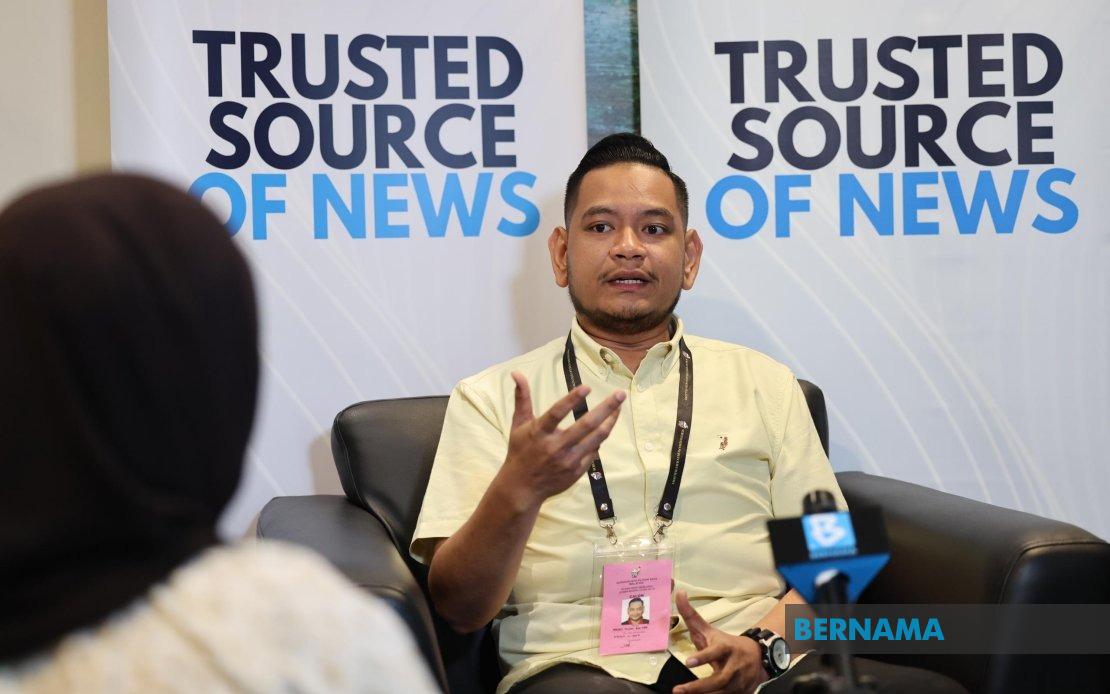
The Johor state election campaign in Sedili has become a generational statement, with Pakatan Harapan's Amirul Huzni Onn deliberately positioning his relative inexperience as a competitive advantage rather than a liability. The 29-year-old Amanah Youth chief enters the July 11 contest undeterred by the prospect of squaring off against two considerably more established politicians, signalling a deliberate strategic pivot toward presenting youthful dynamism in a state election where established political machinery has long dominated the landscape.
Amirul Huzni's opponent roster reflects the depth of experience arrayed against him. Incumbent Barisan Nasional candidate Muszaide Makmor carries the weight of the coalition's organisational machinery, while Perikatan Nasional's Rasman Ithnain brings three consecutive terms representing the same seat, embodying the continuity argument that both BN and PN typically deploy in rural constituencies. Yet rather than conceding ground based on such credentials, Amirul Huzni reframes the equation entirely, arguing that political newcomers carry inherent advantages that years of incumbency cannot replicate.
The candidate's central argument rests on what he terms the "blank canvas" proposition—the notion that untested politicians lack the baggage of unfulfilled promises or administrative failures that accumulate over decades of governance. This framing carries particular resonance in Malaysian politics, where voter frustration over undelivered pledges has periodically shifted electoral dynamics at state and federal levels. By explicitly rejecting the traditional hierarchy where seniority and established connections determine electoral viability, Amirul Huzni appeals implicitly to voters fatigued by promises made repeatedly without materialisation.
His campaign manifesto deliberately constrains scope rather than inflating expectations. Where many candidates issue expansive wish lists, Amirul Huzni concentrates on a single tangible objective: completion of a long-stalled fuel station in Sedili. The facility represents more than infrastructure; it symbolises the gap between political commitments and ground-level delivery that resonates throughout rural Malaysia. The site has sat cleared for over a year without progress, transforming the fuel station into a concrete measure by which the constituency's electorate can judge his performance or lack thereof should he prevail.
This approach carries implicit criticism of his predecessors while avoiding antagonism. Rather than attacking Muszaide Makmor or Rasman Ithnain directly, Amirul Huzni permits the simple fact of the incomplete fuel station to indict years of representation. Local fishermen and anglers, economically dependent on rapid access to fuel, constitute a constituency group whose practical needs have gone unmet through multiple electoral cycles. For such voters, a young politician explicitly anchoring his campaign to their immediate requirements may offer fresher appeal than appeals to party loyalty or traditional political networks.
Geographically, Sedili has functioned as a Barisan Nasional stronghold, making Amirul Huzni's three-way contest distinctly unusual. The entry of a credible Perikatan Nasional challenger, Rasman Ithnain, fragments what might previously have been a binary contest, creating space for Pakatan Harapan to emerge as a genuine contender. Rasman Ithnain's decision to contest under the PN banner rather than defend his seat as a BN incumbent introduces unpredictability into a constituency previously characterised by stable coalitional allegiances. Such fragmentation, particularly in constituencies with deep-rooted voting patterns, can advantage candidates positioning themselves as representatives of change.
Amirul Huzni's emphasis on dignified, respectful campaigning reflects awareness that small constituencies maintain dense social networks where personal relationships transcend party affiliation. His explicit commitment to engaging opponents cordially and avoiding negative electioneering acknowledges that harsh campaigning can damage community cohesion and potentially alienate swing voters. This stance also differentiates him from higher-intensity campaigns waged in urban constituencies, where impersonal campaign machinery can sustain adversarial tone without equivalent social friction.
The campaign timing coincides with broader Johor electoral dynamics. The 16th Johor state election encompasses numerous constituencies across the state, with July 11 as the polling date and July 7 designated for early voting. Sedili's dynamics cannot be fully understood in isolation; statewide momentum, whether generated by federal-level political developments or state-specific issues, will influence local voting patterns. Yet in closely fought three-way contests, local factors and candidate positioning can decisively shape outcomes.
Amirul Huzni's strategy implicitly acknowledges that demographic trends favour younger candidates, particularly in constituencies where younger voters have become proportionally significant. While Sedili's fishing-dependent economy suggests demographic skew toward older residents, the presence of migrant workers and younger people in adjacent areas may broaden his appeal beyond traditional constituency boundaries. His youth simultaneously positions him as potentially more accessible to younger voters while paradoxically requiring him to address the practical concerns of economically vulnerable older cohorts like fishermen.
The candidate's framing also reflects evolving Malaysian political culture wherein established networks and machine politics face increasing challenge from performance-based appeals. Voter expectations have shifted, particularly following periods of rapid governance change and consequent exposure to alternative political propositions. In this context, a young candidate credibly committed to a single, achievable objective may resonate more powerfully than elaborate platforms from candidates whose previous terms witnessed modest delivery.
Amirul Huzni's campaign ultimately represents a conscious wager that in contemporary Johor politics, the liabilities of inexperience matter less than the assets of unblemished record, clear prioritisation, and explicit willingness to be judged on specific, measurable outcomes. Whether voters in this traditionally conservative constituency embrace such an unconventional candidacy will provide significant insight into changing electoral behaviour across Malaysian constituencies. The fuel station, rendered into metaphor as well as infrastructure, becomes the measure by which his electoral gamble succeeds or fails.

