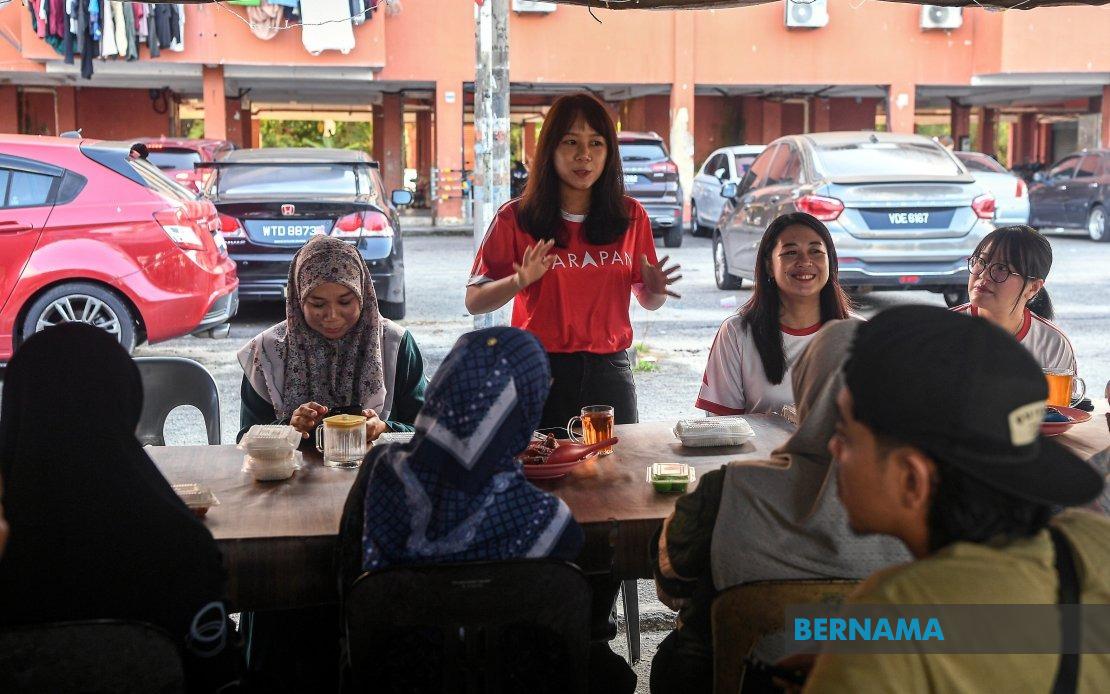
The battle for the Johor Jaya state seat has crystallised around a central theme: how to make the constituency appealing enough for young Malaysians to build their futures there rather than seek opportunities abroad. Lee Wern Yiing, the Pakatan Harapan candidate, embodies this struggle personally. The 30-year-old completed her tertiary education in Singapore and faced the classic dilemma of whether to capitalise on better-paying positions across the causeway or return home to contribute to national development. Her decision to come back speaks to a conviction that Malaysia's reform trajectory offers genuine promise, leading her to join the political machinery as a special officer before being selected to contest the seat.
Lee's choice to enter electoral politics reflects a broader concern among progressives about generational engagement with the democratic process. Young voters, she argues, are far more discerning and politically conscious than conventional wisdom suggests. Rather than viewing them as apathetic or disengaged from civic matters, she contends they actively observe government performance and base their decisions on tangible evidence. This perspective informs her campaign strategy, which prioritises digital and grassroots outreach mechanisms such as the Johor Jaya Run community initiative alongside substantive discussion of youth-relevant policy platforms. As head of the DAP's Socialist Youth wing in Johor, she occupies a position ideally suited to amplify this narrative among her target demographic.
The candidate's policy prescriptions centre on three interconnected challenges confronting younger Malaysians: employment scarcity, housing affordability, and inflationary pressures eroding purchasing power. These are not abstract concerns but lived realities shaping migration decisions within the region. Lee's vision harnesses the Johor-Singapore Special Economic Zone project as a catalyst for local job creation and economic revitalisation. She argues the project remains underdeveloped in terms of its potential to establish a comprehensive employment ecosystem that would retain talent within Johor. By positioning the JS-SEZ not merely as an infrastructure initiative but as a vehicle for career mobility and community stability, she frames economic development in terms of personal aspiration and family continuity.
BN's candidate Chan San San approaches the contest from a foundation of extensive ground-level engagement spanning more than a decade. As an elected member of the Johor Bahru City Council, deputy secretary of the Johor MCA branch, and active volunteer with the MCA Crisis Relief Squad, she has accumulated experience addressing constituent grievances in real time. Chan's campaign narrative emphasises the gap between abstract policy statements and concrete problem-solving. She characterises her activism as rooted in the understanding that ordinary residents' difficulties represent genuine challenges requiring practical solutions, not mere statistics to be tabulated by distant bureaucracies. This grounded approach seeks to counterpose her fieldwork credentials against the perceived idealism of younger contenders.
Chan's platform identifies four strategic priorities intended to reshape Johor Jaya's economic and infrastructural landscape. Foremost among these is reinforcing the local economy through focused investment and support mechanisms. She additionally emphasises positioning Johor Jaya as a crucial transportation nexus within eastern Johor Bahru, with particular attention to integrating the constituency with the Rapid Transit System project. This infrastructure-centric vision aims to improve accessibility and connectivity for residents, reducing commute times and facilitating regional economic integration. Addressing chronic traffic congestion forms part of this broader transportation strategy, acknowledging a perennial grievance among constituents.
The distinction between Lee and Chan reflects divergent conceptualisations of development. Lee emphasises sectoral transformation and knowledge-economy participation through the JS-SEZ, appealing to younger, potentially more educated voters seeking contemporary career pathways. Chan prioritises foundational infrastructure and local economic strengthening, resonating with residents concerned about immediate quality-of-life improvements and transportation logistics. Both frameworks respond to legitimate constituency needs but weight them differently, creating a substantive choice for voters rather than mere personality-based differentiation.
Chan's emphasis on her status as an "anak Plentong"—a daughter of the local area—signals the continued relevance of rootedness and community belonging in Malaysian electoral contests. Despite the increasingly technocratic language surrounding development and the prominence of young, university-educated candidates, voters still value demonstrated commitment to locality and continuity. Chan's decade-long service record provides tangible evidence of sustained engagement beyond campaign cycles. This dynamic creates space for experienced ground operatives within the BN framework, even as opposition parties cultivate younger leadership cohorts.
The Johor Jaya contest occurs within the broader context of the 16th Johor state election, in which 172 candidates are contesting 56 legislative seats. This multi-cornered competition involves not only the dominant PH and BN coalitions but also Parti Bersama Malaysia, represented by Lau Yi Leong, and Independent candidate Lim Hun Peaw. The presence of additional contenders suggests voters have genuine alternatives and may be responding to perceived gaps in mainstream party offerings. Early voting is scheduled for July 7, with the main polling day set for July 11. This compressed electoral calendar limits campaigning time and may advantage candidates with pre-existing name recognition and established support networks.
For Malaysian observers and particularly residents of Johor Bahru, the outcome of elections like Johor Jaya carries implications extending beyond state-level governance. The state parliament influences how regional economic zones like the JS-SEZ develop, which transportation infrastructure receives prioritisation, and which communities receive targeted investment. Moreover, electoral performance in Johor provides signals about broader political dynamics affecting federal-level calculations. The state's strategic location adjacent to Singapore and its role in deepening regional economic integration make it a bellwether for how Malaysian political parties are adapting to contemporary governance challenges.
The candidates' emphasis on retaining young professionals and encouraging return migration reflects anxieties about talent outflow and demographic sustainability affecting Malaysian constituencies. Singapore's continued attractiveness to Malaysian professionals remains a structural challenge that state-level politicians alone cannot resolve, yet their policy choices around local employment generation and quality-of-life improvements contribute meaningfully to the calculus families undertake when deciding where to establish themselves. This reality concentrates attention on whether electoral promises regarding infrastructure, job creation, and economic development translate into implementation after campaigns conclude.
Beyond the immediate contest, the Johor Jaya election exemplifies how Malaysian politics is gradually incorporating developmental nationalism with youth-centric messaging. Both major coalitions are experimenting with appeals emphasising generational renewal, career prospects, and infrastructure modernisation. The extent to which these framings represent genuine strategic reorientation or tactical adaptation to demographic pressures remains an open question. What appears evident is that candidates increasingly recognise that winning younger voters requires substantive engagement with employment and economic anxieties rather than reliance on traditional appeals to party loyalty or communal identity alone. The July 11 polling will provide one indicator of whether this recognition translates into electoral support.

