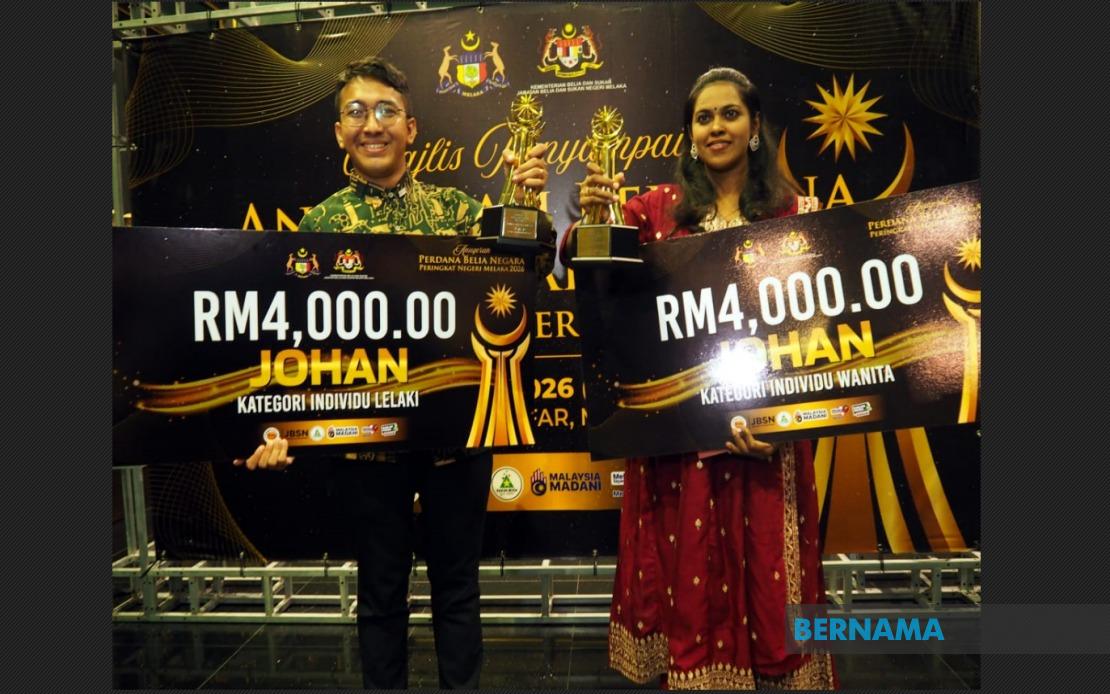
Harris Daniel Hermee, a 28-year-old syariah lawyer, has become the latest recipient of the male individual category award at the 2026 Melaka State-level National Youth Awards, a recognition that caps a remarkable trajectory of youth service and community involvement since his return to the state following his academic pursuits. The honour was presented at a ceremony in Ayer Keroh, officiated by Melaka Chief Minister Datuk Seri Ab Rauf Yusoh, marking a significant achievement for the UniSZA graduate in Islamic studies and law.
Hermee's ascent to the award's pinnacle reflects a deliberate strategy of progressive engagement with youth-centred platforms and initiatives. Speaking to reporters immediately after the ceremony, he characterised the recognition as a watershed moment in his professional journey, underscoring how his involvement has evolved from grassroots community work to engagements spanning district, state, national and international spheres. The recognition carries particular resonance given that his previous third-place finish in the competition the year before had served as a catalyst for deeper commitment rather than complacency.
Central to Hermee's impact has been his dual positioning within both formal organisational structures and government channels. His association with Gerakan Belia 4B Hang Tuah Jaya provided the foundational platform through which he developed and executed programmes emphasising youth empowerment, sporting activities and volunteer engagement. These initiatives frequently operated through collaborative frameworks involving government bodies and established youth organisations, amplifying their reach and institutional legitimacy. Beyond such organisational work, Hermee serves as Youth State Assembly Member for Pengkalan Batu, a role that offers him direct access to policy discourse and community advocacy channels.
The recognition of Hermee's achievements arrives at a moment when Malaysia faces broader questions about youth engagement and political participation. The award scheme itself operates as a barometer of state-level commitment to identifying and nurturing young leaders. For Melaka specifically, the honour reflects an administration attuned to recognising contributions that bridge traditional community structures with contemporary youth concerns. Hermee's profile—combining religious scholarship with civic participation—represents a particular model of youth leadership that bridges multiple constituencies within Malaysian society.
The female category award went to SS Mayuri, a 30-year-old primary school educator based in Alor Gajah, who has distinguished herself through targeted interventions in academic preparation and community health initiatives. Mayuri's trajectory illustrates how youth development work extends beyond organisational membership into the classroom and neighbourhood spaces where sustained, relational impact unfolds. Her engagement with the Melaka and Malaysia Tamil Youth Club Council has centred on structured mentoring for students approaching SPM examinations, combining motivational support with practical academic guidance.
Mayuri's broader community footprint encompasses health-oriented initiatives, most notably blood donation campaigns that activate civic consciousness alongside resource contribution. Such initiatives operate at the intersection of individual health benefit and collective social responsibility, embodying the values that award schemes seek to incentivise. Her statement following the award indicated that recognition has functioned not as an endpoint but as reinforcement for continued investment in youth and community transformation.
For both winners, the awards represent validation of a particular vision of youth leadership emphasising service orientation, institutional engagement and community-based problem solving. Neither has pursued visibility through sensationalism or partisan affiliation; rather, their impact has accumulated through consistent participation in established frameworks and structures. This approach stands in deliberate contrast to more individualistic or attention-seeking models of youth activism that surface periodically in Malaysian public discourse.
The ceremony's presence of Melaka Chief Minister Datuk Seri Ab Rauf Yusoh and state Youth, Sports and NGO Committee chairman Datuk VP Shanmugam signals institutional validation extending beyond symbolic recognition. Such ceremonies function as moments through which state administrations publicly endorse particular conceptions of citizenship and youth participation. The selection and honouring of candidates like Hermee and Mayuri communicates implicit messaging about which forms of youth engagement warrant amplification and replication.
From a Southeast Asian perspective, Malaysia's formal recognition of youth contributors through state-level awards reflects broader regional trends toward institutionalising youth participation frameworks. Countries across the region have developed award mechanisms, youth councils and participatory governance structures as responses to demographic youth bulges and concerns about political alienation. Melaka's scheme positions itself within this regional architecture, even as specific awardees reflect locally grounded engagement patterns and community structures.
The progression visible in Hermee's trajectory—from initial third-place recognition to this year's top honour—suggests that the award scheme functions as a developmental ladder rather than a static ranking. This creates incentive structures encouraging participants to expand their involvement and impact iteratively. For emerging leaders, such feedback mechanisms can prove formative, channelling competitive impulses toward substantive community contribution rather than alternative pursuits.
For Mayuri, the recognition of educational and health-focused work underscores how youth development encompasses institutional sites beyond formal youth organisations. Teachers occupy distinctive positions within communities, operating as trusted figures capable of mobilising resources and influencing trajectories. Her incorporation into award recognition acknowledges this structural significance and validates the pedagogical work of preparing younger cohorts for examination success and civic engagement simultaneously.
Looking forward, both awardees face implicit expectations to leverage their recognition toward expanded platforms and influence. Awards of this character frequently function as launching points for further institutional roles, speaking engagements and policy consultation opportunities. Whether Hermee channels his recognition toward legal reform advocacy or Mayuri expands her educational mentoring models into structured programmes, their award status creates political and social capital available for reinvestment into youth development ecosystems.
The 2026 Melaka awards thus represent more than ceremonial acknowledgment of individual achievement. They constitute a statement about institutional priorities, a development framework for emerging leaders, and a signal to constituencies about which forms of participation warrant public endorsement and resource allocation. As Malaysia navigates questions about youth political engagement and community cohesion, recognising figures like Hermee and Mayuri helps shape the conversation toward substantive service and institutional participation as pathways to meaningful social contribution.

