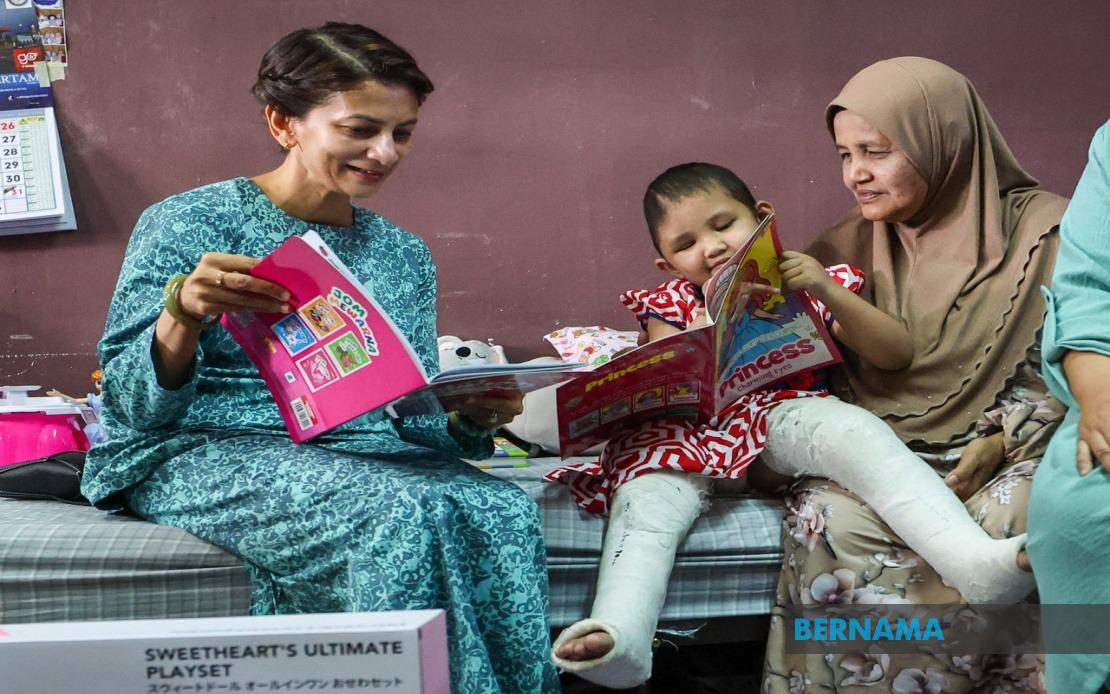
A three-year-old girl who survived one of the region's most devastating family tragedies is defying medical expectations with her remarkable progress toward recovery. Aulia Sofea Ahmad Shafiq, discharged from Sultanah Bahiyah Hospital in Alor Setar on July 2 after nearly a month of intensive treatment, now resides in Bertam with her paternal aunt Siti Nor Atikah Ahmad Syukri, who has become her primary caregiver following the fatal crash that claimed the lives of six relatives.
The tragedy unfolded on June 7 when the family's newly purchased Proton X50 collided with a lorry while en route from Penang to Merbok. The impact was catastrophic. Aulia Sofea's parents, Ahmad Shafiq Ahmad Shukri and Jamaliah Sannusi, perished in the crash along with her two-month-old brother Ahmad Mikail. Three other relatives also lost their lives: her grandmother Nora Mhd Husin, her uncle Ahmad Fahim Ahmad Shukri, and her cousin Iskandar Affan Ibrahim, a seven-year-old boy. Against slim survival odds, Aulia Sofea emerged as the sole survivor, though bearing severe injuries that have profoundly altered her immediate future.
The child's physical injuries remain substantial. Both of her legs sustained fractures in the collision, preventing her from walking despite her otherwise active demeanor and improving strength. Beyond the orthopedic damage, Aulia Sofea experienced serious head trauma and catastrophic damage to her left eye, including a ruptured eyeball that necessitated emergency surgical intervention. Medical teams worked to preserve the eye itself, though the extent of any potential vision recovery remains uncertain. According to Siti Nor Atikah, ophthalmologists have indicated that the child may regain some sight, but physicians cannot yet definitively determine whether her vision will be normal, impaired, or completely lost pending further specialized examinations scheduled for late July.
The psychological toll of the tragedy unfolded gradually as Aulia Sofea regained consciousness approximately two weeks after the incident. Her caregivers faced the difficult task of informing the young child about the deaths of her parents and siblings. Despite these profound losses, Siti Nor Atikah reports that Aulia Sofea displays the resilience characteristic of early childhood, exhibiting playful behavior and engagement with her environment while remaining mobile within the limitations of her physical injuries.
Recognizing the extraordinary circumstances of this family's loss, the state's senior royalty intervened with a gesture of compassion. The Raja Muda of Kedah, Tengku Sarafudin Badlishah ibni Al Aminul Karim Sultan Sallehuddin, accompanied by Raja Puan Muda Che Puan Muda Zaheeda Mohamad Ariff and their daughter Tunku Zara Bahiyah, visited Aulia Sofea at her aunt's residence to offer both emotional support and material assistance. During the visit, the royal family presented essential aid intended to support the child's ongoing care needs and established a National Education Savings Scheme (SSPN) account designated to secure her educational future, a symbolic gesture acknowledging both her immediate vulnerabilities and her need for long-term stability.
The question of legal guardianship adds another layer of complexity to Aulia Sofea's path forward. Siti Nor Atikah and her husband Ibrahim Ghazali, a 39-year-old lorry driver, have committed to raising the young girl as their own daughter and are completing necessary legal procedures to formalize this arrangement. The couple emphasizes that Aulia Sofea's transition into their household has been facilitated by the existing relationships between the children; her cousins provide constant companionship and the familiar social environment crucial for a traumatized young child navigating loss and recovery simultaneously.
The tragedy resonates across Malaysia as a stark reminder of road safety hazards, particularly involving newly purchased vehicles whose owners may still be unfamiliar with their handling characteristics. The collision that claimed six lives while sparing one vulnerable child raises enduring questions about vehicle maintenance, driver fatigue, lorry safety standards, and highway conditions. For Kedah specifically, the incident represents a profound community loss affecting multiple extended family networks and illustrates the cascading consequences of single catastrophic moments.
Aulia Sofea's ongoing medical requirements will shape her immediate future significantly. The scheduled orthopedic assessment on July 26 will provide crucial information about the timeline for regaining mobility and the potential for full functional recovery of her lower limbs. Simultaneously, ophthalmologic evaluations will gradually reveal the extent of her vision, which carries major implications for her long-term educational and developmental prospects. Her caregivers face months of rehabilitation, medical appointments, and emotional support as they help her process the trauma while fostering continued physical and psychological healing.
The royal family's intervention demonstrates how state institutions can provide both symbolic recognition of tragedy and practical support to affected families. Such gestures, while not replacing the irreplaceable loss Aulia Sofea has endured, signal official acknowledgment of her extraordinary circumstances and commitment to her stabilization. For Malaysian families navigating similar sudden loss, the visibility of such support may provide both solace and practical encouragement to pursue available institutional and communal resources during periods of acute crisis.

