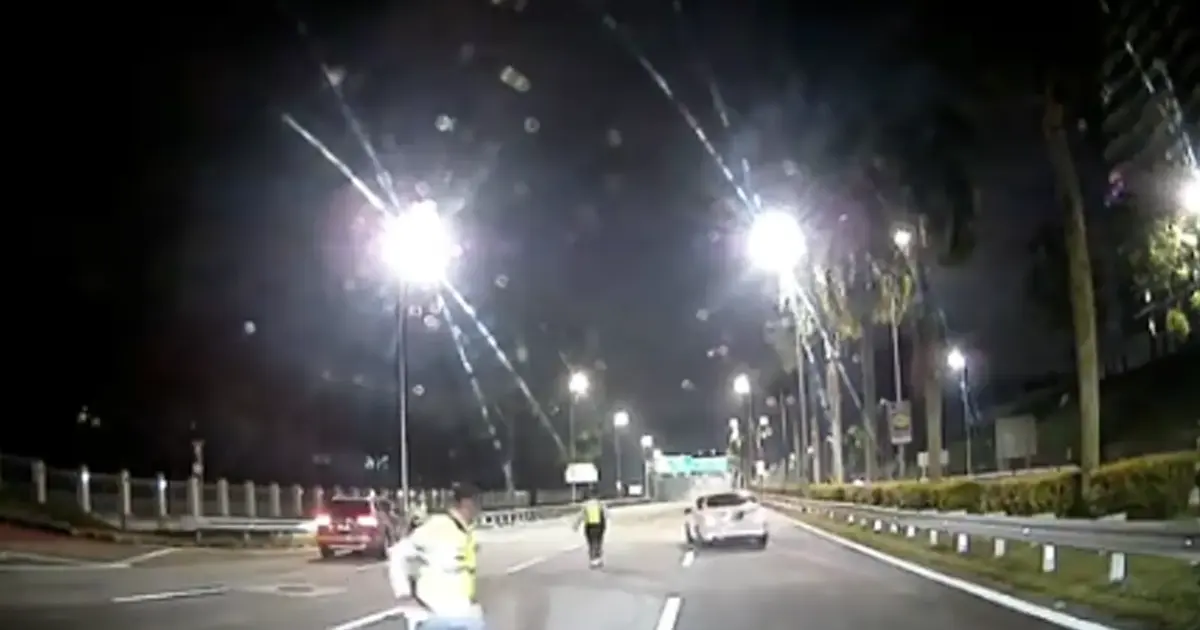
A 20-year-old driver operating a Mercedes motor vehicle was taken into custody following an incident at a police checkpoint where he deliberately breached the barricade rather than submit to routine inspection procedures. The apprehension occurred after the motorist exhibited suspicious behaviour at the roadblock, prompting law enforcement to take immediate action.
The driver's decision to accelerate through the checkpoint instead of halting for standard verification procedures represents a serious breach of traffic regulations and police authority. This type of incident—where motorists attempt to evade law enforcement at checkpoints—places both officers and the general public at significant risk, as it necessitates pursuit operations and emergency response measures that can endanger road safety.
Police observations noted that the individual displayed visible signs of nervousness prior to the incident, raising questions about what prompted him to attempt such a risky manoeuvre. Officers conducting routine checkpoint operations are trained to identify behavioural cues that might indicate illegal activity, contraband transportation, or other serious infractions. The driver's demeanour apparently triggered heightened scrutiny from personnel stationed at the barricade.
The formal charge against the detainee centres on his refusal to comply with direct instructions issued by a police officer performing their lawful duties. This particular offence carries significant legal consequences, as it undermines the authority of law enforcement and the integrity of traffic control procedures that exist to maintain public order. Compliance with police instructions at roadblocks is a fundamental legal obligation that motorists must observe.
Roadblock operations serve multiple critical functions within Malaysia's broader law enforcement ecosystem. These checkpoints facilitate the detection of stolen vehicles, allow authorities to identify individuals wanted for criminal investigations, and provide opportunities to check vehicle documentation and roadworthiness standards. When drivers refuse to cooperate at such points, it forces police to escalate their response, consuming resources and creating potentially dangerous situations on public roads.
The incident reflects ongoing challenges faced by traffic enforcement personnel throughout the country. Despite the professional deployment of checkpoints at strategic locations, some motorists attempt to circumvent these controls through evasion tactics. This behaviour suggests either a deliberate attempt to conceal something from authorities or a fundamental disregard for lawful police operations—both scenarios with serious implications.
Investigations into such incidents typically expand beyond the initial non-compliance charge. Authorities routinely examine whether the vehicle contained contraband, whether the driver was wanted for other offences, or whether the vehicle itself was stolen or improperly registered. The nervousness exhibited by the detainee may have indicated awareness of such underlying issues, potentially explaining his decision to attempt a risky escape.
The case underscores the importance of public cooperation with law enforcement procedures. Malaysian road safety initiatives depend substantially on checkpoint operations that allow police to verify driver credentials, check vehicle conditions, and identify threats. Widespread evasion attempts would severely compromise these programmes and require significantly increased enforcement measures, ultimately proving counterproductive for community safety.
For Malaysian motorists, this incident serves as a cautionary reminder of the legal and safety consequences associated with non-compliance at police checkpoints. The penalties for obstructing police officers and failing to comply with lawful instructions can include substantial fines and imprisonment. Beyond the legal ramifications, attempting to breach a roadblock creates dangerous circumstances that can result in accidents affecting innocent road users.
The arrested individual now faces the judicial process, during which the circumstances surrounding his decision to force through the checkpoint will be examined in detail. Prosecutors will likely seek to establish whether additional offences occurred, while the defence may seek to explain the driver's conduct. The outcome will potentially influence how similar cases are handled going forward and send a message regarding law enforcement's commitment to maintaining checkpoint integrity.
This case also highlights the professional demands placed upon police personnel stationed at checkpoints. Officers must balance the need to process vehicles efficiently against security imperatives and the unpredictable nature of some motorist encounters. The successful apprehension of this driver demonstrates the training and readiness of checkpoint personnel to respond to non-compliance situations and prevent vehicles from breaching controlled points.

