Malaysia's approach to energy policy development took a generational turn this week when 20 university students gathered at the Kuala Lumpur Convention Centre to tackle one of the nation's most pressing contemporary challenges. The inaugural Minister's Cup debate competition, staged as part of the 7th International Sustainable Energy Summit (ISES) 2026, invited young minds to grapple with a question that will shape the country's energy trajectory for decades: whether Malaysia should expand exports of renewable energy-generated electricity to neighbouring countries while simultaneously meeting its own domestic demand.
The debate motion, framed in both Malay and English, reflects the complexity of Malaysia's position in Southeast Asia's energy landscape. As a potential clean energy producer, Malaysia faces a delicate balancing act between capitalising on its renewable energy potential for regional export opportunities and ensuring sufficient affordable electricity for its growing population and industrial base. The selection of this particular topic signals government recognition that energy policy extends beyond technical considerations into fundamental questions about national interest, regional cooperation, and long-term economic strategy.
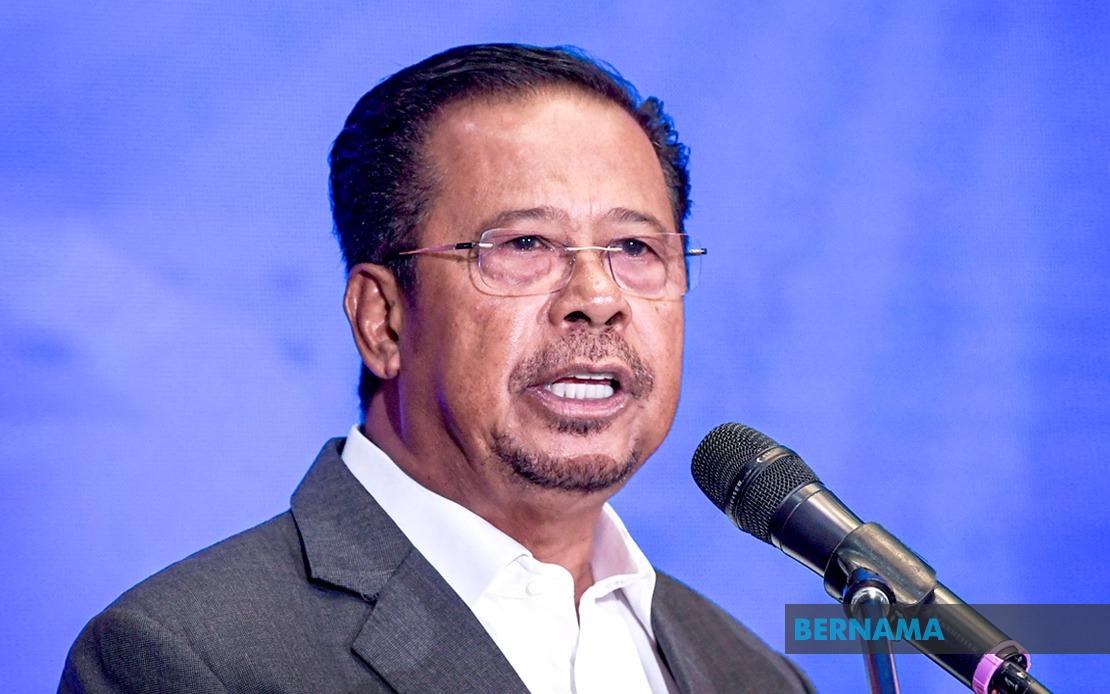
Deputy Minister of Energy Transition and Water Transformation Datuk Seri Abdul Rahman Mohamad presented the championship award to the Government team and recognised Muhammad Uwais Mohd Hazril Munir @ Umar, a 20-year-old law student from Universiti Malaya, as the Best Debater. The presence of Chief Secretary to the Government Tan Sri Dr Wan Ahmad Dahlan Abdul Aziz, who also chairs the Sustainable Energy Development Authority Malaysia (SEDA), underscored the government's commitment to the initiative. This high-level attendance demonstrated that policymakers view youth engagement in energy discussions not as peripheral outreach but as integral to policy formulation.
The Malaysia Energy Literacy Programme (MELP), under which the Minister's Cup operates, represents a deliberate institutional effort to democratise understanding of energy issues. SEDA Strategic Communications director Izzad Zalman Abdul Kader articulated the underlying rationale during the awards ceremony: involving young people in debate creates informed citizens capable of critically evaluating government policies while developing nuanced appreciation for the trade-offs inherent in energy planning. In the Malaysian context, where public discourse sometimes lacks technical depth on infrastructure questions, this investment in youth energy literacy carries particular significance.
The debate format itself carries pedagogical value beyond the immediate competition. By requiring participants to construct arguments, marshal evidence, and respond to counterarguments on both sides of the export question, the competition develops analytical capacities applicable far beyond energy policy. Muhammad Uwais recognised this broader educational dimension, noting that debate transforms abstract technical concepts into accessible public discussion. For a region where energy transitions increasingly drive geopolitical alignment and economic competitiveness, citizens equipped with frameworks for understanding these dynamics become assets to national development.
Afiq Athmar Mohamed, the 21-year-old Faculty of Business and Economics student who participated in the competition, emphasised another crucial dimension: the collaborative architecture supporting such initiatives. The involvement of multiple ministries, government agencies, and media partners creates an ecosystem where energy issues gain legitimate public prominence. This institutional coordination addresses a persistent challenge in developing nations, where public debate often concentrates on immediate political theatre rather than structural policy questions. By channelling ministerial resources and official platforms toward student debate on renewable energy, the government implicitly elevates energy literacy to the status of strategic national concern.
The timing of this inaugural competition carries additional significance within Malaysia's broader energy transition narrative. The country has committed to expanding renewable energy capacity as part of its climate commitments and regional sustainability objectives. However, the technical and financial trajectories of this transition depend ultimately on public understanding and social cohesion around the necessary trade-offs. A manufacturing-dependent economy cannot simply shift to renewables overnight; periods of transition require public acceptance of intermediate pricing structures, infrastructure investment priorities, and grid management complexities. Engaging university students now builds constituencies informed enough to support these transitions when they mature into positions of influence.
The focus on renewable energy exports to neighbouring countries reflects Malaysia's emerging role in regional energy architecture. As Southeast Asia accelerates decarbonisation while demand for electricity continues rising, countries with renewable energy potential become strategically significant. Whether Malaysia develops its renewable sector primarily for domestic use or balances this with export opportunities carries implications for bilateral relationships, the competitiveness of Malaysian industries, and the country's standing within regional energy governance structures. By inviting undergraduate debate on this question, policymakers signal that the decision should not be technocratic but grounded in broader societal consideration.
MLEP itself addresses a foundational gap in Malaysian energy discourse. The programme operates on the principle that Malaysians require accurate, verified information about how energy is produced, consumed, and managed to make responsible choices both individually and collectively. This framing acknowledges that energy decisions extend beyond boardrooms into household consumption patterns, investment choices, and political preferences. A population that understands the relationship between renewable energy expansion and electricity pricing, grid stability, and regional cooperation becomes more resilient to misinformation and more capable of supporting coherent long-term policy.
The Government team's championship at the Minister's Cup raises interesting questions about the competition's structure and messaging. Whether the competition was designed primarily to develop debating skills or to showcase government energy positions merits consideration. Regardless, the presence of students articulate enough to construct sophisticated arguments about energy policy indicates that Malaysian universities are producing graduates capable of engaging substantively with complex policy questions. This human capital advantage becomes increasingly valuable as the region competes on technical innovation and policy sophistication.
Looking forward, the Minister's Cup debate establishes a model potentially applicable to other policy domains. If carefully structured to encourage genuine intellectual contestation rather than rhetorical performance, such competitions can transform policy education from passive reception of government positions into active construction of informed critique. For Malaysia, where demographic dividends depend on channelling youth energy into productive engagement with national challenges, such platforms offer underutilised avenues for building both human capital and social cohesion around necessary transformations.

