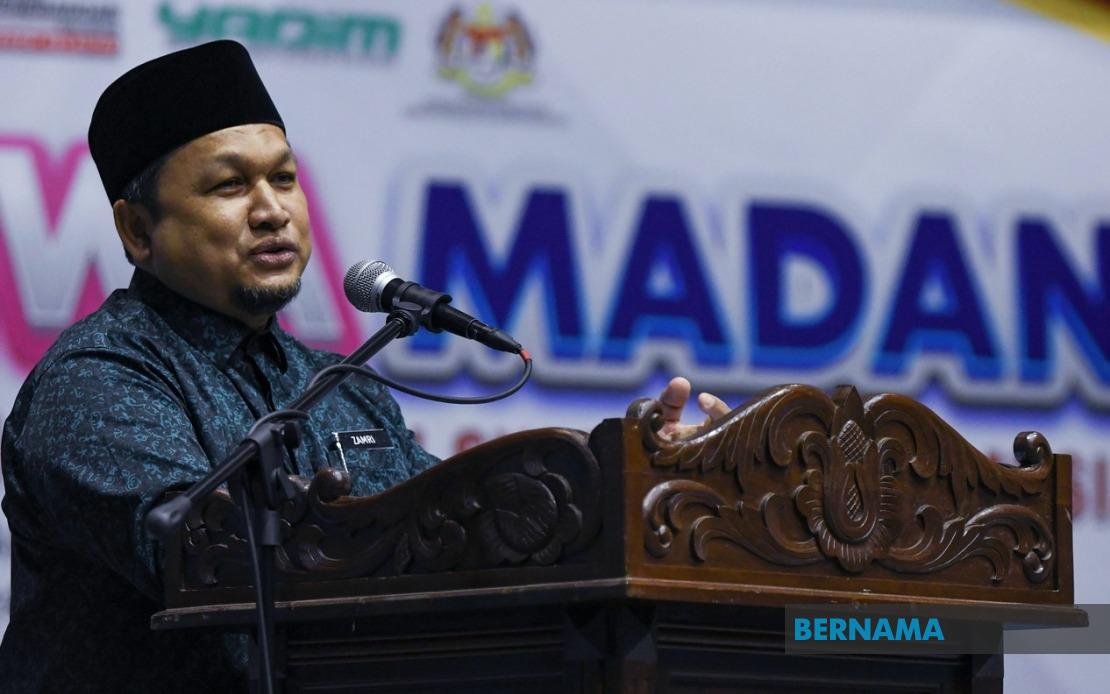
The Malaysian government's plan to overhaul how it vets religious speakers on digital platforms has found a powerful ally in Yayasan Dakwah Islamiah Malaysia (YADIM), the country's premier Islamic foundation. The proposal, unveiled recently by Minister in the Prime Minister's Department (Religious Affairs) Dr Zulkifli Hasan, aims to create a formal accreditation system that would verify the credentials and knowledge base of individuals offering religious guidance through social media and online channels. YADIM's chief executive officer Zamri Zainal Abidin has signalled unequivocal support for this framework, describing it as a necessary safeguard for the credibility of Islamic teachings in the digital sphere.
The impetus behind this initiative reflects a widening gap between traditional Islamic scholarship and the proliferation of self-styled preachers flooding social media platforms. In Malaysia's hyperconnected landscape, where millions turn to YouTube, TikTok, Facebook, and Instagram for religious instruction, the absence of standardised vetting mechanisms has created conditions ripe for the spread of unorthodox interpretations and doctrinally questionable content. Zamri emphasised that without proper gatekeeping, virtually anyone can adopt the title of 'ustaz' or preacher, regardless of their foundational understanding of Islamic jurisprudence, theology, or canonical traditions. This democratisation of religious authority, while superficially inclusive, poses genuine risks to the fidelity of Islamic messaging.
The concern extends particularly to younger demographics, who increasingly source their religious knowledge from social media rather than formal Islamic institutions or traditional scholars. Zamri warned that continued exposure to religiously inaccurate information—whether through ignorance or deliberate distortion—gradually erodes public confidence in established religious authorities and institutions. In a nation where Islam occupies a constitutionally central place, such institutional erosion carries implications beyond the purely religious sphere, touching questions of social cohesion and legitimate spiritual authority. Malaysia has seen sporadic controversy over heterodox online preachers whose teachings diverge markedly from mainstream Islamic jurisprudence, occasionally sparking public concern and regulatory questions.
Crucially, Zamri clarified that the accreditation framework is not designed to suppress dakwah activities or create bureaucratic impediments for genuinely knowledgeable individuals seeking to share Islamic teachings. Instead, the proposal targets a specific vulnerability: the ease with which unqualified individuals can exploit the reach and anonymity of digital platforms to disseminate religious content without adequate grounding in Islamic science. The distinction between restricting legitimate preaching and filtering out unaccredited speakers is conceptually important, though operationally challenging. The framework would presumably establish objective criteria—perhaps drawing on established Islamic education credentials, scholarly recognition by recognised authorities, or formal training programmes—rather than subjective judgement calls.
YADIM's backing carries particular weight because it positions itself as the government's dedicated dakwah agency under the Prime Minister's Department, with direct institutional interest in standardising and legitimising religious outreach across multiple channels. Zamri noted that YADIM has already been practising credential verification internally, particularly through its Daie Muda programme, where trained preachers obtain accreditation from the Federal Territories Mufti Department. This existing system provides a proven model that could be scaled and adapted across the broader ecosystem of online religious speakers. By framing YADIM as a potential strategic partner in implementing the accreditation regime, Zamri positioned the foundation to play a central coordinating role in what promises to be a complex regulatory undertaking.
The timing of this proposal reflects broader regional and global concerns about online misinformation and radicalisation. Several Southeast Asian nations have grappled with the challenge of preventing fringe religious ideologies from spreading unchecked through digital channels, particularly those promoting extremist interpretations of Islam. While Malaysia has not faced the scale of ideological capture seen in some neighbouring countries, authorities remain vigilant about potential pathways through which distorted Islamic teachings could influence vulnerable audiences. An accreditation system could theoretically help distinguish mainstream, institutionally-endorsed voices from heterodox or potentially radicalising content.
However, implementing such a framework will require careful navigation of competing interests and constitutional considerations. Malaysia's constitutional architecture protects Islamic religious authority at both federal and state levels, with state Islamic religious councils holding considerable jurisdiction over Islamic affairs within their territories. Any national accreditation system would need to accommodate this federalised structure and negotiate the authority boundaries between state and federal bodies. Questions will inevitably arise regarding who decides what constitutes acceptable Islamic knowledge, what recourse exists for speakers denied accreditation, and how the system distinguishes between theological disagreement and genuine unfitness to teach.
The initiative also emerges amid Malaysia's ongoing struggle to balance religious freedom with institutional credibility in Islamic matters. While the constitution guarantees freedom of religion, Malaysian jurisprudence has long recognised the state's role in regulating religious affairs and protecting Islamic orthodoxy as defined by established authorities. The accreditation proposal sits comfortably within this framework, positioning credential verification as a public protection mechanism rather than religious censorship. Nevertheless, critics might argue that any system vetting religious content necessarily involves some degree of doctrinal gatekeeping, raising philosophical questions about the boundary between legitimate regulation and restriction on religious expression.
YADIM's enthusiastic endorsement signals confidence that the accreditation framework can be designed in a manner that enhances rather than constrains legitimate Islamic outreach. The foundation's own experience suggests that credentialing systems need not be onerous or inhibitory if properly constructed. Moving forward, the success of this initiative will depend heavily on transparent criteria, fair review processes, and meaningful stakeholder consultation with Islamic scholars, digital platform operators, and online preacher communities. Malaysia's experience in implementing this framework could offer valuable lessons for other Muslim-majority countries confronting similar challenges in the digital age, particularly across Southeast Asia where social media penetration continues to expand rapidly among religiously-engaged audiences.

