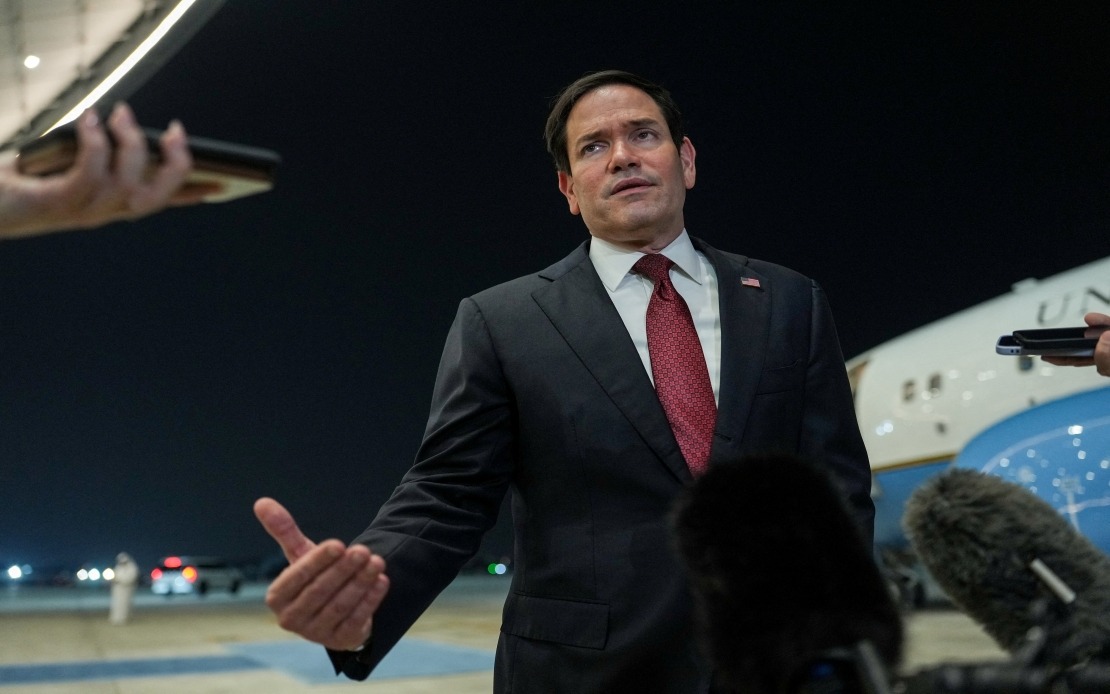
Preparations for Chinese President Xi Jinping's upcoming state visit to the United States are advancing without interruption, according to US Secretary of State Marco Rubio, who downplayed recent diplomatic friction between the two superpowers. Speaking to journalists at Joint Base Andrews on Sunday before departing for regional talks, Rubio conveyed confidence that the September meeting would unfold as previously scheduled, signalling that both governments remain committed to sustaining high-level engagement despite their mounting disagreements.
The visit, initially proposed during President Donald Trump's May journey to Beijing, is set for September 24 at the White House. Rubio's remarks came as a clear reaffirmation that the event remains locked in, with Chinese preparation delegations actively conducting groundwork in Washington. His statement carries weight given the backdrop of escalating rhetoric between the two capitals, suggesting that both administrations view the summit as too strategically important to derail over short-term disputes.
China's Foreign Ministry echoed this commitment, confirming ongoing coordination with American counterparts regarding the proposed meeting. The synchronized messaging from both sides underscores a shared interest in maintaining the diplomatic calendar despite recent friction. This alignment is particularly significant given the pattern of accusations and counter-accusations that have characterised US-China relations in recent weeks, indicating that neither government wishes to allow individual incidents to disrupt their broader strategic dialogue framework.
The timing of these assurances proved notable, arriving just days after Trump levelled accusations at Beijing regarding purported interference in the 2020 American presidential election, which Trump lost to Joe Biden. China swiftly and categorically rejected these allegations, illustrating the type of rhetorical clashes that have become increasingly common in bilateral discourse. Yet despite these pointed exchanges, the decision to move forward with the Xi visit demonstrates that both capitals distinguish between tactical political statements and strategic relationship management.
Rubio's characterization of great power competition offers a revealing window into Washington's framework for engaging Beijing. The Secretary of State explicitly acknowledged that disagreements between major powers like the US and China are inevitable and, to some extent, natural expressions of competing national interests. Rather than treating all friction as crisis-level, his comments suggest a more nuanced approach recognising that sustained dialogue channels remain essential even—or perhaps especially—when tensions run high.
The emphasis on mutual responsibility resonates across both American domestic politics and regional Asian diplomacy. By stressing that both nations bear responsibility for maintaining relations "for the sake of their people and the wider world," Rubio articulated a rationale that extends beyond bilateral considerations to encompass broader stability concerns. For Southeast Asian nations, this message carries particular weight, as the region's prosperity and security architecture depend significantly on US-China relations remaining within manageable bounds rather than spiralling into confrontation.
The imminent ASEAN foreign ministers' meeting in Manila on Tuesday presents an unexpected opportunity for preliminary discussions between American and Chinese representatives before the formal September summit. Beijing's confirmation that Chinese Foreign Minister Wang Yi would attend the gathering suggests China views this regional forum as a suitable venue for preliminary diplomatic soundings. Such multilateral settings often provide more comfortable environments for addressing bilateral tensions than formal bilateral channels, allowing both sides to communicate through slightly different diplomatic registers while maintaining forward momentum.
For Malaysia and other ASEAN members, the Xi visit confirmation carries distinct implications regarding regional balance. The sustained US-China engagement suggests that neither power is prepared for a complete rupture that would force smaller nations into stark binary choices. This continuity provides breathing room for Southeast Asian governments to pursue independent foreign policies and maintain economic relationships with both superpowers without being pressured into premature alliance decisions.
The convergence of preparations and dialogue at multilevel forums indicates a calculated approach by both Washington and Beijing toward managing their competition. Rather than allowing disagreements on specific issues—whether electoral interference, trade matters, or regional disputes—to derail the entire relationship, both capitals appear committed to compartmentalizing conflicts while preserving strategic communication channels. This approach, while not eliminating friction, does suggest both governments recognise the costs of allowing bilateral relations to deteriorate beyond repair.
Rubio's confidence in the September visit's viability ultimately reflects a pragmatic assessment that interrupting such high-level summits would carry greater diplomatic costs than proceeding despite ongoing disagreements. The decision to maintain the calendar sends a signal to markets, allied nations, and domestic constituencies that despite current tensions, the bilateral relationship possesses sufficient underlying institutional and strategic momentum to withstand periodic crises. This resilience, while fragile, remains crucial for global stability given the two nations' interconnected economic interests and nuclear arsenals.

