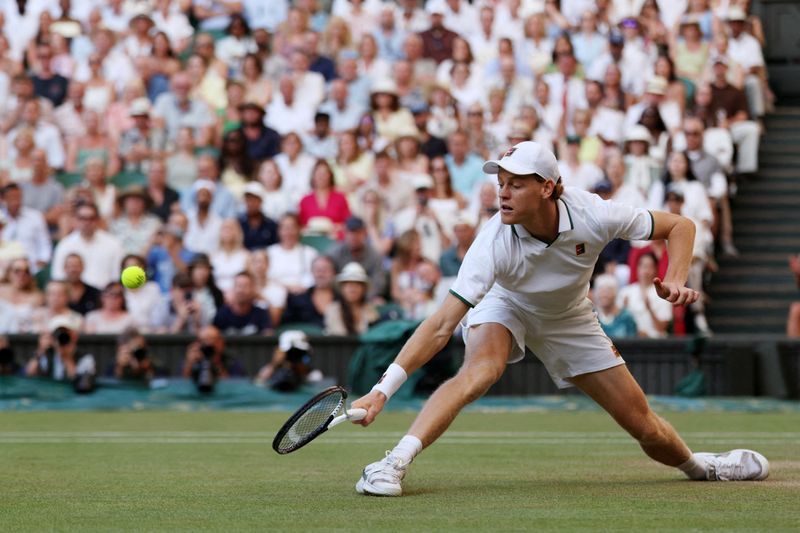
Jannik Sinner, the world's top-ranked tennis player, announced on Friday that he will not compete at the US Open later this month, citing an ongoing injury to his right knee that has sidelined him for nearly two weeks. The 24-year-old Italian's withdrawal represents a significant blow to what promised to be a fiercely contested grand slam tournament, stripping the event of one of its most formidable competitors at a time when he sits atop the global rankings following his Wimbledon triumph last month.
The injury, sustained earlier in August, has proven more stubborn than initially anticipated, forcing Sinner into a cautious recovery approach rather than risk further damage by attempting to compete. In his statement posted on social media, Sinner explained that despite intensive work with his coaching team and medical personnel, continuing to play would be inadvisable. He revealed that his team reconvened for training sessions at Monte Carlo in recent days to reassess his condition, only to conclude that additional healing time remains necessary before he can safely return to match play.
Sinner's withdrawal follows his successive absences from two crucial warm-up tournaments on the hard-court circuit. He opted not to compete at the Cincinnati Open and the Canadian Open, both traditional preparation events that allow players to sharpen their game immediately before the US Open. These decisions signalled that the injury was serious enough to warrant skipping important match preparation, a telling indicator of the severity of the issue and the conservative approach his medical team has adopted.
For context, Sinner arrived at this juncture having captured his fifth major championship at Wimbledon last month, cementing his status as tennis's dominant force heading into the latter stages of the season. His withdrawal from the US Open represents an interruption to what had been a remarkable campaign, though it also underscores the physical toll that professional tennis exacts on even the sport's finest athletes. The decision to sit out the remaining major of the year reflects the reality that short-term competitive ambitions must sometimes yield to long-term career health.
The timing of Sinner's withdrawal creates a significant opening for his chief rival, Carlos Alcaraz of Spain, who occupies the world number two ranking. Alcaraz announced just one day before Sinner's statement that he would make his comeback at Flushing Meadows after a four-month absence from competitive play, a gap caused by his own injury troubles. The Spanish star's return, combined with Sinner's departure, fundamentally alters the tournament landscape and elevates Alcaraz's standing as a title favourite despite the uncertainty surrounding his match fitness following such an extended layoff.
Alcaraz carries particular motivation into the US Open, having won the title last year when he defeated Sinner in the final. That victory demonstrated his capability to perform under pressure at the year's final grand slam, and his proven ability to claim crowns at this venue could prove decisive if he has adequately recovered from his injury. His path to defending his title has now been substantially eased by the absence of the world number one, one of the very few players capable of genuinely competing with Alcaraz at the highest level of tennis.
The removal of Sinner from the field raises intriguing questions about the US Open's competitive balance and the identity of potential champions. While Alcaraz emerges as the highest-ranked player in attendance and a leading contender, his four-month absence introduces uncertainty about his readiness for best-of-five-set competition. Other seeded players will sense opportunity, but none possess the consistent excellence or proven grand slam pedigree that Alcaraz has demonstrated in recent years. The tournament loses much of its narrative tension without the presence of the world's top-ranked player.
From a broader perspective, the high-profile nature of Sinner's withdrawal highlights the physical demands inherent in professional tennis and the challenges athletes face in managing injuries during compressed schedules. The grand slam circuit, compressed into the latter half of the calendar year with Cincinnati and Canada serving as immediate warm-up events, places significant strain on competitors. Sinner's decision to prioritise recovery over participation suggests a maturity in his approach to his career longevity, a consideration that becomes increasingly important as players advance in age and accumulate match miles.
The US Open, scheduled to commence on August 23 and conclude on September 13, will proceed without its headline star. This absence will inevitably reduce global viewing interest for some segments of the tournament, particularly in Sinner's home market and among his expanding international fanbase. Media coverage and betting markets will require recalibration, with Alcaraz's odds as favourite likely to shift given the altered competitive dynamic and the uncertainty surrounding his own fitness levels after such a prolonged absence from competitive tennis.
Sinner's withdrawal also carries implications for other contenders on the men's side, as the removal of the world number one creates openings for players ranked further down the pecking order. Younger challengers and established veterans alike will view the Italian's absence as creating space for their own advancement through the draw. The tournament's narrative arc has fundamentally shifted, transforming what might have been a showdown between the sport's two best players into a more open competition where multiple players harbour realistic aspirations of capturing the title.

