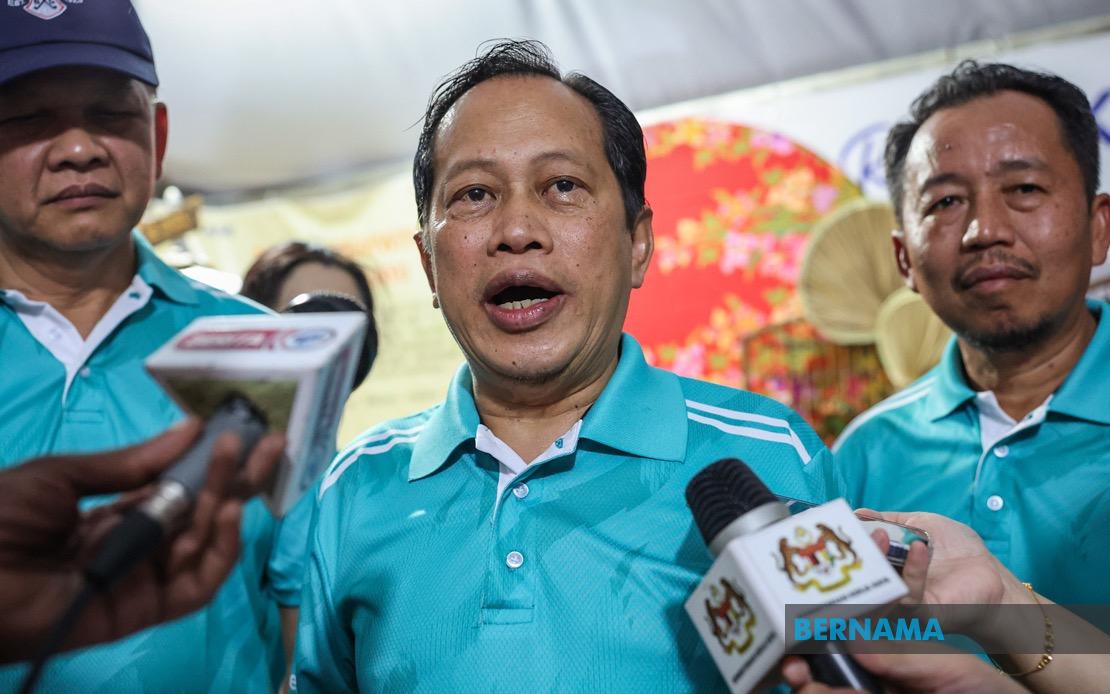
The Works Ministry (KKR) has signalled ambitions to secure the most substantial development budget among government agencies when Malaysia tables its 2027 spending plan, with officials indicating that securing sufficient funding remains critical to executing nationwide infrastructure and maintenance programmes. Deputy Works Minister Datuk Seri Dr Ahmad Maslan disclosed these priorities during an engagement at the Cultural Night Run event in Batu Kawan, revealing that the ministry is currently consolidating proposals from its subsidiary agencies ahead of formal budget discussions with the Finance Ministry II scheduled for late August.
The ministry's push for expanded financial resources reflects growing recognition that Malaysia's infrastructure network requires sustained investment to maintain competitiveness and service quality. KKR received approximately RM10 billion in the previous budget cycle, of which RM9 billion was earmarked for development initiatives. Ahmad's public statement seeking an increase from this baseline suggests the ministry believes current allocation levels are insufficient for the scale of projects it envisions executing. The consolidated input process underway involving the Malaysian Highway Authority (LLM), Construction Industry Development Board Malaysia (CIDB), and Public Works Department (JKR) indicates a comprehensive assessment of infrastructure demands across all ministry divisions.
Parallel to its financial advocacy, KKR is actively promoting technological modernisation across Malaysia's highway network, positioning digital infrastructure as central to the nation's transport future. The ministry's emphasis on smart highways reflects global trends toward intelligent transportation systems, with Ahmad highlighting the deployment of artificial intelligence, closed-circuit television monitoring, automated lane management, and integrated navigation platforms. This technological trajectory addresses longstanding Malaysian concerns about traffic management efficiency and road safety, particularly on heavily-used corridors where congestion costs the economy billions annually.
The development and rollout of TuJu, LLM's proprietary navigation application, represents a significant local technology advancement competing against established international platforms like Waze and Google Maps. Unlike generic navigation apps, TuJu integrates highway-specific functionalities including real-time CCTV feeds, toll rate information, rest area locations, emergency response connectivity, and traffic updates synchronised with LLM's Traffic Control Centre. This integration with complementary government applications like KYJalan enables a sophisticated ecosystem where drivers contribute operational intelligence by reporting road conditions and infrastructure issues. The Traffic Control Centre's monitoring of hundreds of cameras across all 34 Malaysian highways, including both Penang bridges, creates unprecedented visibility into network conditions.
Malaysia's highway landscape encompasses 34 separate corridors spanning over 2,000 kilometres, operated by 28 different concessionaires under varying contractual arrangements. This fragmented operational structure creates coordination challenges that technology platforms attempt to address. PLUS Malaysia Berhad alone manages more than 1,000 kilometres of these routes, making its participation in modernisation initiatives particularly influential. The diversity of operators means that infrastructure improvements must accommodate different commercial models and legacy systems, explaining why the ministry prioritises standardised digital tools that transcend individual concessionaire boundaries.
Implementation of Multi Lane Free Flow (MLFF) technology represents the next frontier in Malaysian toll collection, eliminating the friction of traditional toll plaza stops by enabling payment during normal traffic flow. Ahmad noted that MLFF remains in proof-of-concept stage and will expand through commercial arrangements between concessionaires rather than government subsidy, encouraging companies to either develop proprietary solutions or engage external technology providers. PLUS Malaysia's adoption of JustGo demonstrates early market adoption, suggesting that competitive dynamics and operational efficiency gains may drive broader implementation without direct state investment. This market-led approach reflects evolving infrastructure policy preferences across Southeast Asia toward private-sector innovation within regulatory frameworks.
The ministry's comprehensive modernisation agenda must be understood within Malaysia's broader infrastructure competitiveness context. Regional rivals like Thailand, Singapore, and Indonesia are advancing their own highway and logistics networks, creating implicit pressure on Malaysian authorities to maintain technological and operational parity. Smart highways with real-time monitoring, AI-driven traffic management, and frictionless toll systems represent competitive differentiation factors that attract commercial activity and investment. For Malaysian businesses reliant on domestic logistics, efficiency improvements directly impact operational costs and supply chain reliability, creating downstream economic benefits beyond the transport sector itself.
The Cultural Night Run event serving as the announcement backdrop—attracting 5,000 participants including 114 international visitors—underscores the ministry's broader engagement strategy beyond technical implementation. The collaborative organisation involving the Entrepreneur Development and Cooperatives Ministry, Youth and Sports Ministry, Penang state authorities, and various corporate partners demonstrates how infrastructure development has become intertwined with social and community engagement. This multidimensional approach suggests that government is attempting to frame infrastructure investment as contributing to national development holistically rather than as isolated technical projects.
Budget allocation discussions occurring in late August will determine whether KKR's ambitions translate into funding commitments. The global economic environment, Malaysia's fiscal position, and competing ministry demands will all influence final appropriations. However, Ahmad's public advocacy signals that the ministry is strategically positioning infrastructure modernisation as a priority deserving elevated budget status. For Malaysian readers and businesses dependent on efficient transportation networks, the outcome of these discussions carries direct implications for toll costs, journey times, and logistics reliability. The ministry's emphasis on technology integration and smart systems suggests that future budget allocations, should they increase substantially, would advance Malaysia's infrastructure capabilities toward international benchmarks while addressing persistent domestic traffic management challenges.

