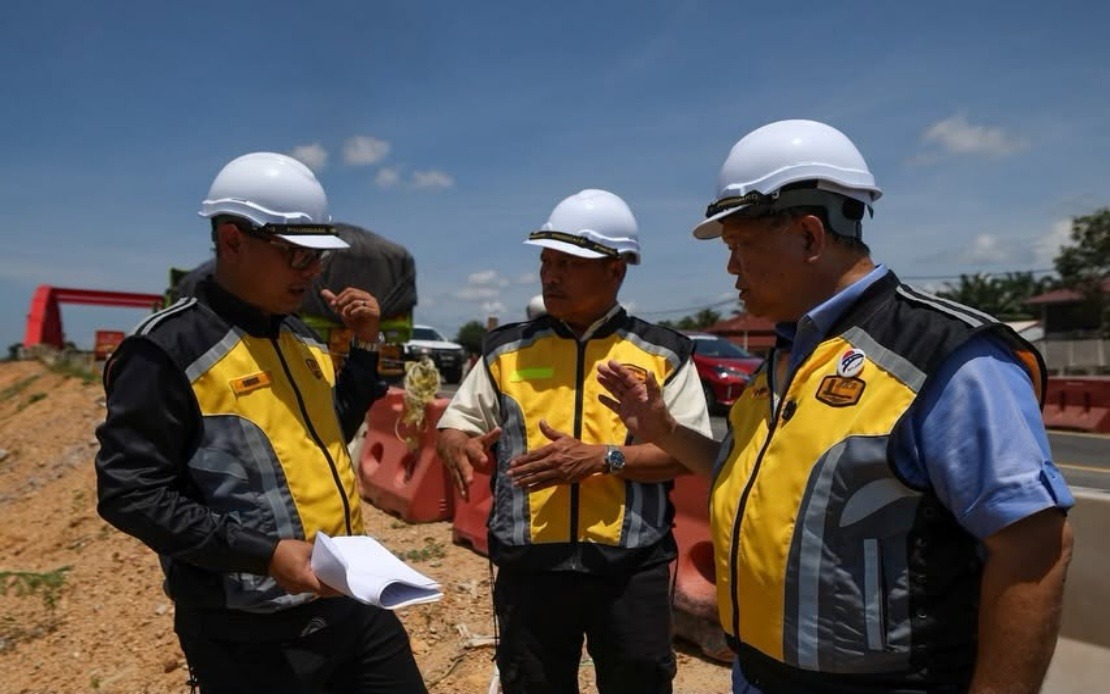
Works Minister Datuk Seri Alexander Nanta Linggi has taken direct action to break the pattern of delays plaguing the Sungai Durian Bridge Replacement Project in Kuala Krai, ordering the contractor to mobilise additional resources and complete construction according to the current timeline. The intervention marks an escalation in ministerial pressure on a project that has already exceeded its original schedule despite being granted six separate extensions of time, underscoring growing frustration within the government over persistent infrastructure delivery failures.
The minister's directive came following an unannounced site visit where he personally inspected progress and identified systemic issues hampering completion. Rather than simply accepting contractor explanations, Nanta's hands-on assessment revealed the depth of challenges facing the replacement structure, which have compounded since work commenced. His decision to issue a public statement through official channels signals that the ministry is prepared to escalate accountability measures if the contractor fails to meet revised deadlines.
Technical complications have emerged as the primary culprit behind successive delays, particularly borepile installation work that has been severely disrupted by encounters with existing utility pipelines running beneath and around the construction site. This underground infrastructure conflict represents a common challenge in urban and semi-urban bridge replacement projects across Malaysia, where inadequate utility mapping prior to tender can create expensive and time-consuming complications during execution. The contractor has also grappled with difficulties related to the temporary support structure needed to safely install the new steel bridge superstructure, a critical phase that cannot be rushed without compromising structural integrity and worker safety.
The Sungai Durian project holds significance for residents of Kuala Krai and commuters in the surrounding region, as the bridge serves as a vital transportation link. Successive delays have tested public patience, with what was originally envisioned as a relatively straightforward replacement programme stretching across multiple budget cycles. For Malaysian taxpayers and those dependent on the crossing, the extended timeline represents both frustration and concern about effective use of public funds, particularly as construction costs may escalate with each extension granted to the contractor.
Nanta's refusal to countenance further delays reflects a broader shift in how government ministries are addressing infrastructure performance, with ministers increasingly visiting project sites and taking visible ownership of outcomes. His explicit warning that implementation weaknesses will not be tolerated suggests the ministry may consider contractual remedies or penalties if the acceleration targets are not met. This approach differs from previous practice where delays were often absorbed through passive extension approvals without ministerial intervention.
The directive requires the contractor to work collaboratively with the Public Works Department to resolve outstanding technical issues, particularly the utility pipeline conflicts and temporary support structure challenges. This collaborative mandate indicates that responsibility for problem-solving cannot be shouldered by the contractor alone, but requires active participation from government agencies to expedite approvals and coordinate solutions. The involvement of the Public Works Department also provides the ministry with real-time monitoring capability and multiple pressure points to enforce compliance.
Deployment of additional resources represents a significant commitment the contractor must now honour, potentially increasing project costs but offering the pathway to accelerated completion. In Malaysian construction practice, resource mobilisation at this stage typically involves bringing in additional skilled labour, equipment, and supporting trades to run parallel work streams that would otherwise proceed sequentially. The feasibility of this acceleration depends partly on the contractor's capacity to source qualified personnel and equipment in a competitive labour market, challenges that may test the sincerity of the acceleration commitment.
The six previous extensions of time represent a substantial accumulation of schedule variations, each requiring separate approvals and likely accompanied by financial adjustments. For infrastructure observers across Southeast Asia, the Sungai Durian project exemplifies challenges common to the region's development agenda, where ground conditions, utility conflicts, and technical complications routinely derail planning assumptions. Malaysia's experience with this bridge replacement offers lessons for other nations managing similar infrastructure modernisation programmes.
Ministerial oversight of this nature creates a critical juncture for the project, as the visible political commitment now attached to its completion raises stakes for all parties involved. Successful acceleration will reinforce Nanta's credibility on infrastructure delivery ahead of future development initiatives, while further delays would undermine both the ministry's authority and the contractor's reputation. This dynamic should provide powerful incentive for genuine effort to overcome remaining obstacles and meet the revised completion target.
The public commitment made through the minister's Facebook statement also establishes a transparent benchmark against which future progress can be measured and evaluated by constituents. For residents of Kuala Krai and users of the Sungai Durian crossing, this ministerial assurance provides both hope and accountability, suggesting that someone in government is actively listening to their frustrations and prepared to intervene. The broader infrastructure community will watch closely to see whether this intervention model proves effective in breaking the pattern of delays that have characterised Malaysian public works delivery in recent years.

