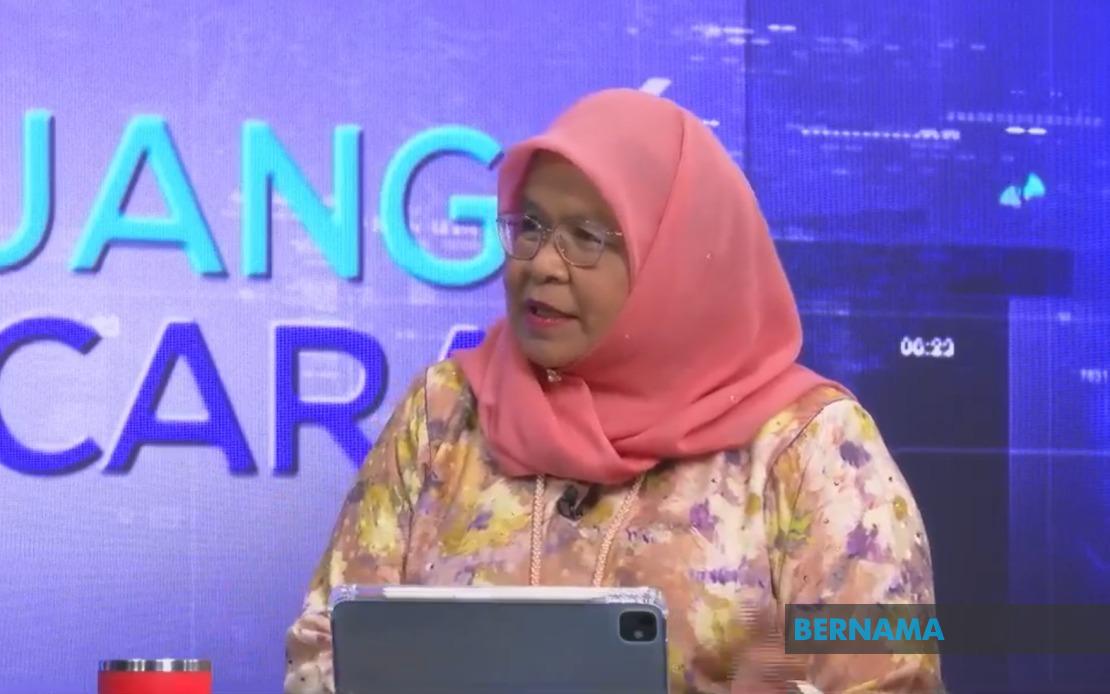
Advancing women into leadership and policy-making positions requires far more than opportunity alone—it demands comprehensive institutional backing, skills development, and genuine confidence in female capability, according to Malaysia's Sustainable Urban Development advisor Datuk Seri Dr Maimunah Mohd Sharif. The former Kuala Lumpur mayor made the remarks at a recent public engagement, underlining a persistent disconnect between women's educational participation and their presence in senior decision-making roles across public and private sectors.
Maimunah stressed that women's representation at the helm of government and corporate bodies remains critical for translating gender-informed perspectives into tangible policy outcomes and organisational strategies. When women occupy positions of genuine authority, their lived experiences and priorities gain voice in spaces where critical decisions affecting entire populations are made. Without this representation, she cautioned, policy frameworks risk overlooking dimensions of social, economic and urban development that disproportionately affect women and their families.
The disparity she highlighted is stark and instructive. Women constitute 56.4 per cent of higher education enrolment according to 2025 data—a substantial majority—yet occupy only 27 per cent of management positions. This gap widens further at the apex of institutional hierarchies. In Parliament, women comprise merely 13.5 per cent of Members of Parliament, while female Cabinet ministers stand at 16.1 per cent. These figures underscore a systemic bottleneck where educational achievement does not translate proportionally into executive authority.
Maimunah's call extends beyond passive opportunity-seeking. She urged women to actively grasp openings when they arise and to invest continuously in knowledge acquisition and skill-building. Implicit in this message is recognition that women entering male-dominated or traditionally hierarchical spaces often must demonstrate greater preparedness and resilience than male counterparts. Yet her assertion that representation should ideally approach 50 per cent reflects an understanding that exclusion of half the population from decision-making is both ethically indefensible and economically wasteful for any society.
From the corporate finance sector, Datuk Mona Suraya Kamarudin, a non-executive independent director at Nomura Asset Management, offered complementary observations grounded in industry experience. She confirmed that women possess technical competence and professional experience comparable to male peers, yet disproportionately concentrate in mid-tier roles rather than ascending to the C-suite or board level. This pattern suggests that barriers to advancement operate at particular inflection points in career progression—often coinciding with senior leadership transitions where subjective assessments, informal networks, and gatekeeping dynamics hold greater sway.
Suraya's commentary on the financial sector carries broader relevance for Malaysia's competitive positioning in knowledge-based industries. She noted that meritocratic sectors—where technical performance is quantifiable and directly tied to outcomes—tend to be more gender-neutral in advancement decisions. A fund manager who delivers superior returns, or a financial analyst whose projections prove accurate, becomes difficult to overlook regardless of gender. This suggests that transparency, measurable performance metrics, and reduced reliance on subjective judgement can unlock pathways for capable women.
Critically, both speakers identified structural and personal support systems as prerequisites for women's leadership development. Training programmes tailored to leadership competencies, mentorship from established leaders, and transparent pathways for advancement constitute the institutional scaffolding necessary to translate aspiration into achievement. Without such frameworks, individual talent faces friction that similarly situated men may never encounter.
Family dynamics emerged as another significant variable. Suraya underscored that spousal support and family-wide adjustment to shared or primary breadwinning roles remain consequential for women balancing professional ambition with caregiving responsibilities. In Malaysian context, where traditional gender roles in household management persist across many communities, institutional policies supporting flexible work arrangements, parental leave provisions, and childcare infrastructure become not merely benefits but preconditions for equitable participation in the workforce's upper echelons.
The dialogue reflects deepening recognition among Malaysia's policy elite that women's advancement serves collective national interest rather than constituting a zero-sum gain at men's expense. An economy that underutilises talent from half its population forgoes productivity gains, entrepreneurial innovation, and diversified perspectives essential for navigating complex regional challenges. Southeast Asia's rapid economic transformation demands leadership cadres drawn from the broadest possible talent pool.
For Malaysia specifically, the conversation occurs amid broader regional competition. Singapore, Thailand, and Indonesia have experimented with gender quotas and targeted advancement programmes with measurable results in senior representation. Malaysian policymakers appear increasingly cognisant that delayed action on structural barriers to women's advancement carries competitive costs in attracting global investment and developing indigenous innovation ecosystems.
The pathway forward articulated by these speakers involves reciprocal responsibility. Women must seize opportunities and commit to continuous professional development. Simultaneously, institutions—government agencies, corporations, universities—must dismantle subtle and explicit barriers, formalise mentorship, provide targeted leadership training, and establish accountability mechanisms for advancement patterns. Without this two-directional effort, Malaysia risks perpetuating a pattern where educational parity masks persistent hierarchical exclusion, constraining national potential and postponing the dividends of genuine inclusive governance.

