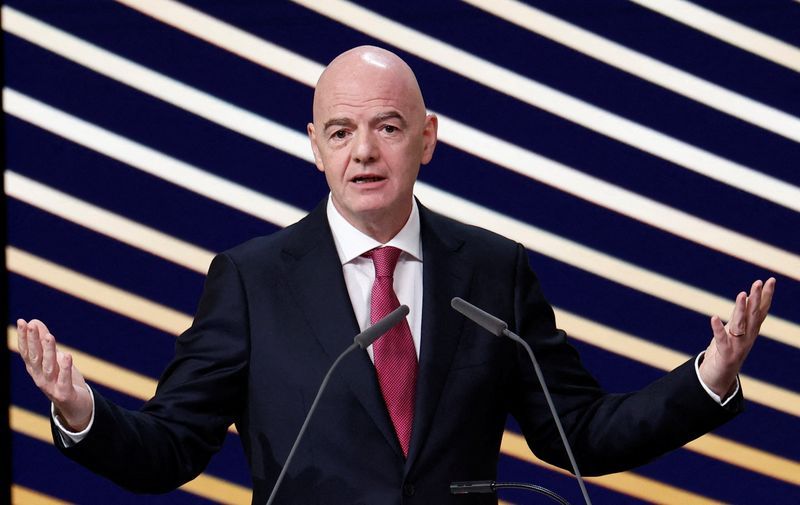
The governance crisis engulfing FIFA has found its most articulate critics in two women sitting on Europe's football ruling body. Laura McAllister of Wales and Norway's Lise Klaveness, both serving on UEFA's executive committee, have become prominent voices demanding accountability from President Gianni Infantino as his attempt to introduce a private equity-backed venture known as FIFA Football Enterprises (FFE) unravels under sustained pressure from member associations across the continent.
Infantino's proposal to restructure FIFA's commercial operations through FFE has sparked unprecedented resistance. The backlash began when Wales withdrew support for his re-election, a move quickly followed by other national associations registering their opposition. UEFA, the continental governing body representing Europe's football nations, has emerged as the locus of organized dissent, with member states rallying to block a vision many see as fundamentally at odds with football's traditional values. This groundswell of opposition has forced an emergency meeting in Morocco as Infantino struggles to maintain his position following more than a decade without serious challenge to his authority.
McAllister's role in orchestrating resistance has been particularly visible. Her proposal for a potential UEFA boycott of FIFA events received unanimous backing from the continental body's membership during emergency discussions last week, signalling the depth of frustration with the current FIFA leadership. Yet her emergence as a leading voice in this conflict has prompted broader conversations about whether the football world might finally be ready to entrust its highest office to a woman. Former FIFA President Sepp Blatter added fuel to this discussion by publicly endorsing the idea of female leadership at the world governing body, though his intervention came after decades during which the organization remained almost exclusively male-dominated at executive levels.
When asked directly about the possibility of becoming FIFA's first female president, McAllister offered a measured response that reflected both optimism and realistic caution. She acknowledged that such a development would be genuinely welcome, yet emphasized that the obstacles extending far beyond simple meritocratic selection. The politics governing FIFA's global structure, she suggested, remain heavily weighted against women even when they demonstrate exceptional competence and courage in challenging institutional failures. The informal networks and regional power bases that determine FIFA's presidency operate according to unwritten rules that have historically favoured male candidates, creating structural barriers that transcend individual capability.
Klaveness and McAllister's professional backgrounds have clearly shaped their approach to the governance crisis. Both played international football for their respective countries before transitioning to roles in football administration. Klaveness now practices law, while McAllister holds a background in political science, yet both emphasize that their fundamental driver is commitment to principles and values rather than personal ambition within football's bureaucratic structures. This values-centric orientation has distinguished their critique from typical power struggles within international sports governance, where personal advancement often motivates factional conflicts. Their insistence that FIFA must maintain its integrity and avoid being corrupted by private capital interests reflects a perspective shaped by their experiences in women's football, where resource constraints have historically made the sport more vulnerable to exactly the kind of commercialization they now oppose.
The governance problems McAllister identifies extend well beyond the FFE proposal. She points to FIFA's involvement with the failed European Super League project, the persistent controversies surrounding World Cup host selections, and the organization's willingness to overturn disciplinary decisions under political pressure. The case of American striker Folarin Balogun's rescinded red card, overturned following intervention by United States President Donald Trump, exemplifies the manner in which external political forces have penetrated FIFA's decision-making processes. These accumulating episodes paint a picture of an organization increasingly adrift from its core functions and fundamental mission, susceptible to influence from both commercial and political interests that treat football as leverage rather than as a cherished global institution.
Statistically, women remain vastly underrepresented in football governance at all levels. Of FIFA's 211 member associations, only 10 are led by female presidents. This disparity persists despite women's football's explosive growth as a spectator sport and participant activity across numerous countries. The International Olympic Committee, by contrast, has appointed Kirsty Coventry as its leader and has pioneered gender equity initiatives for two decades or longer, with the Olympic Games now achieving 50-50 gender parity among competing athletes. Football's World Cup, meanwhile, remains markedly unequal in resources, visibility, and commercial support when comparing men's and women's tournaments, reflecting institutional attitudes that continue to filter into governance structures and leadership recruitment.
McAllister's strategic thinking about advancing women's representation demonstrates political sophistication. Rather than advocating for revolutionary change or forced quota systems, she emphasizes the importance of gradual momentum-building and foundational work that creates conditions for change to occur naturally. This approach acknowledges that attempting to impose female leadership too aggressively might generate backlash from traditional power holders within football, potentially delaying rather than accelerating progress. By focusing on governance principles and institutional accountability, female leaders like McAllister and Klaveness are arguably pursuing a longer-term strategy that builds broader coalitions around values rather than identity politics alone.
The contrast between how McAllister articulates the female leadership question reveals underlying tensions within football governance. She notes that women often bring distinct perspectives to governance precisely because they have developed careers outside football's traditional power structures. Having navigated football initially through participation rather than administrative privilege, female leaders frequently maintain stronger connections to the sport's grassroots dimensions and its role as a genuinely universal activity. This outsider perspective, paradoxically, may make women more rather than less effective leaders at institutions like FIFA, which critics argue has become dangerously disconnected from the communities and values that gave football its global appeal.
The immediate crisis surrounding Infantino's authority will ultimately resolve through procedural mechanisms and regional power negotiations, but the broader conversation about governance and representation raises questions that extend across Southeast Asian football and beyond. Countries throughout the region have adopted various approaches to women's inclusion in football administration, yet patterns of male dominance persist nearly universally. The FIFA governance crisis, by placing women's leadership capabilities into international spotlight, creates opportunity for regional football bodies to reconsider whether their own governance structures reflect the diversity and talent available within their constituencies. Whether this moment catalyzes substantive change or becomes merely a temporary disruption remains uncertain, but McAllister and Klaveness have successfully reframed football leadership debates around principles and competence rather than traditional power preservation.

