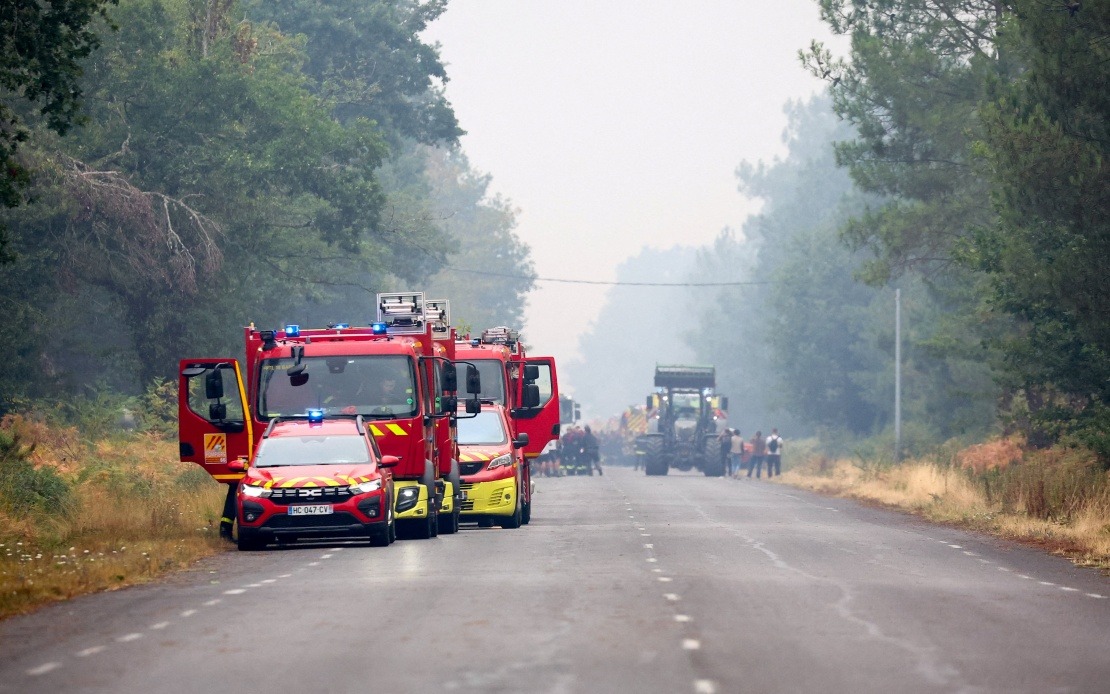
The destructive wildfire season gripping southwestern Europe has entered a critical turning point this week, with the most severe blazes showing signs of stabilisation even as officials prepare for potentially worse conditions ahead. France and Spain, which have battled massive fires consuming thousands of hectares and displacing tens of thousands of residents over recent days, are cautiously optimistic about containing the immediate crisis. However, the respite may prove temporary, as weather forecasters warn that a fresh heat wave is poised to sweep across the region within days, potentially reigniting the conditions that fuelled the unprecedented conflagrations.
In the Gironde department of southwestern France, authorities reported Wednesday morning that the principal wildfire had stabilised following an intensive overnight firefighting operation. Although scattered flare-ups erupted during the night, rapid deployment of emergency crews successfully extinguished each outbreak before it could spread. The prefecture maintained a force of over 2,000 firefighters deployed around the fire's perimeter, working continuously to prevent embers and residual hotspots from reigniting across the scorched landscape. The effort has exacted a considerable human toll, with 126 firefighters suffering injuries since the blaze first began ravaging the department.
Progress has been similarly measured in other affected French zones. The southeastern Var department contained its fire on Tuesday after the blaze had consumed nearly 4,800 hectares of forest and undergrowth. In the Landes region to the southwest, approximately 350 emergency personnel remain stationed to manage a fire that was contained on Monday following the destruction of 3,600 hectares. These achievements represent significant operational successes, yet French authorities remain deeply concerned about the wider meteorological outlook. Meteo-France has placed 65 departments under orange alert status due to sustained high fire risk, whilst issuing similar warnings across 16 additional departments as the anticipated heat wave draws closer.
Spain's wildfire situation reveals a more mixed picture, with some progress accompanied by continuing danger. The forest fire affecting the Sierra Oeste region near Madrid remained stable overnight without fresh flare-ups, according to Spanish media reports. Evacuation restrictions have begun to ease in certain areas, with residents of 15 municipalities across Madrid and Avila permitted to return to their homes on Tuesday evening. In Castellon, 9,000 residents were allowed to leave evacuation zones, whilst 6,000 people from 11 Toledo municipalities also received clearance to return home. These repatriations signal that authorities believe immediate danger has receded in those locations.
Yet the broader Spanish fire emergency remains unresolved across multiple regions. Active firefighting operations continue in the Madrid metropolitan area, Avila, Toledo, Castellon, and Almeria provinces, indicating that numerous fires still threaten populated zones. The most alarming situation persists in Castellon, where the Vall d'Uixo wildfire has burned continuously since Saturday, consuming 10,000 hectares and forcing the evacuation of 10,000 residents. Despite intensive firefighting efforts, this particular blaze remains beyond containment, ranking among Europe's most dangerous active fires. The cumulative impact of these overlapping emergencies has forced authorities to close 30 major roads across five provinces, severely disrupting transport networks and hampering emergency response capacity.
The temporary stabilisation of these catastrophic fires must be understood within the context of Europe's broader climate crisis. The fires ravaging France and Spain reflect exceptional drought conditions and elevated temperatures that have persisted throughout the summer season. Scientists increasingly attribute such extreme weather patterns to human-induced climate change, which is shifting precipitation patterns and intensifying heat episodes across the Mediterranean region. For Malaysia and other Southeast Asian nations, the European wildfire crisis serves as a cautionary example of how accelerating climate volatility creates cascading public safety emergencies that strain governmental resources and displace large populations.
The imminent heat wave presents the most significant near-term threat to the fragile progress firefighters have achieved. Meteorological forecasters at Meteo-France have predicted that incoming high-pressure systems will drive temperatures sharply upward across the region, simultaneously reducing humidity levels and creating ideal conditions for explosive fire propagation. When this weather system arrives, the carefully stabilised fire perimeters could rapidly destabilise, potentially reigniting blazes that crews have spent days containing. Historical patterns from previous European heat waves suggest that secondary waves of fire activity often prove as destructive as initial outbreaks, as they exploit exhausted firefighting resources and populated areas that have been evacuated but not fully secured.
The scale of displacement and property destruction already wrought by these fires underscores the vulnerability of modern European infrastructure and communities to environmental extremes. Tens of thousands of residents have been forced to abandon their homes, whilst critical agricultural land has been scorched and villages have been threatened with destruction. Insurance companies face unprecedented claims for property damage, whilst governments must allocate emergency budgets for reconstruction and recovery assistance. The economic costs extend beyond immediate fire suppression and evacuation management to encompass longer-term impacts on agricultural productivity, tourism revenue, and property values across affected regions.
For regional observers in Southeast Asia, these European events carry particular relevance given the increasing frequency of transboundary haze and wildfire crises across ASEAN nations. Indonesia, Malaysia, and Singapore have all experienced devastating smoke events caused by agricultural burning and uncontrolled forest fires in recent decades. The French and Spanish experience demonstrates how inadequate fire prevention systems, combined with climate-driven increases in fire weather frequency, can rapidly overwhelm even wealthy nations with sophisticated emergency response infrastructure. As global temperatures continue rising, Southeast Asian governments must strengthen fire management protocols, expand firefighting capacity, and invest in climate adaptation measures to protect their populations from similar catastrophes.
Authorities across both France and Spain have activated comprehensive emergency protocols extending beyond immediate firefighting operations to encompass public health warnings, transportation restrictions, and resource mobilisation. Medical facilities have been placed on high alert to manage mass casualties from smoke inhalation and fire-related injuries. Communication campaigns are educating the public about evacuation procedures and safe travel routes. Agricultural organisations are assisting farmers whose livelihoods have been devastated by the destruction of crops and livestock facilities. These coordinated governmental responses demonstrate that managing modern fire emergencies requires integration across multiple institutional sectors and sustained commitment to public safety even as resources become depleted.
The coming days will prove decisive in determining whether the stabilisation achieved this week holds firm or gives way to renewed catastrophe as the heat wave arrives. French and Spanish officials are intensifying preparations, positioning additional firefighting equipment, requesting international assistance, and refining evacuation plans should conditions deteriorate. The European Union has activated its civil protection mechanism, enabling member states to provide mutual aid and share emergency resources. This level of institutional mobilisation, whilst necessary given the scale of the crisis, also reflects the extraordinary nature of current wildfire activity in a region not historically accustomed to such intensity. If current weather forecasts prove accurate, the coming weeks will likely test European firefighting capabilities to unprecedented limits and potentially reshape how Mediterranean nations approach landscape management and climate adaptation.

